Friday, 29 December 2023

Death From Above (Hugo cinema 1979)

This blog post is the 22th in a series examining past winners of the Best Dramatic Presentation Hugo Award. An introductory blog post is here.

As the 1970s drew to a close, science fiction cinema was in transition. The Hugo for Best Dramatic Presentation in 1979 reflects this; socially conscious environmental parables of the waning decade were making way for a new era of popcorn cinema.
Star Wars producer Gary Kurtz presents the 1979
Hugo Award for Best Dramatic Presentation to
Superman star Christopher Reeve at Seacon.
(Image via Supermania78)


For the first time, there were two animated movies nominated in the same year (something that would not happen again until 2002): Watership Down and Ralph Bakshi’s Lord of the Rings. Hitchhikers Guide To The Galaxy became the first (and to date only) commercially broadcast radio show to earn a Hugo nod. This left Superman and Invasion of the Body Snatchers as the only live-action movies up for the award. From the start of organized fandom, fanzines had always provided reviews of movies, but in the late 1970s, more column inches were spent on cinema than ever before. Fans debated whether movies like The Wiz, The Cat From Outer Space, or Coma deserved recognition for the Hugo, and wisely decided that they did not.

In the wake of Star Wars, Hollywood had begun to recognize the commercial viability of big-budget science fiction. The floodgates were opening.

There had also been an uptick in televised science fiction. In Britain, Blake’s 7 was drawing in up to 10 million viewers an episode. In the United States, Glen A. Larson’s Battlestar Galactica became the most expensive television series ever made up to that point. Although it received mixed reviews from fandom, the original pilot Saga of a Star World holds up surprisingly well today. One of the show’s few defenders in fandom, Mike Glyer noted that “Battlestar Galactica has been panned in every review I've read — must be something wrong with me, I enjoyed it.”

In the days leading up to the Worldcon in Brighton, UK, the original radio production of The Hitchhikers’ Guide To The Galaxy seemed to have the edge. Indisputably fannish, and replete with genre references, it was an immediate hit in the United Kingdom. Despite the fact that the Douglas Adams’ comedy would not be broadcast in the United States until three years later, SFF fans all over the world were alerted to its existence by their British friends. It was broadcast on the BBC Worldwide shortwave service, and some North American fans were able to receive it via shortwave radio (and bootleg audio cassettes). File 770 took the unusual step of publishing the schedule of shortwave broadcasts for the show.
How many Hugo finalists have
inspired songs by Radiohead
and Perfect Circle?
(Image via Wikipedia)


Though it’s broadly recognized as a classic today, Richard Donner’s Superman did not seem destined to win the Hugo Award in 1979. When the movie first came out, critics were less than charitable in their assessment of the film. The New Yorker’s Pauline Kael excoriated it as smarmy and cynical with “a sour, scared undertone.” The New York Times’ review is even more dismissive, opining that, “It's as if somebody had constructed a building as tall as the World Trade Center in the color and shape of a carrot. Rabbits might admire it. They might even write learned critiques about it and find it both an inspiration and a reward, while the rest of us would see nothing but an alarmingly large, imitation carrot.”

Even within fandom, there was a sense that comic books weren’t ‘real science fiction,’ and consequently a comic book movie wasn’t a ‘real science fiction’ movie. In the fanzine SF Review, editor Richard E. Geis wrote that “We hated Superman cordially (and hated Invasion of the Body Snatchers not so cordially).”

Bakshi’s Lord of the Rings is arguably the weakest work on the shortlist. Some of the viewers in our group would have considered ranking it below no award if we were voting today. Although the first half of the movie hews closely to JRR Tolkein’s original novel, the second half rushes through major plot points without pause before ending abruptly. Praising the faithfulness of the adaptation, but excoriating the jumpy rotoscoping and off-putting visuals, fan Bill Warren dismissed Bakshi’s Lord of the Rings as “Middling Earth.”

More than in previous years, there was debate about the shortlist, and various works had their proponents. Harlan Ellison had endorsed Watership Down, writing that, “It is intelligent, elegant, true to the splendid book from which it was adapted, and as uplifting for adults as it will be for kids.” A reimagining of the Biblical story of Exodus told with rabbits, the movie had its world premiere at the 1978 Worldcon in Arizona. It may have received a boost by being seen by likely Hugo voters, and the enthusiastic lobbying of Ellison. The naturalism of the animal depictions resonate, and the painterly backdrops are striking, but there’s a tonal disconnect between the seriousness of the violence and juvenile elements like the wacky seagull sidekick Kehaar.
#NotMyAragorn
(Image via IMDB)


Though it initially received mixed reviews from mainstream critics, and only a modest success in its initial release, over time the 1978 remake of Invasion of the Bodysnatchers has gained critical acclaim. Some members of SFF fandom were ahead of the curve, with frequent reviewer Bill Warren describing it as the finest movie he’d seen that year, and suggesting that it was “more than just a remake of an old classic, it's a new classic in itself.” More than four decades after its release, the movie has aged well, with multiple possible interpretations. We ended up debating whether it was a warning about the threat of communism, a meditation on societal pressures to conform, or something else. It deserved its nomination, and would have been a worthy winner. It probably lost Hugo votes because author Jack Finney — upon whose book the movie is based — had shown some disdain for the fandom community.

In the final Hugo vote, the top two finalists were surprisingly close … each of which featured a protagonist who is the last survivor of a doomed planet and each of which had an influence on broader, mainstream culture: Superman and The Hitchhiker’s Guide To The Galaxy.

Hitchhiker’s Guide To the Galaxy is rightly regarded as a classic of science fiction comedy. Those in our cinema club who love it, do so unreservedly … but it was not to everyone’s taste. Understated and ironic, some consider it a masterpiece of timing and laconic charm, despite the dialogue feeling loose and unstructured. Following an everyday Englishman who survives the destruction of planet Earth, the series meanders between various science fiction tropes before the protagonist uncovers the galactic conspiracy behind his planet’s demolition. There’s a reason this radio show spawned four sequels, was adapted into a television series, a movie, a video game, and a novelization that sold more than 14 million copies.
The vote came down to two 
stories — each about a last
survivor of a doomed planet
who has to face off against
real estate developers.


The initial popularity of The Hitchhiker’s Guide To The Galaxy cannot be overstated. Within months of its first airing, fans had adapted it to a stage production, and Graham England was publishing a fanzine titled Don’t Panic, which was actively campaigning to get a Hugo Award for its author Douglas Adams. “I’m more astonished and delighted than I can say at the prospect of being put forward for a Hugo nomination — a fairly mind boggling prospect,” Adams wrote on February 14, 1979 about the campaign to have him recognized, and said he was trying to make the show available in the United States.

Despite the disdain critics had shown for it, Superman was the highest-grossing movie of the year and had connected to audiences. At the time, no movie based on a comic book superhero had been among the year’s top-20 grossing films (previous superhero movies such as the 1966 Batman were comparatively small-scale affairs). In many ways, this would be seen as the turning point in cinema history; the most dominant movies of today had their genesis in 1978, with almost every superhero movie in subsequent decades taking cues from Richard Donner’s interpretation of Superman.

When rewatching these movies with 40 years of hindsight, it’s clear that this was not only one of the more interesting Hugo shortlists, it was one of the best. After decades in which the Best Dramatic Presentation Hugo Award had been somewhat of an afterthought, science fiction cinema seemed to be coming into its own.


Saturday, 9 December 2023

Old Man's Boss Baby

(Image via Goodreads)
There’s a saying in the labour movement: make someone a boss and they’re going to act like a boss.

It’s an observation based on a familiar pattern of workers becoming managers and then acting in ways that put them at odds with the needs of the proletariat. The system incentives people to make decisions that serve the few instead of the many.

This is, fundamentally, the problem with John Scalzi’s latest novel. Starter Villain is narrated in the first person by Charlie, an underemployed and financially precarious teacher who inherits a megacorporation after the death of his estranged uncle Jake. Charlie quickly learns that Uncle Jake’s business empire involved global extortion, illicit genetic experiments, and orbital laser platforms; the protagonist inherits the role of corporate supervilain.

It’s an amusing and intriguing premise … one that could have been used to interrogate capitalist systems of power. Instead, Charlie is presented with a series of facile moral quandaries that are resolved when his ‘common-sense’ and ‘hometown values’ lead him to simplistic solutions for complex situations.

He’s a boss … but he avoids acting like a boss because the book skirts around the perverse incentives that (in the real world) drive many in the management class to act like psychopaths. The novel suggests that the evils of capitalism are not based on structural problems, but on the fact that the wrong people are in charge.

Possibly the most egregious example of this is in how Charlie deals with workers’ rights at his secret volcano lair. Early in the novel, he’s introduced to a pod of genetically enhanced intelligent dolphins, and he learns that they have formed a labour union in order to demand better compensation and working conditions. Although the complaints of the dolphins are depicted as being valid, their negotiating tactics are portrayed as obstreperous and confrontational. That is, the reason they have been unable to resolve their contract negotiation is because of worker intransigence. This dispute is resolved when Charlie takes the time to listen to the workers without getting angry at their antics.

The problem with this understanding of labour relations is that it diminishes the agency of the workers and portrays the skills of managers as superior instead of specialized.

Now, it should be noted that this type of labour union depiction is a significant improvement over the anti-worker rhetoric that was common in science fiction of the 1940s-1970s. But it is still based on ideas of management-class paternalism; this is a story in which the liberation of the cetacean proletariat derives not from the emancipation of the worker but from the benevolence of management. However, in reality, anything that can be offered by a good boss can be denied by a bad one.
Maybe it's a bad idea to put people into positions
of authority based on who their uncle was.
(Image via NPR.com)


Ignoring worker perspectives has a long tradition in science fiction stories. Scalzi’s work fits neatly alongside Asimov’s, Dick’s and Pohl’s; evidently well-intentioned towards workers, but ultimately reinforcing management supremacy and failing to platform worker agency.

One highlight of Starter Villain, however, is a denouement which relies on worker-led interspecies solidarity. Not only is this a philosophically coherent plot mechanism, but it showcases percussive action that few authors writing today are capable of.

Scalzi is an author whose work we’ve often admired. His brand of quippy, accessible prose is often entertaining and fun. The Collapsing Empire novels were engaging and well-thought out parables about the dangers of science denial. Old Man’s War is a modern classic for a reason. But Starter Villain hews to some of Scalzi’s more irritating writerly quirks; a protagonist who’s a bit too smug propped up by smart-alec sidekicks. This is admittedly a comedic novel … and nothing is more subjective than comedy. So this farce might be more to some peoples’ tastes than ours.

Not all labour unions are created equal, and nor are depictions of labour unions in science fiction. The past few years have seen some of the best SFF about labour unions ever published (among others, we’d highlight Babel by R.F. Kuang, 
We Built This City by Marie Vibbert, & Hunger Makes The Wolf by Alex Wells). Simply put, Starter Villain falls short.

Thursday, 9 November 2023

Indie Cinema And The Hugo Of Doom

At the 2023 WSFS Business Meeting, a constitutional amendment was passed that would (if ratified at the 2024 Business Meeting) add two new categories to the already long list of Hugo Awards: Best Independent Short Film and Best Independent Feature Film.
Independent Cinema is awesome, but ill-defined.
(Photo by Daniel Penfield via Wikipedia


The beauty and diversity of global cinema and of independent film is something that should be more celebrated at the Hugo Awards. But despite our love of independent SFF cinema, we are firmly opposed to the creation of a secondary award for a specific type of movie.

Here’s the motion that succeeded by a vote of seven to five:

3.3.X: Best Independent Short Film Award. Awarded to science fiction or fantasy productions presented in the short film format (under 45 minutes) for the first time in the previous calendar year. The films should not be funded by a major studio or distribution label/platform/streamer. Films can be funded by national film/arts grants like the BFI or TeleCanada. The award should not include broadcast or streaming television series episodes.

3.3.X+1: Best Independent Feature Film Award. Awarded to science fiction or fantasy productions presented in the long film format (over 61 minutes) for the first time in the previous calendar year. The films should not be funded by a major studio or distribution label/platform/streamer. Films can be funded by national film/arts grants like the BFI or TeleCanada.

“Although we already have a [Hugo] award for films, those films are usually mainstream. They’re already commercially very successful,” Xia Tong, one of the two fans who proposed the new categories, said. “There are a lot of art movies and Indian films that are quite popular among our fandom. They need more encouragement.”

These are sentiments with which we largely agree. What we don’t agree with is the idea that Indie films need a separate award to be recognized for their value by Worldcon members … and the idea that allowing the existing categories to remain the domain of mainstream films will help.
In the independent movie Prospect, Pedro Pascal
plays a grizzled loner hanging out with a kid,
a role completely unlike any other he's taken.
(Image via Wikipedia)  


In recent years, sub-par corporate works such as The Hobbit: An Unexpected Journey and Avengers Endgame have received Hugo nods ahead of significantly better independent and foreign movies such as Robot & Frank and Prospect. That does point to problems with the category. But the solution is advocacy. People who care about independent cinema should be working to encourage Hugo voters to check out a wider variety of films, and then giving them the time to watch those movies by WSFS extension of eligibility under rule 3.4.3.

Over the past four years, we have filed extension of eligibility motions (allowing a longer time for Hugo voters to consider nominating) on lower-budget SFF movies like After Yang, Strawberry Mansion, Neptune Frost, Mad God, Nine Days, Beyond The Infinite Two Minutes, Psycho Goreman, The Color Out Of Space, and Prospect. We are passionate about celebrating and promoting independent SFF movies. However, we do not think that the best way to recognize that is with the creation of new Hugo Award categories, seemingly based on how much money a film makes.

There are a number of problems with the idea of a Hugo Award for independent cinema. The first and most significant to us is that creating these categories positions independent cinema as something other than “real” movies. Hiving off independent cinema into its own special category creates a ghettoized award that is inherently lesser than mainstream studio movies. As an analogy, nobody markets Billie Eilish’s When We Fall Asleep, Where Do We Go? as the winner of the Grammy for Best Pop Vocal Album … because it also won the Grammy for Best Album of the Year. The category with a more restrictive set of eligibility criteria is going to be seen as less prestigious.

The definition of what counts as "independent" is
quite nebulous — and could even include 
music videos such as Skibidi.
(Image via YouTube)
On a practical level, it is difficult to parse out which works might be eligible for these awards. As an example, this year’s Hugo-winning movie Everything Everywhere All At Once has been categorized as an independent film (and was honoured by the Independent Spirit Awards). Although Everything Everywhere All At Once was not funded by one of the Big Five Studios (Universal Pictures, Paramount Pictures, Warner Bros. Pictures, Walt Disney Studios, and Sony Pictures), the production was funded by IAC, a firm with $10 billion in holdings. Likewise, the 2009 Hugo-winning movie Moon can be categorized as an independent film (winning the BIFA award for Best British Independent Film), but the production was funded by Stage 6 Films, which is wholly owned by Sony Pictures. In addition, a reasonable argument could have been made that Iron Man might have been classed as “independent,” since Marvel Studios self-financed the movie and was at that time not part of Disney. Parsing out the differences between “Independent” and “Studio” films would be a significant challenge for Hugo administrators.

This also raises the question of whether a single work should be eligible for two separate Hugo Awards. In the past, the awards have operated on a premise that recognizing a single work with two separate trophies would be akin to gilding a lily. It seems likely that if these awards had existed in 2023, Everything Everywhere All At Once would have been honoured with both the Best Dramatic Presentation Long Form Hugo, as well as the Best Independent Feature Film Award. (Unlike with the Best Series Hugo which was introduced in 2017 and can bend this principle, the creation of the Independent Cinema Hugos would break the principle fully.)

As of 2024, there will be no fewer than 18 permanent categories at the Hugo Awards. The ever-expanding slate of categories is creating an increasing burden on the event, its volunteers, and the voting membership. This is not the main reason to oppose these new categories, but it should be a significant consideration.

The wording for these awards as it stands would exclude any movies that are between 46 and 60 minutes in length; the short movie award caps out at 45 minutes, and the long form is not available for anything shorter than 61 minutes. This is a nitpick rather than a substantive criticism, but it does seem ill-considered.

2023 Hugo Winner Everything
Everywhere All At Once
also
won the Independent Spirit
Award for Independent Cinema.
(Image Via Wikipedia)
Several attendees of the business meeting spoke in favour of these new categories, including Louis Savy who has done excellent work to promote independent SFF movies as the organizer of the Sci-Fi London Film Festival. On Facebook, organizers of other science fiction film festivals have indicated an intention to attend the next Worldcon to vote for this motion. The question, however, is if new Hugo Awards should be created to meet the needs of a small group of professionals, or in the interests of the Worldcon membership.

This blog has a history of championing independent and smaller-budget SFF films. We would suggest that many of the small-budget SFF movies are more ambitious, daring, provocative, and thoughtful than the endless cavalcade of costumed CGI-generated crimefighter movies that are churned out by large studios. As we have previously argued, the role of the Hugos as they were initially envisioned in 1953 was “to make the great works of science fiction better known to the world,” and by this measure the Best Dramatic Presentation category does not serve its purpose by routinely honouring the big-budget blockbusters of which the world is already well aware. The solution is not to create new categories, but to make more use of WSFS rule 3.4.3, which can help platform independent gems. And, to perhaps build awareness and interest in films from regions not regularly represented on the nominating ballot.

Conversely, it’s worth noting that Worldcon has always been more of a literary convention than a media convention. Consequently, the Hugos are voted on by people with a deeper knowledge of literature than of the independent film festival circuit. In that light, it might also be time for us to consider whether or not the Best Dramatic Presentation categories should continue at all, though that’s a conversation for another time.

Awards that recognize works based on a democratic vote depend on an informed electorate. But independent cinema is accessible to a smaller audience than mainstream blockbusters, and it is consequently difficult for nominators to be aware of the field. An award for independent science fiction cinema is warranted, but it is likely that a juried award would be better suited to do justice to this art form.

The WSFS Business Meeting in Glasgow should reject these proposed categories. Not every type of work needs to have a category at the Hugo Awards.


Saturday, 28 October 2023

The Un-American Treatment of a Leftist Science Fiction Fan

Professor Chandler Davis: author, mathematician,
activist, and science fiction fan.
Chan Davis (1929 - 2022) was well known to science fiction fans of the 1940s and 1950s. He was a fanzine editor, an early filker, a Worldcon troublemaker, and a regular contributor to Astounding Science Fiction.

But to the broader public, he’s more likely to be remembered as a mathematician … and as a political prisoner.

Fired from the University of Michigan in 1954, and imprisoned for six months in 1960 on charges of contempt of Congress brought by the House Unamerican Activities Committee (HUAC), Davis has long warranted the sort of examination that biographer Dr. Steve Batterson provides in his new book The Prosecution of Professor Chandler Davis.

“Almost all HUAC witnesses with Communist connections were avoiding the jeopardy of contempt prosecution either by naming the names of others or declining to answer questions under the Fifth Amendment.,” explains biographer Dr. Steve Batterson. “Finding both stay out of jail options to be intolerable, Chandler refused to cooperate asserting the Freedom of Speech protection of the First Amendment. He intended to use the standing gained by an expected conviction to obtain a hearing before the Supreme Court and hopefully end HUAC’s persecution of the left. During the height of McCarthyism, it was a course of enormous risk and courage.” 

Although it starts out as a relatively straight biography of Davis, The Prosecution of Professor Chandler Davis quickly evolves into an in-depth examination of how the American legal system works … or doesn’t work. The book portrays a principled American mathematician at odds with a system that was failing to protect the civil liberties of citizens.

“Even though I’m a mathematician, I’m also sort of a Supreme Court groupie … so the legal aspects of this intrigued me,” Batterson says. “And 10 years earlier, the Hollywood 10 had gone to jail when they based their defense on the First Amendment. So why did Chandler try something that hadn’t worked. It took me a while to understand.”

The book delves deeply into the legal aspects of Davis’ case – particularly the Barenblatt V. United States case in which the Supreme Court ruled that the Communist Party was such a significant threat to American Security that it overrode the country’s commitment to free speech. These are complicated issues, but Batterson explains them clearly and thoroughly.

“It always surprised me that I would talk to mathematicians and they wouldn’t know about Chandler Davis’ story,” Batterson recalls. “It was a long time ago, and the story was just … getting lost.”

An emeritus professor of mathematics at Emory University in Georgia, Batterson had been acquainted with Davis for more than 20 years. He’d read Ellen Schrecker’s history of McCarthyism No Ivory Tower, which included a chapter on Chandler Davis, so he knew the broad strokes of the case.

“Chandler and I happened to be at the same conference in Banff [Canada] in 2010, and were on a hike together in the mountains. When I asked Chandler about the case he was very forthright with me. He wasn’t reluctant to talk about it because he knew he’d done what was right,” Batterson recalls. “The story fascinated me. He was a mathematician who went to jail … I mean that's a pretty unusual thing to happen!”

Science fiction and fandom are relegated to a sideline in the book, though it should be understood that these became less important to Davis as his career progressed. Although Chan Davis appears throughout the fanzines of the 1940s, he fell out of fandom right around the time he was facing the House Unamerican Activities Committee. Although John W. Campbell had been a friend of Davis, they had a falling out in the late 1940s over Campbell’s antisemitism.

“After he had been fired in 1954, he wrote what he later called some of his best science fiction stories,” Batterson notes (The stories in question included The Star System and Adrift on the Policy Level). “He thought that possibly he could make a living as a science fiction writer under an assumed name. But that’s not what he wanted. He was a mathematician, and he didn’t want to be forced into a career change by the government.”
Chan Davis and Natalie Zemon-Davis were
prominent academics based in Toronto.
(Image via University of Toronto)

The book starts off with a fairly straightforward biography of Davis’ early life. His childhood as the son of leftist academics who were members of the Communist Party, his education at Harvard and involvement with science fiction fandom, his military service and his marriage to Natalie Zemon-Davis. All of this is in service of the focus of the book: Davis’ brief stint at the University of Michigan, his firing, and the six-year legal saga that led to his imprisonment.

“It was incredibly courageous what Chandler did,” Batterson explains. “He was 27 or 28 years old when this all started. He had a wife and one child at the time – with another on the way. His wife was a graduate student, and it wasn’t clear at the time that she would go on to become one of the greatest historians of her generation.”

During the period after his firing, the Davis family faced economic hard times. When friends and colleagues took up a donation for them, the FBI ended up with a list of who donated; sadly it appears few in the science fiction community stood by their former compatriot.

“There’s not a lot of mention of science fiction or fandom in the FBI documents,” Batterson notes. “The FBI didn’t consider that to be disreputable.”

After he was released from serving his six-month prison sentence in 1960, the family emigrated to Canada where both Davis and his wife became professors at the University of Toronto. He rejoined fandom there, and published a handful of later stories. In 1989, he was one of the guests at the 47th Worldcon held in Boston. Both he and his wife had distinguished academic careers.

In the seven decades since Davis appeared in front of the House Committee, his position has largely been vindicated.

“These kinds of stories are always relevant. At the time, there was the censorship of left-wing political views under McCarthyism. But you find even now (in Florida for example) an attempt at censorship of left-wing political views,” Batterson notes. “Most people think that they’d take a principled stand, but when push comes to shove ... they bend just a little. Chandler Davis didn’t bend, and I find that interesting.”

Although the three previous biographies that Batterson had written were published by academic presses that specialized in mathematical works, The Prosecution of Professor Chandler Davis was published by the progressive publisher Monthly Review Press, and will consequently be more widely available.

Over the past decade, science fiction fandom has begun to grapple with the histories of its problematic icons. Excellent biographies of Asimov, of Heinlein, of Campbell (among others) have highlighted that they had feet of clay. It is refreshing to be reminded that there were those within the science fiction community who were willing to stand against the prevailing winds of the day, and gratifying to have this excellent volume about Dr. Chandler Davis’ life.


Friday, 29 September 2023

A Conversation With Wole Talabi

Success as a science fiction author didn’t come out of nowhere for Wole Talabi. The Nigerian-born author’s byline has been appearing regularly in publications such as Asimov’s Science Fiction, Apex Magazine, and the Magazine of Fantasy & Science Fiction for about a decade. But the past year, Talabi’s name seems to be everywhere.
With multiple award nominations and his first
novel hitting shelves, 2023 has been
a great year for Wole Talabi.
(Image via the author's Facebook page)


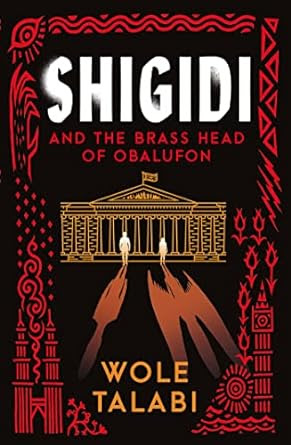
His novelette A Dream Of Electric Mothers was shortlisted for the most prestigious awards in genre fiction, garnering nods from the Hugo Awards, the Nebula Awards, the Locus Awards, and the Sidewise Awards. His first novel Shigidi and the Brass Head of Obufalon hit shelves in August. His story ‘Blowout’ in Analog is receiving excellent reviews. And Daw Books is publishing a collection of his short works Convergence Problems, which should reach readers early in 2024.

“One can never predict such things – or even the timing for certain stories being published,” Talabi says, speaking to us from his office in Malaysia. “Shigidi was initially planned for 2022 but delayed. So it seems that things conspired to make 2023 the year that it has been.”

He adds that this annus mirabilis is part of a larger trend towards a version of science fiction and fantasy fandom that is less focused on works from North America and Europe.

“These stories have always been there,” Talabi reminds us. “African authors have been writing science fiction and fantasy for a long time. We’ve been reading global science fiction and fantasy for a long time. We just weren’t included.”

In part, he credits the success of the movie Black Panther for helping prove to publishers and studios that the public has an appetite for fantastic stories inspired by African cultures.

“But there’s also been grassroots campaigns from people across the continent,” Talabi says. “The African Speculative Fiction Society has been doing a lot to get African authors seen as part of the global science fiction and fantasy writing community.”

Talabi’s novelette A Dream of Electric Mothers was published in Africa Risen (edited by Sheree Renée Thomas, Oghenechovwe Donald Ekpeki, and Zelda Knight), which was one of the first anthologies published by a North American publisher focusing on science fiction and fantasy from African authors. He says the public response to the novelette — which explores identity, memory, and culture through artificial intelligence in an alternate history setting — has been gratifying.
The brass head of Obulafon is a
Nigerian artefact from the1300s
that was taken by the British
Museum in 1938.
(Image via SmartHistory)


“Some people have messaged me to ask if it’s a far-future science fiction story, and I enjoy telling them that it isn’t. It’s an alternate history story,” Talabi says. “I don’t make that obvious because the story uses the traditional Yoruba calendar, not the Gregorian calendar. It actually takes place in an alternate 2021 in a timeline where essentially European colonization of Africa never happened and they formed an intellectual partnership instead … that’s why it seems like a far-future story. Because we’ve made more progress by not fighting.”

Talabi became interested in science fiction at a young age. His father Kola, who was also a chemical engineer, had a large collection of books that included titles by authors from all over the globe. As a youth, Talabi read voraciously, and discussed the books with his father.

“There were hundreds of books on the bookshelf in our house,” Talabi says. “I would just grab one of them and read it. We had a second-hand book store  it was just a guy who would come around with a bag of books and he would put them on the street  some of the books no longer had their covers attached, so I didn’t always know the name of the book that I had just read.”

Over the past decade, Talabi’s output has ranged from hopeful alternate history to singularitarian speculation to anthropological first contact stories. But he was probably best-known for his thought-provoking consideration of artificial intelligence. From this perspective, a rollicking urban fantasy heist novel might seem like a departure.

In the few weeks since its release, Shigidi and the Brass Head of Obalufon has received a starred review in Publisher’s Weekly that described it as a rollicking thrill ride, and has been praised by Gary K. Wolfe as “terrifically entertaining.” It is a tightly plotted novel written with a deft touch, sitting somewhere between Neil Gaiman’s elegiac deconstruction of myths and Ian Fleming’s hard-edged action.
Cinematic and action-packed,
Wole Talabi's debut novel
packs history and philosophy
into a thoughtful and fun novel.
Highly recommended.
(Image via Amazon)

According to traditional Yoruba culture, Shigidi is a god of nightmares. He’s a minor god, usually thought of as small and ugly, and represented by small mud figures that are kept in homes to help ward off bad dreams or to send them to enemies.

“When I read about Shigidi, I found this fascinating. This small tiny creature that’s meant to be a god and just sits in peoples’ houses either waiting to catch nightmares, or to send them,” Talabi says. “For a long time I kept thinking ‘That sounds like a terrible job … could he even be happy?”

Talabi reimagines the Yoruba pantheon as a bureaucratic corporation trading in belief and faith, with minor gods serving as minor functionaries or middle managers. After having taken an early semi-retirement, Shigidi gets strong armed into conducting a heist to repatriate an artefact from the British Museum along with his succubus partner Nneoma. It's worth noting that the titular Obalufon is an important 13th-Century historical figure who ruled the Ife Empire in what is now Nigeria. The artefact – an exquisitely crafted brass head depicting the ruler – was found in Ife in 1938, and acquired by the museum under questionable circumstances.

“Obalufon’s story is one of the main drivers for why one of the elder gods in the Yoruba pantheon wants that heist to take place,” Talabi says. “In traditional Yoruba culture, a lot of the gods are believed to have been kings that became deified when they died. Obalufon is actually a god.”

The protagonists of Shigidi and the Brass Head of Obufalon made their first appearance in Talabi’s 2016 novelette I, Shigidi which appeared in Abyss & Apex Magazine. The characters make a few other appearances in Talabi’s short fiction, including Saturday’s Song, which appeared in Lightspeed Magazine.

“There’s definitely room for at least one more novel for these characters,” Talabi notes. “Though I don’t know for sure if that will happen.”

A chemical engineer by profession, Talabi’s day job involves working on software that simulates complex fluid dynamic systems, many of which pertain to the energy sector, which to an increasing degree involves renewables and carbon capture projects.

“In devising the overall structure and plot of many stories, I approach it like I am approaching something I need to figure out as an engineer,” he says. “The title of my upcoming collection Convergence Problems comes from this. [Convergence problems] are the challenges you encounter on your way to resolving something, versus challenges you encounter when you’re trying to run a simulation. You just need to figure out where the problem is coming from so you can resolve it in the story.”

In November, an anthology he edited for Android Press will hit the shelves and ebook platforms. Mothersound: The Sauútiverse Anthology features works from Oghenechovwe Donald Ekpeki, Eugen Bacon, Tobias S. Buckell, Cheryl S. Ntumy, and others, who have worked together to build a shared universe.

“We’ve been working on it since last year. Collaborating to flesh out the magic systems, the technology, culture… we call it an African inspired secondary world,” Talabi explains. “We tried to build in as much African culture and philosophy from all parts of the continent, because we have authors from all parts of the continent who are contributing.”

Talabi has no intentions of slowing down. On top of several short works, Talabi is working on a science fiction novel that he hopes might reach readers’ hands in the next couple of years.


Sunday, 13 August 2023

The Numbers Game

Over the past decade, there has been a regularly recurring argument about the maximum number of individual contributors that can be listed for each group finalist on the Hugo ballot. This is more common with fan categories like fanzine, fancast, and semiprozine — in recent years some of the contributors lists for an individual publication have extended to several dozen names.
In 1959, editors of Cry of the Nameless
— F. M. Busby, Elinor Busby,
Burnett Toskey and Wally Weber —
became the first team of more than three
credited for a single Hugo finalist. 
(Cry of the Nameless April 1958 cover
via Fanac.org)


On one side of the argument are those who express logistical concerns about the size of the ballot. On the other side are those who want to ensure that everyone who contributed to the success of a work or publication are given nomination-level credit for their work.

The reason this argument is recurring is because the current WSFS constitution does not offer clear answers about the number of names that can be officially listed. Adding to the confusion, this question has been adjudicated differently from year to year. In 2013, up to nine people were listed per Hugo group finalist … but two years later the number was capped at five. In 2022, there was no upper limit on the number of names credited per group finalist … but this year it was capped at seven.

Since each Worldcon appoints a different Hugo Award Administrator and the decision is within their purview, it has been decided differently each year. There is also no public-facing document that explains the rationale for a limit of exactly seven this year, which makes the number seem arbitrary to observers.

The inconsistent nature of these decisions is concerning, as it calls into question the fairness of the awards process.

We would suggest inserting clarifying language into the WSFS constitution (possibly as Section 3.2.13). This clause could either provide guidance as to a maximum number of contributors per group finalist, could offer clarity about what level of involvement warrants an individual being listed as a contributor, or could state that there is no limit.

Hugo Award administration is a difficult and complex role, and we have a lot of respect for the dedicated volunteers who have taken it on over the years. We would suggest that having clarity in the WSFS constitution on this point would make this aspect of their work easier.

There is a long tradition of recognizing several individuals for a Hugo-shortlisted work; as far back as 1959, the fanzine Cry of the Nameless listed four editors on the ballot. All six members of Monty Python were credited for The Holy Grail in 1976. In 2009, the Hugo ballot credited nine individual contributors for the movie Iron Man.

The conflict over the number of credited contributors seems to have arisen in about 2013, with larger and more complicated fan publications trying to ensure that everyone involved got to call themselves a Hugo Finalist. Given that those participating in these projects are often rewarded with little other than recognition, excluding individual contributors from the “limelight” is often felt keenly.
Questions have been raised over the capacity
of the pre-ceremony Hugo Awards reception.
(Photo by Cora Buhlert via File 770)


Those advocating for a more expansive approach to contributors’ lists make a colourable argument that it is often marginalized voices who get omitted from lists of contributors when limits are imposed. Having a maximum number of names per publication will possibly have a detrimental effect on creators who are non-male, who are non-American, and who are racialized.

Those advocating for a more restrictive set of rules point out that the pre-Hugo reception already has capacity issues and logistical constraints. They also suggest that if everyone gets called a “Hugo finalist,” then the status becomes devalued. In addition, the distribution of perks to Hugo finalists, such as the rocketship pins, etc., increase costs on Worldcons.

Both of these positions have merit, and neither should be dismissed out of hand. But the debate should take place in the appropriate forum. The WSFS membership on whose behalf these awards are presented deserve a say in this matter, and the way to do this is to allow both sides to make their case at a business meeting.

The Hugo Awards aren’t the only organization that has had to confront similar issues. As major Hollywood productions became more financially complex in the 1990s, the Oscars had to wrestle with how many producers could be credited for a single Best Picture. After a record-breaking five-producer movie won Best Picture winner in 1999, the Academy imposed a two-producer limit.

What should be noted, however, is that this limit was voted on by the Academy’s Board of Governors, was communicated clearly and well in advance, and was not changed arbitrarily.

Rather than having this argument play out every year over social media and through strongly-worded letters of complaint, there should be an opportunity to discuss and debate a solution at the next Worldcon.

Recognition at the Hugos should follow consistent rules that have buy-in from the community at large.

Wednesday, 26 July 2023

Hugo Packet Translated

The editors of this fanzine are grateful for the Hugo nomination, and have had our best articles of 2022 translated into Mandarin so they are accessible to Chinese fans at this year's Worldcon. Translation was done by freelance translator Zoë C. Ma.

本杂志编撰团队感谢雨果奖提名,并借此机会挑选了2022年度若干得意之作翻译成中文,以飨参加本年度世界科幻大会的中国友人。译者:Zoë C. Ma