Showing posts with label Hugo History. Show all posts

Friday, 14 July 2023

Trivia is Latin for "Three Roads"

One of the ongoing projects of this blog has been to compile fun facts about Hugo Award finalists. To date, we’ve been publishing trivial tidbits mostly on Twitter, but recent developments indicate that it’s worth sharing them here as well.

Isaac Asimov collected trivial facts, and even 
published a book of trivia. 
(Photo by Jay Kay Klein via Calisphere)
As such, we’re going to start posting trivia about Hugo Awards on the blog.

A couple of quick notes:
  • There are eight authors who were Hugo finalists for whom we have no biographical information. These include some who publish under pseudonyms like “Juan Tabo” or “Chuck Tingle,” as well as some recent finalists such as Ren Qing and Simone Heller.
  • We do not compile data about ethnicity because it is often not possible to know how individual authors self-identify, and it would be inappropriate to make assumptions.

International Hugos:
  • The 2023 Hugo Award shortlist in the five prose categories (novel, novella, novelette, short story, and series) includes authors who were born in nine different countries: the USA, Canada, the United Kingdom, China, Japan, Mexico, Nigeria, Taiwan, and New Zealand. By this measure, it is the most international Hugo Award shortlist ever.
  • The previous record for the most international Hugo Award shortlist in the five prose categories was 2022, when authors born in six different countries had works on the ballot: the United States, Canada, Australia, Japan, the United Kingdom, and Nigeria.
  • In the first 40 years of the Hugo Awards combined (1953 to 1992), the Hugo ballot included works from authors born in only eight different countries: the USA, Canada, the United Kingdom, Angola, Germany, Russia, Thailand, and France.

Sibling Rivalry:

  • There are three pairs of siblings in which each has separately been on the Hugo Award shortlist (I.E. they are not credited as collaborating on the same Hugo-finalist work.)
    • 1953 Best Editor finalist H.L. Gold was the brother of 1956 Best Book Reviewer finalist Floyd C. Gale.
      Hugo-finalist editor H.L. Gold
      (image via Wikipedia)
    • Seven-time prose fiction Hugo finalist C.J. Cherryh is the sister of 11-time professional artist Hugo finalist David A. Cherry.
    • 1972 Best Dramatic Presentation Hugo finalist Steven Spielberg is the brother of 1989 Best Dramatic Presentation Hugo finalist Anne Spielberg.

The 10 Hugo Nominations Club:
  • There are only 25 authors who have authored at least 10 works that were finalists for a Hugo Award in one of the prose fiction categories (novel, novella, novelette, short story, and series).
  • The youngest author to do so was George R.R. Martin, who was 14 days shy of his 34th birthday in 1982 when he had “Guardians” on the ballot.
  • Interesting to note that Martin only narrowly beat the record set by John Varley the year previous; Varley was only two days shy of his 34th birthday when he had his 10th appearance on the Hugo ballot in 1981.


The 20 Hugo Nominations Club:
  • Only six authors have each written 20 works that were shortlisted for a Hugo Award in one of the prose categories:
    • Mike Resnick (30 Hugo-shortlisted works),
    • Connie Willis (24 Hugo-shortlisted works),
    • Seanan McGuire (24 Hugo-shortlisted works),
    • Robert Silverberg (22 Hugo-shortlisted works),
    • Michael Swanwick (21 Hugo-shortlisted works), and
    • Ursula K. LeGuin (20 Hugo-shortlisted works)
  • Of these six, the youngest to do so was Seanan McGuire, who was 44 years and eight months old when she reached the 20-Hugo-nominations mark in 2022.
The Hugo Hat Trick:
  • There are only three authors who have won a Hugo Award in each of the four long-established prose fiction categories (novel, novella, novelette, and short story). They are Fritz Leiber, Ursula K. Le Guin, and Connie Willis.
  • Connie Willis was the youngest person to accomplish this when she won her third and fourth Hugo Awards at the age of 47 in 1993. Interestingly, her first four Hugo wins were each in different categories.

Span of time between Hugo Awards:
  • The longest period between first time shortlisted for a Hugo Award in the five prose categories (novel, novella, novelette, short story, or series), and most recent belongs to George R.R. Martin. Thirty-eight years passed between his first Hugo nomination (With Morning Comes Mistfall in 1974) and his most recent (A Dance With Dragons in 2012).
  • Isaac Asimov has the second-longest period between first and last prose Hugo nod, having gone 36 years between his first nomination (The End of Eternity in 1956) and his last (Gold in 1992).
  • James White waited the longest time between two Hugo nominations with none in the intervening years. He was on the shortlist in 1962 and had to wait 15 years to appear on the ballot again in 1977, and had to wait another 20 years for his third and final appearance on the ballot in 1997.
The Longest And Shortest Titles:
  • The Hugo-Award-winning work of prose fiction (novel, novella, novelette, short story or series) with the longest title is “A Witch’s Guide to Escape: A Practical Compendium of Portal Fantasies” by Alix E. Harrow at a length of 69 characters.
  • If one excludes parentheticals or subtitles, the longest is “The Beast That Shouted Love at the Heart of the World” by Harlan Ellison, though that is a comparatively svelte 53 characters long.
  • The Hugo Award-shortlisted work of prose fiction with the longest title is the 84-character behemoth “Ten Excerpts from an Annotated Bibliography on the Cannibal Women of Ratnabar Island” by Nibedita Sen.
  • There have been seven Hugo-shortlisted works with three-letter titles: Kin by Bruce McAllister, Jem by Frederick Pohl, TAP by Greg Egan, Rat by James Patrick, ARM by Larry Niven, Sky by R.A. Lafferty, and Sur by Ursula K. LeGuin.

The Ages Of Editors:
  • The oldest finalist for a best editor Hugo Award was Jerry Pournelle, who was 82 years and eight months old when he was on the ballot in 2016.
  • The youngest finalist for a best editor Hugo Award was Liz Gorinsky, who was just shy of her 29th birthday when she was on the ballot for the first time in 2010.
  • The youngest non-American finalist for a best editor Hugo Award was Oghenechovwe Donald Ekpeki who was 31 when he was a finalist for the first time.
The Power of Nouns
  • Excluding determiners, pronouns and prepositions, the most popular words in Hugo-finalist fiction titles is the word “time.” Thirty-three Hugo finalist works of fiction mention “time” in their title.
  • The word “man” comes in a close second, with 31 titles.
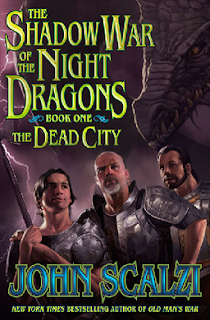
  • By comparison, the word “war” only appears in 11 titles, “dragon” in only 16, “night” in only 17, and “shadow” in only 7.
    (Image via Wikipedia)
  • Most popular planets of the solar system to visit in science fiction? Mercury, Pluto, Jupiter, or Uranus are not named in the titles of any prose-category Hugo finalists. Two Hugo finalists mention Neptune in the title, two more mention Saturn. Only one mentions Venus. Six mention the Moon. Eight works have titles that list the Earth. But Mars is the destination of choice, with 11 Hugo-finalist works referencing the Red Planet in their titles.

If you are interested in us figuring out any other interesting Hugo Awards trivia, please let us know in the comments.

Tuesday, 15 November 2022

Battle of the Vonneguts - Hugo Cinema 1973

This blog post is the sixteenth in a series examining past winners of the Best Dramatic Presentation Hugo Award. An introductory blog post is here.

The hotel’s aging air conditioning system wheezed and struggled as the temperatures soared above 100F (30C) outside the Royal York in Toronto in the beginning of September, 1973.

Almost three thousand fans had made their way to Canada’s largest city for the 31st World Science Fiction Convention; a crowd that far eclipsed any previous Worldcon.
The CN tower under construction in 1973
The stump of the CN Tower in August, 1973 as
seen from near the Worldcon convention hotel.
(Image via CBC)


Looming over the proceedings was “the stump” of the CN Tower. The first few hundred meters of what would one day be the tallest building on the planet was slowly reaching to the sky a few blocks from the convention.

In a frescoed ballroom where Queen Elizabeth II had danced only a few short weeks prior to the Worldcon during her tour of Canada, two thousand fans (two thirds of the convention) squeezed in to catch an early glimpse of a highly-anticipated new animated Star Trek series for which associate producer Dorothy Fontana had brought an advance copy.

Dramatic presentations themselves clearly held an appeal to Hugo voters, though the award itself remained somewhat scorned. At that year’s ceremony, Best Dramatic Presentation seemed somewhat of an afterthought. Which is a shame, as it was a fairly good year for science fiction and fantasy cinema. Even the worst entry on the ballot was generally tolerable.

Unusually, two movies shared at least some of the same source material; both the mainstream hit Slaughterhouse Five and the ultra-low-budget Between Time and Timbuktu are based in whole or in part on Kurt Vonnegut’s 1969 bestseller (also Slaughterhouse Five, though to be fair the latter uses very little of the novel). Despite this unique circumstance, it appears that neither Vonnegut nor anyone involved with either production was in attendance for the Hugo Awards ceremony.
Slaughterhouse Five is a beloved adaptation of 
Kurt Vonnegut's most famous work, but in some
ways it has aged poorly, particularly in terms of sexism.
(Image via Guardian.co.uk)


In fact, nobody from any of the finalist Dramatic Presentations were in attendance. Not The People author Zenna Henderson, not Silent Running script writer Steven Bochco, not even Silent Running director Douglas Trumbull who spent that week at the CFTO-TV Studios in Scarborough, barely 15 miles from the Worldcon.

In what may be one of the most eccentric selections in Hugo Award history, voters selected the television movie Between Time and Timbuktu. It is a chaotic and ultimately disappointing PBS television movie that stitches together various scenarios from essentially every major Vonnegut work up to that point including Cat’s Cradle, Harrison Bergeron, Happy Birthday, Wanda June, God Bless You, Mr. Rosewater, The Sirens of Titan, Welcome to the Monkeyhouse, and Slaughterhouse Five.

The overarching plot is that Stoney Stephenson (William Hickey) — a poet in modern-day America — wins a contest to travel into space, and on that trip he gets thrown into a dozen different parallel realities. In each of these realities, the viewer gets a brief glimpse of a better and more coherent movie that might have been.

Between Time and Timbuktu might be an obtuse and often irritating movie, but one has to admire the fannish exuberance that must have led a group of public broadcasting employees to create this. It’s clearly made by people who love every word typed by Kurt Vonnegut Jr., but who have no budget to bring those words to life, and no discipline to bring coherence to the script.

A more successful Vonnegut adaptation is Slaughterhouse Five, based on the author’s semi-autobiographical anti-war novel that was shortlisted for the Hugo in 1970. Told in non-linear order, the movie chronicles Billy Pilgrim as he slips forwards and backwards in time to experiences in the fire bombing of Dresden, to his marriage and suburban post-war life, to his abduction by aliens in the 1960s. It’s a piece of speculative fiction that was important in its day, and it’s difficult to complain too bitterly about the fact that the movie won the Hugo Award; at least two members of our cinema club hold it in some reverence.

Non-linear storytelling is especially difficult in cinema, so the fact that director George Roy Hill manages to make it both comprehensible and engaging is commendable. Michael Sacks brings an abiding humanity to the lead role. Miroslav Ondříček’s cinematography is painterly and draws in the eye. And the soundtrack by Glenn Gould is extraordinary.

But in many ways, the film version of Slaughterhouse Five has aged poorly; the depiction of women is demeaning and unpleasant to watch. Most of all, the fat shaming of Billy Pilgrim’s wife, and Pilgrim getting ‘rewarded’ with a young woman upon his wife’s demise, are beyond objectionable.

Based on the short stories by Zenna Henderson, The People was the ABC TV movie of the week on January 22, 1972. It’s a somewhat ham-handed production about a school teacher (played by Kim Darby) who is sent to what appears to be an anabaptist community that eschews technology. Over the course of the movie, she discovers that the residents are in fact telepathic aliens who fled the destruction of their planet. The conflict in the story — such as it is — involves tension within the alien society about whether or not to continue hiding their true selves. William Shatner’s role as the community doctor is one of his least Shatnery performances, but it’s also among his least memorable. This is probably the weakest finalist of that year.

Silent Running is an innovative and oddball
classic that provides memorable characters
both human and robot. To be blunt, it rules.
(Image via IMDB) 
Of this shortlist, most of our cinema club would have voted for Silent Running. The directorial debut of special effects wizard Douglas Trumbull is a slow, weird little movie about Freeman Lowell (Bruce Dern), an ecologist on a spaceship who is tasked with preserving the planet’s last-remaining forests that have been launched into orbit for safekeeping. It’s a fairly flimsy set up, but it provides compelling drama based around moral dilemmas that occur when politicians order Lowell and his crewmates to scuttle the ship. There’s some grey area in these questions; is it appropriate for Lowell to murder his crewmates to preserve the lives of trees and wild animals? Is Lowell correct to disobey unjust orders in the first place?

The movie’s helper robots Huey, Dewey, and Louie, are among the most memorable robots in all of science fiction cinema; as actors Mark Persons, Steven Brown and Cheryl Sparks manage to imbue them with a subtle empathy and dignity.

Trumbull’s filmmaking is technically excellent, both on the interior shots, and the special effects. Compounded with good performances and an absolutely killer Joan Baez soundtrack, Silent Running is a movie that looks better with each passing year.

But there is one omission from the shortlist that is somewhat galling. One science fiction movie in 1972 towers above all the others: Andrei Tarkovsky’s Solaris. Based on a novel by Polish author Stanisław Lem, the movie follows Kris Kelvin, a psychologist sent to investigate occurrences on a remote research station orbiting a planet that is the movie’s namesake. When he arrives on the station, he discovers that one of the three scientists posted there has died, and the other two are in turmoil. The movie slowly reveals that the planet they’re orbiting is alive, and is sending manifestations to the station, possibly in an attempt to understand humans.
Solaris was well-known to SFF fans
in the 1970s, but somehow it didn't
ever appear on a Hugo award ballot.
(Image via IMDB)

Many have argued that Solaris is one of the finest pieces of science fiction ever brought to the screen, so its complete absence from the Hugo ballot is somewhat baffling. It won awards at Cannes and at the Chicago International Film Festival. It was contemporaneously reviewed in Fanzines such as Norstrilian News and Zimri. Brian Aldis suggests that “it bids fair to stand as the best science fiction film so far.”

The movie is filled with nuance and emotional interiority, as layers of the characters are revealed through their pasts, through the psychological turmoil that the planet’s manifestations cause them, and through the difficult decisions they must make. There’s also an interesting tension between the protagonist’s rationalist worldview, and his desire to believe his deceased wife has been returned to him. It’s a compelling piece of cinema, and should have been a frontrunner for a Hugo Award in any year it was eligible.

The Hugo Award for Best Dramatic Presentation in 1973 had one of the more credible winners, and one of the better shortlists to date. But the omission of Solaris brings the whole enterprise of recognizing the “best” science fiction cinema into question.

Friday, 17 June 2022

One Giant Leap Backwards For Science Fiction On Screen

This blog post is the thirteenth in a series examining past winners of the Best Dramatic Presentation Hugo Award. An introductory blog post is here.  

“The dramatic Hugo is the least satisfactory category under today's reality.” - Harry Warner, Jr., 1970

“I didn’t see anything worth giving it to.” - Buck Coulson on Best Dramatic Presentation 1970

To say that the fictional works on the shortlist for the Best Dramatic Presentation Hugo in 1970 was a step backwards would be an understatement.

On first glance, the shortlist seems like an aberration, comprising such unloved and unmemorable works as Marooned, The Bedsitting Room, Illustrated Man, and The Immortal. Watching these movies, we wondered what Hugo voters could have been thinking in nominating them. 
Hugo finalist dramatic presentation Marooned has
the unique distinction of being the only Academy
Award winner to be lampooned on MST3K.
(Image via IMDB)


But the more we looked at cinema from that year, the more we realized that Hugo voters had done as good a job as possible in selecting the shortlist, considering that the eligible films for those Hugos (movies released in 1969) included such celebrated works as Journey to the Far Side of the Sun, Moon Zero Two, Night of the Bloody Apes and The Curious Dr. Humpp.

Reality had overtaken screen SFF. The decision to honour news footage rather than fiction (a decision we had initially questioned) seems rather brilliant in the context of the rest of the shortlist and the state of science fiction cinema. 

The nomination process wasn’t helped by a moral panic among a recalcitrant conservative faction of fandom. With the site selection vote having given the 1970 Worldcon to Heidelberg, West Germany, there were fears that the Hugos would be taken away from the English-speaking West, that the United States might never have another Worldcon, and that the Best Novel shortlist would be comprised of nothing but Perry Rhodan books. Members of the 1969 WSFS business meeting passed several motions trying to prevent this speculative calamity, including provisions that put restrictions on the language that the Hugo finalist could be published in (spoiler: English only).

Thankfully, fandom has moved beyond this type of knee-jerk panic. There’s no object lesson to be learned from what happened in 1970, and none of these events are at all relevant to anything going on in Worldcon fandom in 2023.

This change meant that in 1970, the Japanese action movie Latitude Zero and the Italian-French comedy Hibernatus were ineligible. Although neither movie is a classic, either one would have been a more interesting finalist than most of the works on the shortlist.

Of the films that did make the shortlist, the most serious is the high-budget Marooned, a Martin Caidin-penned tale of three American astronauts dealing with technical problems during a NASA mission. Although the movie has high-wattage star power featuring (among others) Gregory Peck and Gene Hackman, it is astonishingly dull and monotonous.

There are a few redeeming moments in Marooned; the heroic role of Russian cosmonauts and the international cooperation depicted is certainly refreshing for the era. And there is an excellent taut sequence in which one of the astronauts is asked to sacrifice himself to save oxygen for the rest of the crew. But overall, it is an astonishingly dreary movie to endure.

It’s interesting that Marooned and 2001: A Space Odyssey were filmed on comparable budgets at approximately the same time. Although it won an Academy Award for special effects, Marooned seems cheap and shoddy by comparison to Kubrik’s masterpiece.

The Illustrated Man, based on Bradbury’s collection of stories, is mediocre in more perplexing ways. Much like the collection it’s based on, the movie uses a man’s tattoos as a narrative framework to tell various stories, including Bradbury’s “The Veldt,” “The Long Rain,” and “The Last Night of the World.”

While any of these stories could have been adapted into serviceable episodes of The Twilight Zone, they don’t work well when combined into one overarching narrative. Compounding this tonal mismatch is leaden dialogue and hammy acting.

The most controversial of the shortlist for us turned out to be The Bedsitting Room, a frankly bizarre post-apocalyptic comedy set in the ruins of London in the wake of a nuclear war. Based on a stage play by Goon Show legend Spike Milligan, the movie rambles between the 20 or so survivors of the atomic fires as they go about their daily lives and come into incredibly petty conflicts and surreal misadventures.

The Bedsitting Room is elevated by an exceedingly strong cast including Dudley Moore, Rita Tushingham, Peter Cook, and Marty Feldman (in his film debut).
In the bright cold air, you seemed as innocent
and fair as Rita Tushingham in 1969.
(Image via IMDB)

Very little in the movie makes sense, whether it’s an elderly woman spontaneously turning into a piece of furniture, an aquatic bishop swimming up from a lake to perform a forced marriage, or the cast being listed in the credits by order of height. While those of us with strong cultural ties to the United Kingdom found some of these moments funny, overall it was a difficult movie to appreciate.

The nearly forgotten and short-lived television series The Immortal may have been the strongest fictional work on the ballot in 1970.

The show is a story about Ben Richards, a race car driver whose genetics render him impervious to disease and likely to live an extended lifespan. The show puts him in conflict with a billionaire who wants to kidnap him and harvest his blood. Much like Richard Kimble, The Incredible Hulk, or Johnny Bago, the series follows the protagonist as he flees across the country.

The Immortal — which didn’t even last a full season — wasn’t great. They took a decent novel by James E. Gunn, sanded the rough edges off it and made it safe and generic television. However, the fact that most of our cinema club would have put it on the top of our ballots is an indictment of the quality of screen SFF that year.

Produced by Universal's famous "factory" model
of television storytelling, the Immortal is remarkably
similar to many of the studio's shows. 
(Image via ComfortTV)
In light of the year’s fiction in this category, the selection of news footage from Apollo XI as the winner for Best Dramatic Presentation looks rather inspired. Certainly the special effects were extraordinarily realistic (given that they were real), viewers were emotionally engaged by the memorable characters such as Buzz Aldrin, and Neil Armstrong, and the work did provide some of the most quotable dialogue in dramatic presentation history (who could ever forget lines like “One Giant Leap For Mankind”?).

The news footage is interesting, but needed an editor to tighten it down to a shorter run time and to provide context. Rather than going back and watching the original news footage, we would recommend watching the spectacular IMAX documentary Apollo 11. The event and the documentation holds up remarkably well 53 years later.

There was at least one major omission from the Hugo Awards ballot: Destroy All Monsters. The ninth, and arguably most bonkers, of Ishirō Honda’s Godzilla movies brings together kaiju from all previous entries in the series. This is the Avengers: Endgame of the GCU (Godzilla Cinematic Universe.) It is likely that among our viewing group, this would have been the top pick amongst actual movies and TV shows that year. Likewise, it's possible that one of the late episodes of Star Trek such as "All Our Yesterdays" might have warranted an inclusion … though even this might be a stretch. 

After several years in which Hugo nominators had an embarrassment of riches to choose from, the well had gone suddenly dry, and there was little top tier science fiction on screen.

It still feels weird to honour real history in a category that has otherwise been exclusively dedicated to fiction, but if not for Apollo XI, this might have been the first year that we suggested a No Award result. 

Friday, 11 March 2022

The Hugo For Best Star Trek: Hugo Cinema 1968

This blog post is the eleventh in a series examining past winners of the Best Dramatic Presentation Hugo Award. An introductory blog post is here.  


Star Trek’s dominance of the 1968 Hugo Award Best Dramatic Presentation shortlist is as much a reflection of the quality of the show’s first and second seasons (episodes from each were eligible), as it is evidence that it was an off-year for most science fiction on screen.

As noted by contemporaneous fan writers such as Ted White and Brian Aldiss, there were an extraordinary number of exceptionally terrible science fiction films in the theatres in the preceding year:
Star Trek faced weak competition
for the Hugo Award in 1968.
(Image via Vintage Movie Posters)

exploitation flicks like Voyage to the Planet of Prehistoric Women, broad comedies like Don Knotts’ The Reluctant Astronaut, and cheaply made filler like Journey To The Centre of Time. Most of the televised science fiction was sub-par, though Doctor Who’s Second Doctor had three of his best stories with “Tomb of the Cybermen,” “The Moonbase,” and “The Web of Fear.”

In terms of foreign-language cinema, there’s few stand outs. If it weren’t for Star Trek, would Best Dramatic Presentation have recognized something like Late August In The Hotel Ozone?

While some pundits decried the fact that the entire shortlist for the 1968 Dramatic Presentation Hugo was made up of Star Trek episodes, none could offer credible alternatives to Roddenberry’s show.

“Non-Star-Trek fanciers may be annoyed to see five Star Trek episodes and nothing else on the ballot, but I’m happy enough,” Juanita Coulson wrote in Yandro.

For the most part, it’s remarkable how well the shortlist holds up. It may all be Star Trek, but there is a remarkable diversity of science fiction stories that writers were able to tell within the confines of the show’s “wagon train to the stars” format.

Reimagining Moby Dick by way of Fred Saberhagen’s Berzerker stories, Norman Spinrad’s episode
"Doomsday Machine" stands
the test of time as a solid
character study of obsession
and loss. 
(Image via StarTrek.com)

“Doomsday Machine” is a terrific adventure story that combines big science fiction ideas with memorable character moments. William Windom as Commodore Matt Decker is one of the all-time great guest appearances on Star Trek.

On the other end of the spectrum, “The Trouble With Tribbles” is a more lighthearted episode about an agricultural shipment, a grain-eating pest, and Cold War tensions. The dialogue in the episode is memorably sharp with quippy lines like “hauled away as garbage,” “a very little joke,” and “an ermine violin.” Some contemporaneous fans complained that the tone was too unserious, but with the benefit of hindsight, the episode holds up well.

To us, a more questionable inclusion was the Season 2 premiere “Amok Time,” a weird melodramatic episode about Spock’s return to his home planet of Vulcan. For those who haven’t seen it recently, it’s a buck-wild bit of ritual combat between Spock and Kirk as they are forced to fight over a woman. The “woman as a prize” theme should have been unacceptable in the 1960s, and certainly doesn’t hold up well today, the writing is mostly quite flat, and the depiction of Vulcans as a mystical culture that uses gongs excessively could be read as having some ugly coded subtext. This is one of the worst episodes for Kirk as a character; it’s unsettling to watch Kirk pressuring a subordinate to reveal personal info.

Although the ‘alternate universe’ episode has become a staple for most SFF TV shows, when Star Trek did
Kirk's visit to the darkest timeline
provided a template for all later
mirror universes on television.
(Image via StarTrek.com)

it with “Mirror Mirror,” the concept was still fresh. With the introduction of the concept to mass media television, they also hit a high water mark. The quality of Star Trek’s original cast shines through in this episode, as George Takei, Walter Koenig, and Leonard Nimoy all show why they would have been stars even if Trek had never made it to air. It must also be mentioned that guest star BarBara Luna is memorable as Lt. Marlena Moreau.

More has been written about the Hugo-winning episode, Harlan Ellison’s “City On The Edge of Forever,” than about probably any other single episode of televised science fiction. Given the weighty moral quandary (sacrificing love for the sake of history), and the solid character moments between the central trio of Spock, Kirk, and McCoy, the level of appreciation for the episode is understandable. What’s interesting is how quickly it was recognized as a classic, and immediately at the forefront of discussions of what should get the Hugo.

“City [on the Edge of Forever], which deservedly won the Hugo for best dramatic presentation, is probably the best drama, if not the best science fiction, ST has had to date, and I was happy to see it again” wrote Kay Anderson in her convention report.

What few complaints there were about a Star Trek-full category focused more on who had been left off the ballot; pundits such as Doug Lovenstem of the fanzine Arioch suggested that it was time for D.C. Fontana to win a Hugo Award (she would receive her only nomination 20 years later). Others noted the absence of “Devil in the Dark,” which is often regarded as one of Star Trek’s finest hours (and certainly better than “Amok Time”).

For our cinema club’s re-watch of these episodes, we’d all gone in expecting to agree with this consensus. But in the end, none of us were convinced that “City On The Edge of Forever” was the best episode; two of us preferred “Mirror Mirror,” one put “Doomsday Machine” at the top of their list, while another rated “Devil In The Dark” the most highly.

But at the 1968 Hugo Awards, two things were inescapable: Star Trek and Harlan Ellison. Five nominations to Star Trek, three to works penned by Ellison, and five to works that appeared in a publication edited by Ellison. In retrospect, this win seemed inevitable.

“The Hugos: Bjo doesn’t win. Dave Gerrold doesn’t win. Larry [Niven] doesn’t win. Harlan wins. There
The head table at the 1968 Hugo Awards banquet
Philip Jose Farmer, Betty Farmer, Harlan Ellison
(Image by Len & June Moffatt via Fanac.org)


is no justice in this world. I like Harlan, but there’s a limit to how many Hugos he should win,” Sandy Cohen wrote in Argus in October 1968. Ellison had ruffled his fair share of feathers throughout fandom, and it would eventually come to haunt him. But in 1968, Harlan Ellison was at the top of the SFF world, and probably his all-time most recognizable work took home the Best Dramatic Hugo.

The Best Dramatic Presentation shortlist in 1968 is a product of its time. It is likely that no SFF television show will ever have the impact that Star Trek did that year, and it is equally unlikely that there will be another year with as few viable contenders for the prize. (A clean sweep of nominations in the category has also been rendered impossible by rules changes).

In short: an odd year for the Hugos, but one where it’s difficult to argue too vehemently against the judgment of the fans.

Wednesday, 8 September 2021

How I Learned to Stop Worrying and Love the Bombastic Ego

This blog post is the eighth in a series examining past winners of the Best Dramatic Presentation Hugo Award. An introductory blog post is here.  

On September 19, 1964, Harlan Ellison invited a group of fans over to watch an episode of television
Although Harlan Ellison was denied a Hugo nod
for his Outer Limits episode "Soldier," it remains
an influential classic. In retrospect, its omission
from the Hugo ballot seems questionable.
(Image via UltimateActionMovies.com

he had written: The Outer Limits season premiere “Soldier.” Although Ellison had written a handful of television episodes in the preceding two years, only one of those had been science fiction (an episode of Voyage to the Bottom of the Sea that he’d regretted).

Ellison told his Los Angeles-based fandom peers that “Soldier” was a milestone in his quickly growing fame, and that it would advance the reputation of science fiction on television. It was an episode of which he was proud, and one that he would spend much of the year promoting to Hugo voters as being worthy of recognition.

“The tension from a high-pitched show (and a higher-pitched host) was terrific. And at the end I felt I had spent a valuable hour even though I’m not yet a TV-watcher,” Ron Ellik wrote in his fanzine Starspinke.

Although Ellison would later have a large collection of Hugos, in 1964-65 he had yet to receive even a single nomination, and was hungry for the recognition.

In the January 1965 progress report of that year’s Worldcon (which was to be held in London) the convention’s organizing committee announced that they would present Hugos in the categories that had been recognized at the previous year’s convention. And as it so happened, Best Dramatic Presentation had been omitted in 1964, due to a lack of interest.

So there was to be no Best Dramatic Presentation Hugo Award that year, and “Soldier” would be denied the nomination that Ellison believed he was due.

The young Harlan Ellison 
already had a reputation for
bombast and temper. 
(Image via ElpasoPost.com)
Well-known for his level head and cool demeanor, Ellison responded to the omission of this category with good grace. He contacted a number of fans across the Western United States, suggesting that the Worldcon be stripped of their right to hold the Hugo Awards, with the possibility that the awards would instead be handed out at a North American convention. He went so far as to call Worldcon chair Ella Parker at 5 a.m. one morning in late January, and told her that Ben Jason would not be sending the Hugo trophies to the UK convention (though this was easy to disprove, as Jason had quit being the manufacturer of the trophies two years previously).

“When [Harlan] did finally phone-me, I lost no time informing him of his colossal blunder and, in no uncertain terms, advised him to write a letter of apology,” Jason wrote.

Though he backed down from that attempt, Ellison was adamant that there should be a Hugo for Best Dramatic Presentation in 1965, and encouraged other fans to write in nominations for the category … with the apparent belief that if the category was being considered that year, his Outer Limits episode would be a shoe-in.

But the 1965 Hugo Awards operated under a unique set of rules that have not been used since; as per the convention committee, the shortlist was created via “nomination by a panel of experts, selecting from suggestions offered by the membership at large.” In practice, this meant that no matter how many voters included “Soldier” on their nominating ballot, the Hugo Committee could omit it if they so chose.

In the final tally, this nominating committee chose to include only two names on the shortlist for the
At least one fan believed that
Disney classic Mary Poppins
deserved to be on the Hugo
ballot. We're inclined to agree.
(Image via EW.com)

Best Dramatic Presentation category in 1965; the only instance in any Hugo category of a shortlist that brief. As recorded in fanzines, it is clear that there were at least some nominating ballots submitted for “Soldier,” for Mary Poppins, and for The Last Man On Earth. But the Hugo Committee determined either that there weren’t sufficient nominations for these, or that the works listed weren’t appropriate for the Hugos.

It is a puzzling decision, particularly in light of one of the works they did include: The Seven Faces of Dr. Lao. Glacially directed by George Pal, and starring lilly-white Tony Randall as the racially stereotyped title character, it was agreed by most of our cinema club to be among the worst works ever shortlisted for a Hugo Award in any category. To compound the movie’s abhorrent racism, the dialogue spoon feeds the audience a series of simplistic moralist messages delivered with acting that is exceptionally exaggerated and broad. This is a movie that drips with condescension for its audience. The question of why The Seven Faces of Dr. Lao ended up on the Hugo shortlist remains baffling to us and leaves us wondering what Ellison’s emotional reaction might have been.

Best Dramatic Presentation was the last award handed out on the evening of August 29, 1965. “And we have a remaining category, for Best Drama. It goes to Dr. Strangelove,” presenter Robert Silverberg said. “We do not have Dr. Strangelove himself here to accept the award, but we do have Peter George who wrote the novel on which the movie was based.” 

The extent of George’s acceptance speech (as far as we are aware, the shortest Hugo acceptance speech on record) was: “Thank you very much. This is lovely.”
Dr. Strangelove author Peter George
accepts a Hugo Award in 1965.
Sadly, the author died of a self-inflicted
gunshot wound within the year. 
(Image via Fanac.org)

Dr. Strangelove is only marginally science fictional; the only element of the movie that is clearly speculative is the doomsday weapon, although there had long been a tradition of nuclear war fiction without any speculative technologies being considered for the Hugo — The Long Loud Silence by Wilson Tucker had been the runner-up for the very first Hugo Award in 1953. Still, for at least one of our bloggers this deficit of clearly science fictional elements in Dr. Strangelove was enough to bring into question whether it should have been recognized at all.

The shortlist from 1965 was probably too short, as there were numerous works that year whose omissions are puzzling. Matheson’s classic I Am Legend had been adapted as The Last Man On Earth, an effective and moody Hammer Horror movie starring Vincent Price. Later remade as The Omega Man, the original version hews more closely to the novel than later adaptations, and features a superb performance from Franca Bettoia who imbues her vampire character with enormous humanity. The intense loneliness conveyed in the movie is a more moving form of horror than any of the jump scares of Will Smith’s later I Am Legend.

We might also suggest that the Hugo shortlist might have done well to find room to honour The Earth Dies Screaming; a quirky low-budget British movie about an alien invasion. Despite its low budget, the film’s robots and zombies are often an effective storytelling device as the tension ratchets up. It’s difficult not to note the more economical pace of this low-budget movie, and how tightly edited it is, in comparison to the high-budget but soporific Seven Faces of Dr. Lao.

Overall, it is hard to question the decision of Hugo voters that year; Dr. Strangelove despite its paucity of obvious science fictional elements was the right work to recognize. The decisions of the nominating committee are less transparent (how did this committee work? What did they leave off and why?). Though some of us might have preferred to see Ellison’s “Soldier” receive the honour, as it was a far more science fictional story, his bad behaviour may have prevented him from snagging his first Hugo in 1965.

Monday, 26 July 2021

Ignoring Foreign Films in 1964

This blog post is the seventh in a series examining past winners of the Best Dramatic Presentation Hugo Award. An introductory blog post is here.  

There was no Hugo Award for Best Dramatic Presentation in 1964.
Godzilla vs. King Kong remains
one of the most successful Japanese
movies of all time. Still didn't 
earn a Hugo Award nomination.
(Image via DenOfGeek)

As had happened in the previous several years, fans had been solicited for nominations in a variety of categories including Best Dramatic Presentation. But of the 165 people who sent in nominating ballots, fewer than a dozen people offered suggestions for what should be considered in this category.

In response to the extraordinarily low number of ballots cast in the Best Dramatic Presentation category in 1961, a paragraph was added to the WSFS constitution as Section 2.1: “At the discretion of an individual convention committee, if the lack of nominations or the final votes in a specific category shows a marked lack of interest in that category on the part of the voters, the Award in that category shall be cancelled for that year.”

And for the first time in 1964, this clause was invoked by the Worldcon Committee, who called the disappointing ballot count evidence of a “total lack of interest in the category.”

But we would suggest that this ‘lack of interest’ in 1964 reflects both that it was an exceedingly mediocre year for celluloid science fiction in North America, and that the Hugo Awards remained a largely parochial award that rarely recognized works made outside of the United States or the United Kingdom.

During a 40-year stretch from 1964-2003, no foreign films were shortlisted for the Hugo Award: no nominations for Stalker, Akira, Fantastic Planet, City of the Lost Children, Solaris, Planet Of The Vampires, or for Alphaville.

In terms of the 1964 Hugo Awards, it seems a travesty that the Chechoslovakian epic Ikarie XB-1
Ikarie XB-1 is among the best science fiction movies
ever made, and far ahead of its time on many fronts
including depiction of competent women astronauts.
(Image via JanusFilms.com)

didn’t get any recognition. Loosely based on Stanisław Lem’s The Magellanic Cloud, the movie chronicles the multi-year voyage of humanity’s first expedition to Alpha Centauri. The production design by Karel Lukás is among the most influential in the history of science fiction cinema, inspiring everyone from director Stanley Kubrik to designer Matt Jeffreys to architect Eero Aarnio.

The sets built by Lukás help bring to life one of the most mature and human-focused science fiction stories on screen that had been filmed to date. Although the story starts slowly, the filmmaker builds viewer’s emotional investment in the crew and their relationships, and the payoff is excellent because it makes later moments connect.

There are numerous details that we loved about Ikarie XB-1: The non-military international crew, the belief in science, the reaching out to new civilizations in peace and friendship, the fact that the crew has women in positions of authority, the moments of philosophical musing. Combined with the high production value and the technical expertise of the editing and filmmaking, this is a stone-cold classic of science fiction.

Another notable omission from Hugo contention in 1964 was The Mouse On The Moon, an odd
One of the many shots from Ikarie XB-1 that gets
compared to Kubrik's 2001.
(Image via JanusFilms.com)
science-fictional sequel to Peter Sellers’ surprise 1959 hit The Mouse That Roared. This was a great-looking movie despite being made on a shoestring budget with only one member of the original cast returning for a second movie. Notably, the recasting included future Doctor Who companion Bernard Cribbins, Terry Thomas who received a Golden Globe nomination for the movie, and Margaret Rutherford who would go on to win an Academy Award a few months later for her performance in The V.I.P.s.

This little-remembered sequel, which depicts the fictional European micronation Grand Fenwick using their terrible wine-making skills to develop a space program to rival the Soviets and Americans, is charming.

Given its then-unknown director, lack of resources, and insane plot, the movie has all the ingredients of a flop. But inventive reuse of props and sets from other productions, breakout performances from some then C-list actors, and first-rate cinematography made this one of the most surprisingly winsome science fiction movies of the year.
The Mouse On The Moon helped propel director
Richard Lester to a longstanding collaboration 
with The Beatles, directing multiple movies
with the various members of the band.
(Image via ParkCircusFilm.com)

The movie (along with his short film The Running, Jumping, Standing Still Film) helped Director Richard Lester earn the opportunity to direct The Beatles’ first movie A Hard Day’s Night.

Several more mainstream movies might also have merited some attention from the Worldcon voting membership: Roger Corman’s X: The Man With X-Ray Eyes is a well-done mad-science gone wrong parable whose narrative arc is not dissimilar from that of The Invisible Man. It’s among the best movies Corman has ever directed.

Likewise the 1963 cinematic adaptation of John Wyndam’s The Triffids is a competent and visually interesting film, though it excises the novel’s most interesting themes surrounding labour and colonialism. The result is mostly similar to a decent zombie movie.

On television, and in retrospect, the obvious major contender for a Hugo Award casts a very long shadow: the first season of Doctor Who. Revisiting these episodes with 50 years of hindsight is an eye-opening experience because within the first two serials (those that aired in 1963) you can see almost everything that made the show such an enduring classic: the sense of wonder, the dynamic between the Doctor and companions, and the engaging plots.

If we had been nominating in 1964, the serial we would have put on our ballots would be the second one The Daleks. Although that series introduced Doctor Who’s most enduring foes, the story has more in common with the 1960 movie The Time Machine than it does with later Dalek stories; the bifurcation of a race into a hideous violent species (Morlocks/Daleks) and a peaceful beautiful race (Eloi/Thals), the moralizing over the effects of global warfare. Made on less than a pittance of a budget, with barely two sets, the actors make extraordinary use of what little space they have to act.

In 1963, the best science fiction on screen was not coming from America: It was coming from Czechoslovakia, from Japan, and from England. If Hugo voters had been able to cast their nets a little more widely, they would have found some dramatic presentations worthy of a Hugo Award in 1964.

Monday, 26 April 2021

Zoning Out - The Hugo cinema of 1962

This blog post is the fifth in a series examining past winners of the Best Dramatic Presentation Hugo Award. An introductory blog post is here.  

At the 1962 Hugo Award ceremony, held at the Pick-Congress Hotel in Chicago, Illinois on Sunday,
The audience at the 1962 Hugo Award banquet
photo by Ben Jason, via Fanac.org.

September 2, the announcement that Twilight Zone had won Best Dramatic Presentation for a third time was greeted with mixed reactions. While many in the audience were fans of the series overall, there were suggestions that the show had declined in quality.

For the third year in a row, Rod Serling was not present to receive his Hugo Award, even though on the night of the ceremony, he was a relatively short drive (about five hours) away in Yellow Springs, Ohio, where he was guest lecturing at Antioch College. Lacking even a delegation of Los Angeles-based fans to accept the trophy, Toastmaster Bob Tucker instead handed a chrome rocketship to WSFS business meeting chair Martin Moore, Jr.

This snub of the Hugo Awards was symbolic to some fans, who had often complained that Hollywood didn’t take science fiction seriously. The dissatisfaction with the situation was compounded by questions raised about the eligibility of a series to win the award three years in a row; as the 1960 WSFS business meeting had discussed such a restriction.

The Twilight Zone was still capable of extraordinary highs; The Invaders, which features a solitary
When Twilight Zone is great,
it's great. But there's a reason
people remember The Invaders,
but forget Quality Of Mercy.
(Image via IMDB.com)

woman terrorized by tiny aliens, remains a favourite. It's A Good Life, in which a child with god-like powers terrorizes a town, may be the high point of the entire series. But more and more, the writers seemed to have fallen into a rut. Viewers had come to expect a surprise ending, and the writers only aim seemed to be delivering that twist and little else.

Serling's writerly preoccupations had begun to wear thin: nostalgia, aging, the civil war, and the misuse of magic powers. The series got repetitive. In March of 1961, Twilight Zone aired two different episodes that revolved around communicating across time using radio. By the time the dreadful civil war episode The Passerby aired in November, the series had already done at least two previous episodes where the main character was a ghost who didn’t know she was dead.

In retrospect, this is a perplexing shortlist for the Best Dramatic Presentation, with inclusions both interesting and questionable. Despite the fact that it’s a top-tier movie — one that several of us thought should have won the award in 1961 — Village Of The Damned should not have made a repeat appearance on the ballot.

The Two Worlds of Charlie Gordon, a television movie faithfully based on Daniel Keyes’ short story Flowers For Algernon, is an interesting choice. By the time the television adaptation aired, the story had achieved rare crossover success, earning the author a Hugo Award, as well as critical acclaim from the New York Times and Time Magazine.

This would be just the first of several dozen dramatic adaptations of the story; the 1969 movie was
Boris Karloff is just delightful as a host
of the NBC series Thriller
(Image via Wikipedia) 

Hugo-nominated, and earned Cliff Robertson (who reprised his role) an Academy Award. Two big-budget stage musicals were later produced, as well as two Japanese film adaptations, and eleven different radio damas. In 1980, Stirling Silliphant was hired to write a sequel called Charlie 2. But The Two Worlds of Charlie Gordon was the first of many.

For those unfamiliar with the story, it depicts experiments to increase the intelligence of a person with an intellectual disability. Although the experiments are initially successful, the protagonist Charlie Gordon then has to deal with a slow reversion to his pre-experiment abilities.

Performed live to air, this television production has a remarkable vitality to it. Several of the performances are terrific, including Cliff Robertson, who earned an Emmy nod for his sensitive and nuanced portrayal of the title character.

What is interesting to note is how many differences there are between this early version of the story and later retellings. Of these changes, Keyes would later write in his autobiography that his focus had always been on ensuring that the protagonist was not an object of ridicule, and that the reader perhaps walked away with more respect for persons with intellectual disabilities.

Another interesting shortlisted work is the second season of the television series Thriller. The show had been originally intended to be an NBC crime anthology series that would compete with CBS’ hit show Alfred Hitchcock Presents. For the first several episodes of the first season, the show was largely considered a failure. A slow retooling of the series over several months, which included the addition of supernatural elements, helped it find its niche, with stories by authors like Robert Bloch, August Derleth, Robert E. Howard, and Henry Kuttner drawing in audiences.

The introductory monologues to these stories are provided by Boris Karloff — making him arguably the first person of Indian descent to be a Hugo finalist. Modern audiences may not recall just how terrific Karloff’s sonorous baritone voice can be, but he delivers these macabre introductions with a perfect mix of glee and charm.

Stephen King has called the resulting show “probably the best horror series ever put on TV,” and we would not disagree. There are several stand-out episodes: The Hungry Glass (featuring a young and shockingly charismatic William Shater) is a perfectly paced ghost story. Pre-Bewitched Elizabeth Montgomery is note-perfect in the Henry-Kuttner penned Masquerade. Pigeons From Hell is the first Robert E. Howard work ever adapted to the screen. The high quality of this season of television is more consistent than the third season of Twilight Zone.
With Aniara honoured at the
1962 Hugo Awards, Harry 
Martinson became the first
person to earn a Nobel Prize
and a Hugo.
(Image via Youtube)


For us, the two works that were clearly head-and-shoulders above all the other Hugo finalists were the first two foreign-language works to be honoured by the World Science Fiction Society: Swedish musical Aniara, and Czech art film Invention For Destruction. Both are extraordinarily inventive, visually dazzling works unlike anything we’ve seen before or since.

Aniara, an opera adapted from an epic poem written by Nobel Prize winner Harry Martinson, was performed in 1960 by the Royal Opera of Stockholm and filmed for Swedish television. Due to the overwhelming response to the story of a spaceship filled with refugees from Earth encountering adversity in their voyage, the BBC broadcast a subtitled version in 1962.

The Worldcon committee determined — largely at the urging of British author Brian Aldiss — to name Aniara a “Hugo Award honourable mention.” As far as we are aware, this is a distinction that has not been repeated for any work since. The haunting music, powerful vocal performances, and surreal set design make this one of the most avant-garde and compelling works ever to be recognized by the Hugo Awards.

But in our opinion, the Hugo should have gone to Invention For Destruction, the artfully odd adaptation of several works of Jules Verne. Released in Czechoslovakia in 1958, and translated into English for a 1961 release, it was an international hit. To this day, it remains the most successful Czech-language movie ever made.
Invention For Destruction sometimes feels like a
Virgil Finlay illustration has come to life.
(Image via Criterion.com)

Director Karel Zeman was a passionate fan of the history of cinema and of Jules Verne’s novels, using a combination of live action and animation to bring pulp-magazine-style illustrations to life. The acting is less naturalistic than most modern audiences would be used to, but in combination with the unreal visuals, that acting feels right.

The story — which follows a scientist and his aide who are kidnapped by pirates who want to use the scientist’s work for evil — moves along at a sprightly pace. It’s an enjoyable story that’s relatively well told. But we were often so taken with the imagery that the story became secondary. There were visual effects that we are still astounded by — how could something like this have been made more than 70 years ago? The only modern movie we might compare this to visually is the Hugo winner Spider-Man: Through The Spider-Verse.

But as difficult as it is to win a Hugo Award, it sometimes seems more difficult to stop winning them. By 1962, the Hugo for Best Dramatic Presentation had been in existence for five years, had been presented four times, and The Twilight Zone had won thrice.

It would be three more years before the Hugo Awards recognized anything else for Dramatic Presentation.

Sunday, 25 October 2020

Hugo Cinema Club: The "No Award" of 1959

This blog post is the second in a series examining past winners of the Best Dramatic Presentation Hugo Award. An introductory blog post is here.  

At the 1959 Hugo Awards, three movies that are still well-remembered today vied for the title of “Best
(Image via IMDB)

Hollywood Movie.” There was The 7th Voyage of Sinbad, in which Ray Harryhausen crafted the first of his mythology-inspired adventure movies; the influential off-kilter science fiction horror in The Fly (directed by Kurt Neumann); and Christopher Lee redefined the modern vampire in the Hammer Studios version of Dracula. It was an excellent shortlist.

In a decision that looks more and more curious in retrospect, none of these films were honoured, as Hugo voters chose to present no award.

At the time, this was not a controversial choice. In the fanzine Science Fiction Times, Belle C. Dietz describes that the vote to do so was overwhelming. Writing in Fanac, Dick Eney describes people cheering as they learned that no movie would be honoured that year. The long-standing beef that many fans had with how filmmakers outside of fandom had adapted their genre to the screen seems to have been in full force that year.

It’s a shame because each of these movies has a lot of strengths, and each show differing ways in which science fiction and fantasy cinema continued to evolve.

Of the three, The 7th Voyage of Sinbad is the most visually compelling, but it’s also clearly the weakest in terms of storytelling and acting. The movie follows Sinbad (Kerwin Mathews) as he goes to Colossa Island, fights monsters, and gets involved in a magician’s subterfuge. The plot seems to exist mostly to take the viewer from one special effects sequence to the next, but those sequences are compelling enough to warrant a viewing.

In many ways, it is not a movie that has aged well: There are significant issues of cultural appropriation, of casting lilly-white actors to play Middle-Eastern protagonists, and the reinforcement of unfortunate
As visually impressive as any
movie made in the 1950s,
7th Voyage of Sinbad is
basically still just a kids movie.
 (Image via Classic Film)

cultural stereotypes. But the creature effects and the skeleton fight scene are epic. It pushed special effects forward so much that it was selected for preservation by the United States National Film Registry.

Modern viewers are probably more familiar with David Cronenberg’s 1986 remake, but the original The Fly also holds up remarkably well. Much like the remake, the 1958 original is a body horror about a man who becomes merged with a fly during an experiment in teleportation.

The narrative framing of having the story told as an extended flashback as police interrogate Hélène does a disservice to the plot. Because of this framing, viewers go into the horror knowing how the story will end, who will survive, and who will not. This unfortunately leeches some of the tension out of an otherwise first-rate science fiction horror.

The pacing of The Fly is terrific, the acting and directing are more naturalistic than was common for films of the era, and the horror of a man slowly losing himself is extremely effective. This would have been a worthy Hugo winner, and was the top pick for at least one of our viewers.
He may not have a clue and he may not have style
But everything he lacks, well, he makes up in denial.
(Image via Avalon Theatre)


But for most of our viewing group, the clear stand-out on the ballot was Dracula. From top-to-bottom, the 1958 version of Dracula has an extraordinary cast: Christopher Lee, Peter Cushing, Michael Gough, and Melissa Stribling are all note perfect.

Despite making significant changes to the novel, it was still clearly made with care and respect for the original source material. The story may be more confined to a smaller stage, but the broad strokes are all there. And unlike previous almost-chaste adaptations of the novel, the Hammer Horror version oozes with a dark lust. This is the definitive movie version of Dracula, and should have not only won the Hugo Award, but deserved recognition from the Oscars.

All three of these movies received significant praise and commercial success outside of fandom. The 7th
Christopher Lee is the all-time
 definitive movie Dracula.
(Image via Filmschoolrejects.com)

Voyage of Sinbad
earned $6 million at the box office — more than ten times its budget. A contemporaneous review in the London Spectator praised The Fly as ‘serious,’ ‘respectable,’ and ‘ingenious.’ While Motion Picture Daily listed Dracula as one of the all-time best horror films.

Interestingly and likely relevant, 1959 was the first Hugo Awards in which “No Award” was an option, and voters chose to snub all the movies in this category. In explaining why they offered voters that choice, Worldcon publications editor George Young wrote “It was very apparent from the nominations ballots that in some categories there was no particularly outstanding selection. Because of this we have included a choice called “No award in this category.” The option was offered in three categories: Short Story, Best New Author, and Best Movie.

It is an intense shame that voters felt the need to insult these films by declaring that none of them deserved recognition. It is sometimes easier to assess the enduring merit of works with the benefit of hindsight. It seems likely that if there were Retro Hugos for 1959, modern audiences would not select “No Award.”

Friday, 24 April 2020

The Edges Of A Genre

When Arthur C. Clarke observed that “any sufficiently advanced technology is indistinguishable from magic,” he highlighted a fundamental malaise of science fiction as a genre. This is a discomfort with which the fandom community continues to grapple.

There is a continuum between utterly mimetic and purely fantastical fiction; the difference between
(Image via Wikipedia)
Truman Capote’s In Cold Blood, and J.R.R. Tolkein’s Lord of the Rings is only a matter of degrees. The angst of science fiction is that it lies in a liminal area between that which reflects the real world and that which eschews reality.

There is clearly no “hard line” between what is science fiction and what is fantasy, a fact that Norman Spinrad inartfully grappled with in a now-notorious column in Asimov’s magazine last November.

Genre-based awards are, by definition, bound by an accepted understanding of the genre itself. For the science fiction community, and the Hugo Awards in particular, the existential anxiety of defining these boundaries continues to be both a strength and a weakness.

These days, the Hugo Award is an award for any form of speculative fiction, be it fantasy, science fiction, alternate history or other sub-genre work. In many ways, this inclusive, adaptive approach is a strength. But it does mean that none of the top-five most prestigious literary awards focus squarely on science fiction as a genre.

Fantasy has the World Fantasy Award (WFA), and horror has the Bram Stoker Award — neither of which recognize works of science fiction (beyond the occasional genre-blurring piece). The Arthur C. Clarke Award is more strict about genre delineations, but it is UK-based, and doesn’t have as high a profile as the WFA or the Locus Award. Both Hugos and Nebulas are about as likely to go to a work
Norman Spinrad may
have expressed himself
inelegantly recently.
(Image via Wordbasket)
of science fiction as they are a work of fantasy.

Those who criticize the Hugo Awards for recognizing fantasy works may in part be reacting to the absence of a “pure” science fiction award. However, it is possible for those who yearn for a more narrowly-defined award for science fiction to do so positively.

It’s worth digging into why the World Science Fiction Society (WSFS) at the World Science Fiction Convention gives an award formerly known as the “Science Fiction Achievement Awards,” but does not restrict the award to science fiction in the same way the World Fantasy Convention’s World Fantasy Award is restricted to works of fantasy (try saying that sentence ten times fast). Part of the explanation of this oddity may be found in the history of the Hugo Award.

In the 1953 Worldcon Progress Report #3, Will Jenkins writes:
  • “At the 11th World Science Fiction in Philadelphia on Labour Day weekend, a new tradition will be established, with the formal awarding of the First Annual Science Fiction Achievement Awards to those writers, editors, artists, and fans whom the members of the convention feel have distinguished themselves during the past year. This is the first time in the history of Science Fiction that such awards have been made to include all fields of Science Fiction endeavor.”
By the repetition of the phrase “science fiction” in describing the award and not once mentioning the word “fantasy,” it might be reasonable to assume that the original intent of the organizers was to focus on science fiction. Certainly in what we’ve read of the discussions of award voting that year, there’s no mention of now-classic works of fantasy that would have been eligible, such as C.S. Lewis’ The Voyage of the Dawn Treader. This seems to be an assumption that WSFS rules historian Ben Yalow disagrees with, as he writes on the official Hugo Awards website “The Hugo Award ... has always included works of fantasy.” Our disagreement with Yalow's assertion is more of a nitpick than a substantive argument against it.

We find it amusing to think that there might be proponents of Hugo Award Rules
Antonin Scalia was wrong
about the U.S. constitution …
much like the WSFS constitution,
it's a living document.
(Image via Wikipedia)
originalism; a WSFS equivalent of Antonin Scalia if you would. An examination of the evidence will tell you that the Hugos have accepted works of fantasy for more than six decades.

By the time they awarded the second Science Fiction Achievement Awards, the rules written by Nicholas L. Falasca include a note “While the award carries the connotation that only science fictional material will be considered, we hasten to add that fantasy and weird material can be included.” There’s explicit acknowledgment of fantasy, but the list of winners continues to show a strong bias towards what would generally be classed as science fiction (although the fanzine award that year was given to Fantasy Times).

By 1959, when the term “Hugo” began to be used in official documents to describe the awards, and the phrase “science fiction or fantasy” was used throughout the rules, clarifying that these awards include both.

The first 40 years of the Hugo Award winners show a strong bias towards works that would be classed by most readers as falling on the science fiction side of the SF-F spectrum. By our estimate, the first work of pure fantasy to win — or even be shortlisted for — a Hugo Award for fiction was in 1959 with the short story “That Hell-Bound Train” by Robert Bloch.

However in recent years, works that would likely be described as fantasy have become more common. This is particularly evident in the short story category where in 2019, the only finalist that falls on the science fiction end of the spectrum was Sarah Gailey’s interactive “STET.”

The World Fantasy Award — which was founded in 1975 as part of the World Fantasy Convention — doesn’t seem to have ever had any controversy about whether or not science fiction should be considered for the award. Looking over the list of shortlisted works, it would be difficult to argue that the World Fantasy Award recognizes science fiction. Although we have been unable to find an online version of the WFA rules, the nominees and winners appear to fit squarely within what most would describe as fantasy. The closest that we could find was the WFA judging panel announcements which mention that: “All forms of fantasy are eligible, e.g. high, epic, dark, contemporary, literary.

The struggle to define the exact boundary between science fiction and fantasy does not mean that
Last year, the only short story on the
Hugo ballot that could be called
science fiction was Sarah Gailey's
"STET." If you haven't read it yet,
you should do so right now. It's great.
(Image via Goodreads)
there is no difference. Instead, it points to the fact that the edges of a genre aren’t necessarily hard edges, but rather points on a continuum. A work might be more science fictional or less science fictional, more fantastical or less fantastical. Those who suggest that one needs to “take a side” are woefully misguided... but those who suggest that there is no difference between science fiction and fantasy aren’t entirely correct either.

In his column, Spinrad took umbrage with the “evaporating” boundary between science fiction and fantasy. Some of his many critics have claimed that there is no difference between science fiction and fantasy, that any attempt to distinguish between them is futile.

In a well-reasoned response to Spinrad’s column, Alexandra Erin blogged at Uncanny magazine about the impossibility of creating a hard distinction between fantasy and science fiction. She highlighted numerous ways in which works that are generally considered to be science fiction are in fact fantastical, and several instances in which works generally regarded as fantasy are science fictional.

Within our book club, there are widely varying opinions and preferences about fantasy versus science fiction. Some of our book club members believe that a broad, more inclusive set of rules for the Hugos means that the cream rises to the top without putting it through a filter first. Others feel that the increasing prevalence of fantasy on the Hugo ballot makes the award more likely to be redundant, as there are other awards to recognize works of fantasy.

It can be said without privileging one over the other that there is a difference between science fiction and fantasy. Likewise, it’s completely fair for an individual reader to prefer science fiction or fantasy without casting aspersions on the other.

The Hugos have changed with time and with different contingents of Worldcon attendees. In the late 1960s, the definition of science fiction was radically changed as the demographic juggernaut of Baby Boomers began nominating and voting for works that addressed their concerns and tastes. We’re currently undergoing a similar demographic shift with the Hugos, as Millenials come into their Hugo-voting years and redefine the genre again.

Because Hugo nominees are not determined by a judging panel in the style of the WFA and Stoker,
"Oh no, millennials killed
science fiction!" is clearly
a ridiculous claim.
(Image via SassySpoon.com)
they are more affected by demographic shifts, and more prone to mutability of purpose. While this mutability is not necessarily a bad thing, it has left a gap in the ecosystem of genre awards, one that is keenly felt by fans who prefer a more technologically centred version of science fiction.

There is no easy way to address this gap. None of us want to impose more restrictive rules on the Hugo awards, since trying to parse the exact boundaries of the genre would be a fool’s errand. Creating a separate category within the Hugo architecture would likewise be unsatisfying, as there are frankly too many categories already, and more would dilute the importance of the awards.

For now, those who yearn for “pure” science fiction can make do with alternatives like the geographically restricted (not-universal) Arthur C. Clarke Award, sub-genre specific (but less prestigious) awards like the Prometheus Award, or recently created and troubled awards like the Dragon Awards. They can also lobby for the best examples of writing they love to win the Hugo. More people talking about great stories can only be a good thing.

These options may seem like cold comfort to some, but they are all better than — through churlish nostalgia — undermining an existing awards system that works well for a broader spectrum of genre fiction.

----

This is a blog post in part inspired by:
https://camestrosfelapton.wordpress.com/2019/11/07/fantasy-versus-science-fiction/
https://www.tor.com/2019/11/06/science-fiction-vs-fantasy-the-choice-is-clear/
https://classicsofsciencefiction.com/2019/11/06/does-science-fiction-have-a-purpose/
https://www.asimovs.com/current-issue/on-books/

Amy Goldschalger and Avon Eos did a creditable job of trying to define the differences between SF and fantasy: https://www.sfsite.com/columns/amy26.htm