Showing posts with label Hard SF. Show all posts

Friday, 13 May 2022

The enduring appeal of the last ditch attempt

It feels like Project Hail Mary fell out of a time travel portal from the year 1986.

Much like many of the best-selling and award-winning science fiction novels of that time, Andy Weir’s third novel is an engineering-forward big adventure in space. And much like many of the best-selling and award-winning science fiction novels of that time, the book largely ignores pesky questions of race, class and gender.
Project Hail Mary's cover was
designed by Hugo-finalist
Will Staehle
.
(Image via Goodreads)


While many of us in the book club are often drawn to SFF that incorporates social justice commentary, some of us were happy to add a more escapist work like Project Hail Mary to our reading lists.

Much like Weir’s first (and most famous) novel The Martian, this is a book about a lone human protagonist in an unfamiliar environment using logic, math, and science to solve problems. The protagonist Ryland Grace wakes up from suspended animation in a spaceship with little memory of why he’s there, and must figure out both his mission and how to survive.

The broad strokes of the narrative — life on Earth is imperiled by a cosmic catastrophe, and it’s up to science to save humanity — will be a familiar one to many readers. In fact, the plot could be paralleled to those found in recent Hugo finalists such as Mary Robinette Kowal’s Lady Astronaut of Mars books and Neil Stephenson’s Seveneves.

With Project Hail Mary, this cosmic catastrophe comes in the form of solar dimming that will plunge the Earth into a fimbulwinter. It is quickly determined that the problem is caused by a microorganism — dubbed “astrophage” — that’s infected the sun and several other nearby stars. The titular project is subsequently launched to investigate the one local star that astronomers believe is immune to the astrophage.

Grace’s amnesia is a bit contrived at times, and provides ample opportunity for the sort of trigonometry fetishism that is a hallmark of Weir’s writing. Readers who get frustrated at the pedantic demonstrations of high-school physics will probably not enjoy this book.

Flashbacks to the inception, creation, and launch of the spaceship provide much-needed context to what’s going on, both on Earth and in space, but unless you’ve been living under a rock for the past few decades, can feel somewhat naive. Weir paints a picture of humanity coming together to solve a global problem that threatens the survival of the species, which seems unlikely. Negative consequences of decisions made by protagonists are waved away. As an example of this myopia, we’d suggest looking at the side plot about an enormous solar project built in Africa, which Weir offhandedly notes will “lift the continent out of poverty”. Anyone who has taken even a cursory examination of development economics or the history of infrastructure projects built in Africa by for-profit behemoths will know that these ventures never end up enriching local populations. At times, this can feel hopelessly Pollyannaish and even knock an especially jaded reader out of the book. Even those of us who enjoyed the book noted Weir’s tendency to avoid talking about challenging political ideas, which can be seen as an embrace of the status quo.

At the risk of spoiling some plot arcs within the novel, what elevates Project Hail Mary above Weir’s previous two books is the communication, cooperation, and eventual friendship between Ryland Grace and a non-human sentient being named Rocky. This heavy-metal arachnid might be Weir’s most memorable character to date, and this empathetic relationship provides the novel with much-needed heart. The habitrail-like system of tubes that Rocky builds himself within Grace’s spaceship also provides an amusing visual. As an aside, many of the visual descriptions seem purposefully written for the screen and, surprise, a movie is in the works. However, as pointed out on the Narrated Podcast, even the character of Rocky is affected by the author's penchant for taking the path of least critical engagement with culture; Rocky is referred to by male pronouns, even though it is made textually clear that they/them pronouns would be more accurate. 
A three-page copyright court scene could almost stand
alone as flash fiction, and provides observant commentary
about the broken nature of this regime. It’s oddly believable
that it would take an international coalition with legal
immunity and the backing of a large military to ensure
that copyright public policy serves the public good.
(Image via PixForFree.com)


Andy Weir’s approach to science fiction is a classically nerdy approach, and can probably be best paralleled to that of Hal Clement or to Fred Hoyle. Like Clement, Weir sets up an improbable — but vaguely scientifically plausible — scenario and then follows that premise to as logical a conclusion as he can manage. And like Clement, his work has attracted a lot of ardent fans among engineers and scientists. (It might be noted that Clement also had to wait until he was nearly 50 years old to receive his first-and-only Hugo nomination in 1971 for the novel Star Light.)

Triumphalist visions of accelerated NASA, rocket ships to nearby stars, friendly sentient aliens, and survival stories in space are well-worn ideas in science fiction. But Project Hail Mary shows that there can be value in old ideas done well.

The novel is elevated by an emotionally satisfying ending that managed to simultaneously be unexpected, and to fit within the context of the story.

Hard science fiction has rarely been front-and-centre with the Hugo Awards, but over the past two decades, it has seemed that this type of work has fallen even further out of fashion. Despite some flaws, Project Hail Mary is a good example of the subgenre, and one we’re glad to see on the Hugo ballot this year.

Tuesday, 5 April 2022

Monstrously Wealthy

It is impossible to be monstrously wealthy without being truly monstrous.
For tyrants they are both,
even flat against their oath
To grant us they are loathe
 free meat and drink and cloth
Stand up now diggers all.

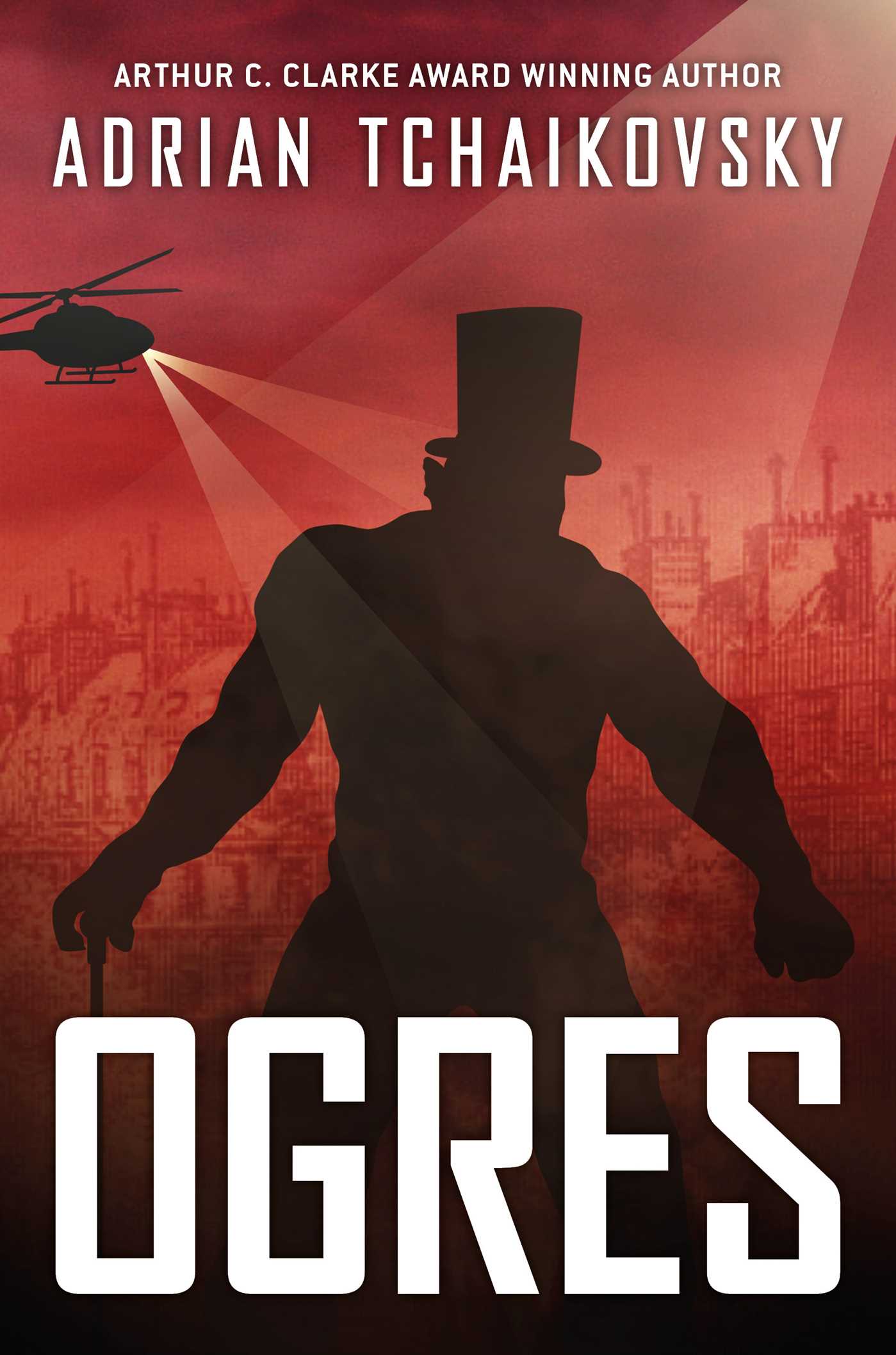
(Image via Goodreads.) 


This is the core theme of Adrian Tchaikovsky’s latest novella Ogres, a fast-paced and clever little book about a world where the titular 10-foot-tall monsters extract rent from proletarian humans.

Told in the second-person, the story follows Torquell, the son of a rural village headsman, whose life gets turned upside down after he makes the mistake of having an altercation with the son of the Ogre noble who oversees his village, and is forced to flee into the wider world. Through Torquell’s eyes, readers are taken on a tour of this society, seeing factory towns, exploited military regiments, and Ogre high society.

Nuanced, iterative worldbuilding reveals a complex set of social relations, despite an initially obvious – and blunt – metaphor about inequality.

Ogres may be one of the most overtly leftist pieces of mainstream SFF published in the past 50 years; it is clearly informed by Enclosure Acts-era British rent seeking, by Dickensian living conditions, by The Sound Of His Horn, and by Marxist theory. This is not Marxist in the pop-culture understanding of the word, but informed by the academic intellectual framework.

This theoretical underpinning is evident in the ways societal structures reinforce the Ogres’ control, and maintain economic disparity. The use of religion as a tool for maintaining the compliance of economically disadvantaged people is particularly striking. Likewise, the way that “economic” is used as a pejorative by the Ogres highlights the philosophical stance of the book, as well as how the Ogres think about humans.

By the end, it is clear that what makes the Ogres monstrous isn’t their enormous size or their strength, but rather their wealth. Those who attain such heights of power and privilege are monstrous, no matter what their shape or size.

At times, the second-person point-of-view narration can come across as a bit precious. It is certainly not the standard perspective for most fiction, and this may present an impediment for some readers. But once the story gets going, this quirk of prose style becomes less and less obtrusive, and by the book’s conclusion it is evident why the second-person voice was necessary.
Tchaikovsky's Ogres
may be his most 
political work yet, and
is among his best.
(Image via Pan MacMillan)

While this isn’t the easily accessible prose that Tchaikovsky’s fans have come to expect, it is just as rich as his other works. For example, the book is filled with some excellent turns of phrase such as a line in which someone is described as “used to weighing others by the amount of world they displace.”

At the risk of offering a relatively mild spoiler, the second-person perspective pays off in the last 10 pages in a note-perfect and unexpected recontextualization of the entire narrative. Portions of the denouement that seemed improbable or overly convenient were put in sharp focus — and improved — by this conclusion. It was the sort of ending that may prompt re-reads of the work for those who want to find all the little clues throughout. If we had our way, it would be included in a creative writing curriculum.

Over the course of several of his most recent novellas (Elder Race, Expert Champion, Ogres), Tchaikovsky has explored various iterations of Clark’s Law. In Ogres, he goes one further and shows that while sufficiently advanced technology may be indistinguishable from magic, sufficiently advanced inequality is indistinguishable from grimdark fiction.

Science fiction and fantasy are at their best when something real is reflected through unreal worlds. The monstrous nature of Ogres is effective because it is so real.

Friday, 7 August 2020

Interview with Derek Künsken - Author of The House Of Styx

Ottawa-based science fiction author Derek Künsken has become a mainstay in
Cover of The House Of Styx
The House of Styx
is Derek Kunsken's
third (and best) novel.
(Image via Goodreads) 
the magazines Asimov’s Science Fiction and Analog Science Fiction. Armed with a master’s degree in molecular biology from McMaster University, and his experiences working in Canada’s diplomatic service, he writes politically deft space opera that explores the implications of genetic engineering. His third novel The House Of Styx was serialized this spring in Analog, with a complete edition coming out in a few weeks from Rebellion Publishing. In April, blog contributor Olav Rokne interviewed Künsken about the upcoming novel.  

House of Styx is your third novel, but it’s a prequel to the first two. Could you tell me a little bit about it and how it relates to your previous books and stories?

The House of Styx is basically a Godfather story set in the clouds of Venus.

It’s going to show in two books basically the genesis of the Venusian Congregate which in later stories and novels becomes an interstellar powerhouse.

You’re Canadian … you'll quite obviously notice that the Congregate in The House of Styx are Quebecois.

I had imagined what would happen if Quebec separated [from Canada] at some point and then wanted to be a space-faring nation. But by the time they got to space, the only place left unclaimed was Venus. What would you do with a society that has been focused for 250 years on trying not to be assimilated linguistically and culturally? And what would happen if they became powerful? How would their linguistic concerns play out in society?

That’s why in the book, we get French 8.1 and 8.3 and the Scarecrow speaks a 7.1 but it's impolitic for some outsiders to speak particular kinds of accents and stuff like that.

I so loved the idea of seeing my Quebecois family sort of reflected in the future history that I was writing and it’s interesting because a lot of future histories even written by non-American authors seem to reflect the future as a largely American-dominated culture. It’s that hegemony of American power that we see reflected.

What was the main theme that you wanted to tackle in The House of Styx?

I was flying to the Nebulas conference, I think it was in 2013. I had already created all of the biology in the clouds of Venus, but I didn't really have a story to tell with this. I had a sort of survival story, but something was missing. This was going on at the same time as some of the ‘reasonable accommodation’ debates were happening in Quebec — and I’m half-Quebecois myself.
The serialized version of House Of Styx was 
illustrated by Eldar Zakirov.
(Image via DeviantArt)


So I was following the news and basically it was appalling to see some of the discourse around “how should Arab people integrate into Quebec.” It quite obviously came from a place of intolerance. Then I realized that the caustic intolerance that I was observing in society was a perfect metaphor for the sort of acidic environment of the clouds of Venus. And so I wrote that story, but there was so much more to it that — as soon as I had sold it to Analog — I realized I had another novel or two in me dealing with those kinds of characters, that kind of political setting and that kind of metaphorical environment.

That’s interesting because I’d picked up on a theme of subverting colonialism in your work. It’s a colonialist system, but it’s a narrative of decolonization.

You’re correct.
The patron nations and the client nations came about in these stories because I was asking what would happen if the rich powers — these four major powers that basically get a lock on outer space resources — what would be left for a country that comes to space 100 years later?

That's concerning to me.

Once nations spend as much money to get into space as it takes, will they necessarily respect the common good? Or will it just be ‘I got here first, now I’m exploiting it?’

Does science fiction have a responsibility to imagine better possible futures and by doing so potentially engineer them?
Künsken takes inspiration from
politics in his home province.
(Image via NorthumberlandFM)


I don’t know if I would go so far as to say ‘responsibility,’ because in the end I’m trying to tell entertaining stories that will hopefully move people in some way. If there's a thousand readers or 10,000 readers and that’s it, you know sort of mission accomplished.

I don't see my role to necessarily look at things but one of the things science fiction does really well is cautionary tales. It’s not that I set out to write a cautionary tale, but some of my concerns come through, so things like the Puppets are an expression of my own anxieties.

One of the things I loved most about Quantum Garden and Quantum Magician was how you played with concerns around genetic engineering. I was wondering if you could expand on your thinking that led to the creation of the Puppets and Numen because they kind of creep me out.

So I want to start every conversation about The Quantum Magician with “I’m so sorry for the Puppets.”

There are some fundamentalist sects of Christianity where they tend to have multiple brides they tend to eject the younger males. I was reading about that at one point and I was surprised at how this could happen [today]. If that can happen on the Earth and if North Korea can happen on the Earth …

If our current systems can’t even deal with [Human Trafficking] on planet Earth, what would happen if you have an asteroid colony where 100 people take over and make everybody do what they want? What is it going to be like when the next nearest police or help for somebody is six light hours away?

I thought about what might happen if you took the most selfish and short-sighted people in the world and you gave them the power to genetically engineer their own children, what would they do?
If they want to make themselves perfect slaves that are half the size so that they will never be physically threatened and then build a system where pheremonally these people will love their masters … and there are people who are unethical enough and short-sighted enough to think that this would be a fine idea.

That’s where the Puppets came from.

A recurring theme in your work is the cruelty of creating these genetically engineered lines of humanity and the unintended consequences.

It is cruel.

The thing is you know let’s say you get a coder or a developer to write you a computer program. They have the specifications for what you need, and then they create a draft of the program, they run it and then they debug it and then they run it again and then they see is this what you wanted and then they’ll reprogram some things and then they’ll debug it again and there’s no ethical consequence to any of that process because there’s nothing in there that deserves ethical consideration.

When you’re dealing with human beings and you're dealing with germ-line changes — which means it’ll pass on to the children — the debugging process is literally the children are born and you hope they grow right. And if they don't, oh that's a bug in the code. So I mean there’s huge huge ethical problems with that process.

What’s next on your writing agenda?

Well, I’ve got an epic fantasy book that I’m editing right now. I would like to see if there’s any market for it. I also wrote a horror novel — a very short one so it probably needs a lot of beefing up. Some of what I did with the Puppets shows that I can probably do horror.

Wednesday, 11 December 2019

The Ebullient Imagination of Stealing Worlds

Optimistic and replete with ebullient imagination, Stealing Worlds is a compelling techno-thriller
Karl Schroeder's at his best
when proposing new ways to
organize political power.
(Image via Goodreads)
elevated by first-rate near-future world-building.

At one level, the plot is a fairly linear whodunnit; On the run from shadowy figures, protagonist Sura Neelin finds refuge in an augmented-reality game world that allows her to hide in plain sight. As she learns more about her new-found community, she investigates the circumstances around her father’s death.

But at another level, it is the story of revolutionary societal change. It is on this second level that the novel succeeds most fully.

Stealing Worlds is a highly political novel, not in a partisan sense, but because it offers thought experiments about how power structures can be organized. While the book depicts a global capitalist structure that continues to erode human freedom, Schroeder also envisions self-organizing communities that work in the interstices of the modern world. New technology and tools evolve to allow for the exploitation of idle and forgotten resources, to the benefit of those left behind or targeted maliciously by those in power.

The most interesting innovations in the novel, however, don’t come from the technology of augmented reality, but from cleverly imagined legal constructions. Schroeder’s idea of giving legal life to inanimate objects and abstract ideas is the most intriguing part of the story. To accomplish this, Artificial Intelligences (AI) are programmed to operate on behalf of eagles, forests, and other entities and to bargain with people to meet the needs of that legal entity. For example, an AI responsible for the legal personhood of a forest might negotiate the sale of lumber to pay for reclamation or protection. More complex ecosystems might comprise numerous, smaller AI actors that coordinate the survival of, for example, a boreal forest by ensuring the rivers are clean, the animals are not overhunted, and enough habitat remains to support life. Using markets to place value on natural resources isn’t a new idea but this agency provides the natural resources a mind-blowing role in the process.

Schroeder demands more than a passing level of technical knowledge. For example, basic levels of
A futurist by trade and
training, Schroeder brings
intellectual rigor to near-
future science fiction.
(Image via KarlSchroeder.com)
blockchain and cryptocurrency literacy help. While this may turn off some readers, it will make the work more engaging for others. Impressively, Schroeder doesn’t condescend, but builds and explores these concepts for a wide range of readers.

The novel has a clear separation between worldbuilding and adventure. Sura’s path weaves between investigating her father’s death and learning about the hidden world of augmented reality. While reading the thriller portions of the novel, we were left wanting more of the intellectual story and the sharp critique of our world. When delving into the world building, we occasionally forgot entirely about the narrative because we got lost in Schroeder’s irrepressible imagination.

Often, when reviewers focus their praise on a book’s worldbuilding, it is a sign that the book might have significant flaws in other areas. In the case of Stealing Worlds, it is an indication that the novel is possibly the crowning achievement of one of science fiction’s most accomplished — and optimistic — futurists.

The fact that Schroeder proposes a believable and positive vision of the future puts this among our favourite novels of 2019.

Tuesday, 30 May 2017

The Berlin Project (2017) Gregory Benford

It was with some surprise that we noted that Gregory Benford’s name has never appeared on the shortlist for the Best Novel Hugo Award. For a novelist who enjoyed significant success from the 1970s to the 1990s, and who was well loved by other SF awards, it’s surprising that Benford never ended up on the shortlist for the biggest prize of all in genre.

There are reasons to believe his latest novel may be his best shot yet at finally adding that Best Novel Hugo to his list of accolades.
Image via Amazon.com


This book is Benford’s first novel as sole author in more than a decade, and it’s a departure for him. But in many ways, the Berlin Project feels like the novel that Benford was born to write.

Written with evident affection


His knowledge of the people he’s writing about shines through, and they feel like fully rounded human beings, in a way that some of the protagonists in his previous novels have not. These are people that Benford knows, and he writes about them with evident affection. While the science is front and centre (not unusual in a Benford novel), the characters do not take a backseat.

The first 350 pages are a taught, meticulously researched alternate history that delves into the nitty-gritty technical details of the race to build an atomic bomb. It’s a believable departure from the real history. One small decision made differently that makes sense, and everything flows from that departure point.

The interpersonal tensions and big personalities of the real-world Manhattan Project make for some fascinating reading as they tackle the issues surrounding the creation of the first atomic bombs. This novel is gripping, right up until the first bomb is dropped.

Tonal shift

The protagonists of the book.
Image via www.uchicago.edu
It is unfortunate, however, that most of the last 100 pages do not live up to the promise of the first 350.

The story takes an odd turn when the main character embarks on a spy mission in occupied France. While the characterizations remain strong, the plot wanders. Later scenes involving the German military command and the post-war peace are well handled, but the book never regains the energy and excitement of the first 350 pages.

Despite the flaws in the later portion of the book, this may well be Benford’s masterpiece. The end notes on the research and the musings of Manhattan Project scientists about the mistakes they made in the uranium enrichment process only add to the appeal of this book.

Whether or not this makes it to the Hugo shortlist, it should definitely be a strong contender for the Sidewise Award.