Showing posts with label Music. Show all posts

Thursday, 18 September 2025

The Alien Conquest of Brighton (Hugo Cinema 1987)

This blog post is the thirtieth in a series examining past winners of the Best Dramatic Presentation Hugo Award. An introductory blog post is here.

It had been an unusually cool August in Brighton, the English seaside town that hosted the 45th World Science Fiction Convention. But on the day of the Hugo Award ceremony the weather had turned pleasant.

The Brighton Metropole Hotel, site of the 1987 
Hugo Awards. (Image via Doubletree.com)
The event was held at the Brighton Metropole Hotel. It was possibly one of the most architecturally significant venues ever to host the Hugos, having been designed by Alfred Waterhouse, who was famous for the Natural History Museum in London and Strangeways in Manchester.

The ceremony had to conclude by 10 p.m. sharp, owing to timed fireworks that would conclude the Worldcon. This meant short shrift for categories without acceptors in attendance. Per usual, there was nobody present to accept the Hugo Award for Best Dramatic Presentation, but the win for Aliens was greeted by the audience with a robust cheer. It had won by a considerable margin.

Some weeks after the ceremony, Hugo Administrator Paul Kincaid stopped by the offices of 20th Century Fox and left the Hugo trophy with the receptionist.

It was an eclectic and interesting year for science fiction and fantasy film, with numerous and impressive titles failing to make the shortlist. The Park Plaza Mall was terrorized by security robots in Jim Wynorski’s send-up of Regan-era capitalism Chopping Mall. Autobots and Decepticons battled it out in the first — and best — big-screen outing for the Transformers. A rural British couple faced the aftermath of a nuclear war in Jimmy Murakami’s animated movie When The Wind Blows. And in the Russian movie Dead Man’s Letters, a scientist huddled in the basement of a decimated museum trying to imagine what he’d say to his son.
Clancy Brown is a memorably
great villain in Highlander.
(Image via IMDB)

A surprising omission from the shortlist is Russell Mulcahy’s Highlander, a stylishly directed epic about immortals destined to fight each other to the death. Although it was not particularly successful in the cinemas, the movie had decent buzz within fandom, and has held up better than most movies of the era. Mulcahy, who had a background as a music video auteur, took a rock-and-roll sensibility to the direction and livened up the editing with thoughtful transition wipes. It is impressive how clear and easy the movie is to follow given that the narrative is told in two parallel tracks, following the protagonist Connor McLeod (Christopher Lambert) in the present day in one and in the 1700s in the other. Notably, the soundtrack was by Queen, and featured several top-charting hits. Highlander is one of the most technically accomplished SFF films of the year, despite a leaden and hammy performance by Christopher Lambert.

But to be fair, there’s only really one movie on the 1987 shortlist for Dramatic Presentation that probably doesn’t belong there: Labyrinth, Jim Henson and Brian Froud’s follow-up to The Dark Crystal. Like many other Henson productions, the movie has some charm and is visually appealing, but the story meanders and blunders from event to event with little direction. Featuring David Bowie as the Goblin King, the movie is oddly paced with what little plot there is interrupted by largely irrelevant musical numbers. It does get some points for being the only non-remake, non-sequel movie on the shortlist in 1987.

Labyrinth was one of two musicals on the shortlist, which was the only time multiple musicals were shortlisted for the Hugo in the same year. Little Shop of Horrors (adapted from a Broadway play based on the 1960 Roger Corman movie of the same name) could be considered the first Kaiju movie ever shortlisted for a Hugo Award. It’s filled with top-tier talent (such as Rick Moranis, Steve Martin, John Candy, and Jim Belushi) and has an incredible amount of energy in the first half, leaving the second act in, well, second place. There was a fair amount of disagreement in our viewing club, with some of the viewers complaining that the music was “very Boomer,” and that the lead actress Ellen Greene was cloying in her theatrics.
Evil alien plant Audrey in Little Shop of Horrors
was voiced by Levi Stubbs of the Four Tops.
(Image via Letterboxd)


David Cronenberg’s The Fly is one of the few cinematic remakes that is generally considered to have outshone the original. Set almost entirely in the apartment and laboratory of scientist Seth Brundle (a young Jeff Goldblum), it centres on his relationship with journalist Veronica Quaife (an even younger Geena Davis) as an experiment causes him to slowly transform into a human-fly hybrid. The movie is carried by two truly terrific lead performances, and viscerally disturbing body horror. In another year, it might have competed for the trophy, but 1987 was a very strong year.

Star Trek IV: The Voyage Home came in second in the final vote, and it’s easy to understand why. With the crew time travelling back to 1980s Earth to save humpback whales and humanity, it’s probably the most unserious of all Star Trek movies. It was, however, also one of the most engaging to watch, especially for those in our cinema club who are not hard-core Trekkies. This would have been at, or near the top of most of our ballots despite some dated gender dynamics in the (somewhat forced) romance between captain James T. Kirk and marine biologist Dr. Gillian Taylor (Catherine Hicks).

But the winner for Best Dramatic Presentation in 1987 was never in doubt. It’s easy to see why Aliens — the sequel to 1979’s Hugo-winner Alien — earned more than twice as many votes as its nearest competitor on the shortlist. The sequel sees Ripley return to the alien-infested planet, this time with marines and massive firepower. Much like the Hugo ceremony in 1987, it ends with fireworks. Aliens is a truly exceptional action movie that counterpoints the isolating horror of the original.

YASSSS QUEEN! Hashtag #Slay!
(Image via IMDB)
What is really stunning to see with the benefit of hindsight is just how efficiently written Aliens is, and the technical skill evident in the craftsmanship. Characters are introduced in as few lines of dialogue as possible, and yet seem fleshed out and real; as an example a female marine named Vasquez (Jenette Goldstein) has fewer than a dozen lines in the movie, but connects with the audience. It’s also worth noting that the pace of editing in Aliens is beyond anything contemporaneous audiences were used to, using almost twice as many cuts per minute than anything else on the Hugo shortlist that year. The overall effect is a percussive, and deeply engaging action movie that puts science fiction at the forefront.

The Hugo for Best Dramatic Presentation was just finishing its third decade in existence, and was now clearly one of the most popular categories with voters. More votes were cast with Aliens as a top choice than had been cast in the entire Fan Artist category that year, for example. The award had come into its own, and did it in style by recognizing a movie that is inarguably the best of the year.

Friday, 14 October 2022

A Unanimous Gold Mine Of Subtext

If you’ve ever wondered what it would be like if Sun Ra and Samuel R. Delany had tried to make The Matrix, the answer is something like Neptune Frost.
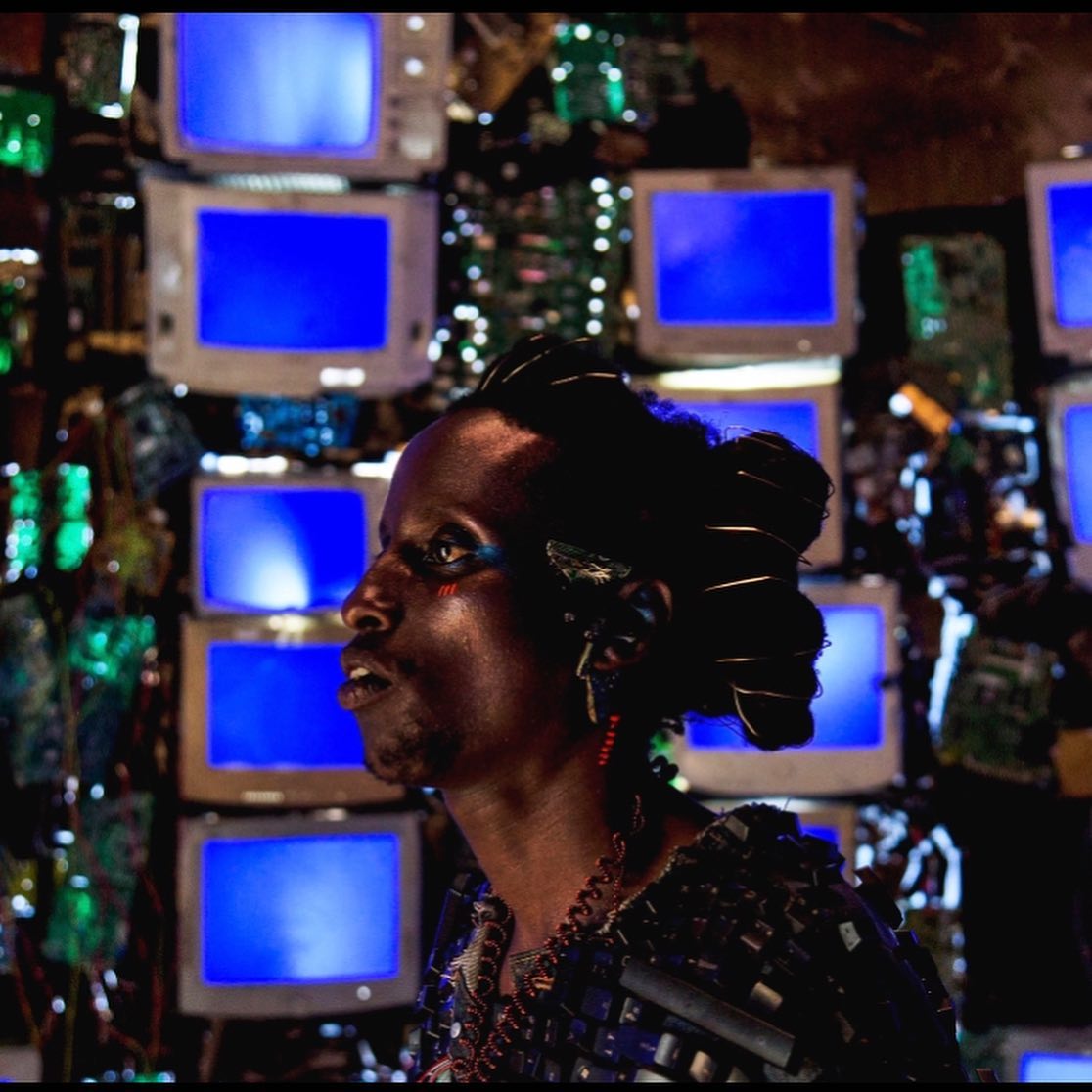
Burudian rapper Kaya Free (AKA Bertrand
Ninteretse
) gives a compelling nuanced performance
as Matalusa in Neptune Frost. 
(Image via the Facebook Page of Saul Williams) 


A collaboration between alternative hip-hop artist and provocateur Saul Williams and Rwandan artist and playwright Anisia Uzeyman, Neptune Frost is structured in alternating segments between a story following a coltan miner named Matalusa whose brother is killed while mining coltan in an open pit mine, and an intersex runaway named Neptune who flees from an attempted sexual assault. Neither of them fits into the systems at play in the communities they call home, and through this, the viewer is challenged to find parallels between the oppression of gender conformity and the oppression of standard capitalist employment relationships.

The ability of each of these narrative threads to engender empathy hangs on superb performances in these two roles; Matalusa as played by Kaya Free and Neptune who is played alternatingly by Cherylel Isheja and Elvis Ngabo.

Finding each other when they join a revolutionary anti-capitalist hackers collective, Matalusa and Neptune discover that their relationship warps the fabric of reality and may provide the key to freeing society from the grip of a rapacious mining company and an authoritarian regime.

But a simple plot summary does not begin to convey what makes the movie so unusual and compelling. The central characters’ journeys through this imagined future Rwanda and Burundi shimmers between differing states of existence; musical understandings of the world and cinematic explorations. It’s … a lot to work through.

Additionally, given that it’s a multilingual movie whose dialogue is in parts spoken in Kirundi, Swahili, Kinyarwanda, French, and English, and given that some of the subtext depends on puns in the various languages, it is the sort of cinema that takes some generosity, imagination, and effort to parse.

Although the movie can be opaque and obtuse at times, what is clear is the criticism of capitalism, of colonialism, and of exploitation. This is a movie about an anarchist, anticolonial rejection of heterodox narrative conventions.

This carries through to the exuberant and kaleidoscopic visuals that are elevated by found-item and repurposed set construction. This world is built of broken, discarded, and recycled computers and technology, evoking a punk aesthetic; handmade yet high tech.
Creators Saul Williams and 
Anisia Uzeyman. 
(Image via Facebook)


Although it opened at the Cannes Film Festival in 2021, it’s eligibility for the Hugo Awards was extended at the 2022 WSFS business meeting, so it can be nominated for a Hugo Award for Best Dramatic Presentation in 2023. And it deserves your attention. 

Although the Hugo Award for Best Dramatic Presentation has a long history of celebrating works that are already successful, several nominations in other categories show that Hugo voters are interested in works that represent cultural perspectives other than North American.

In an era when mainstream science fiction movies have embraced safe and comforting fare, experiencing cinema that dares to offer non-traditional narrative structures is refreshing.

Currently available for purchase on various streaming services (YouTube, Apple+, GooglePlay), this challenging, multilayered, perplexing, beautiful beat poem of a movie is probably the most interesting piece of science fiction cinema to have arrived from Africa since the 2009 release of Wanuri Kahiu’s Pumzi.

To quote Neptune Frost itself: this is a Unanimous Gold Mine.

Saturday, 20 August 2022

Possibly The Worst Year In Sci-Fi Cinema

This blog post is the fourteenth in a series examining past winners of the Best Dramatic Presentation Hugo Award. An introductory blog post is here.

The 1971 Best Dramatic Presentation Hugo ballot was filled to the brim with mediocrity. Despite having the benefit of hindsight and an internet to help us learn about films eligible in that year, our cinema club couldn’t have produced a better list of nominees.

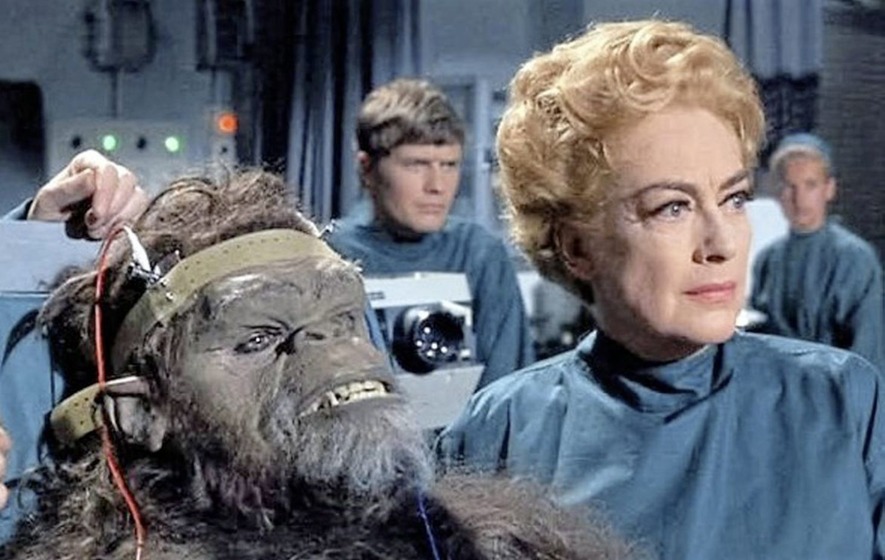
Despite Joan Crawford's performance, Trog is not
up to the standards we might look for in a Hugo finalist.
(Image via IMDB)
We scoured the internet for other options. Doomwatch was influential, but an absolute bore. Skullduggery was a hit, but beyond risible. David Cronenberg’s first movie Crimes of the Future shows promise, but is still the unfinished vision of a young creator. Fans had slim pickings when nominating that year — which may in part explain some of the more … unorthodox choices they made.

It was the first year that audio recordings made it on the ballot, and as much as we are fans of being format agnostic, we wish that the distinction of being the first comedy album to get a Hugo nod had gone to a more worthy entry than Don't Crush That Dwarf, Hand Me the Pliers.

Expressing a sentiment that was common at the time, John Baxter wrote: “Written SF is usually radical in politics and philosophy; SF cinema, like the comic strips, endorses the political and moral climate of its day.” While we’d suggest that Baxter was a little too generous towards prose SF, having watched and listened to the 1971 shortlist, it’s clear that there’s some merit in his indictment of screen offerings.

The shortlist was an eclectic one in some ways. It had one theatrically released American movie (Colossus: The Forbin Project), one television movie (Hauser’s Memory), one British movie (No Blade of Grass) one spoken-word comedy album (Don't Crush That Dwarf, Hand Me the Pliers) and one prog rock concept album (Blows Against the Empire).

While this relative diversity of formats could be praised for a willingness to consider various forms of storytelling, to our eyes it looks like Hugo voters were scraping the bottom of the barrel. Writing in Science Fiction Review, Fred Patten suggested that the entire shortlist “is not worthy of consideration.”

Paul Kantner's Blows Against the Empire has
a relatively simple premise that hasn't aged well.
(Image via Futurama)
Blows Against the Empire, recorded by Paul Kantner and some of his Jefferson Airplane bandmates, loosely tells the story of a bunch of San Francisco hippies who steal a starship to go off into space and create a new, better civilization on another planet. The story also seems to focus on a baby that Paul Kanter was having with Grace Slick. To be perfectly blunt, the storytelling offers the height of self-indulgent self-aggrandizement that reflects the worst artistic impulses of the Altamont generation. The majority of the songs contribute nothing to the narrative, and although music may appeal to some listeners, as a piece of science fiction it is dreadful.

Ever so slightly less perplexing a choice for a finalist is Don't Crush That Dwarf, Hand Me the Pliers, the third album from Los Angeles comedy troupe Firesign Theater. Although it seems fairly scattershot at the beginning, it slowly becomes clear that the album is telling the life story of a single character named George Leroy Tirebiter, through flashbacks and television. The comedic style has aged poorly, and we wonder how it ever could have been appreciated. The degree to which the work counts as science fiction or fantasy was also perplexing.

Hauser’s Memory, a made-for-television adaptation of Curt Siodmak’s novel of the same name, is a competent if boring spy adventure in which scientist Hillel Mondoro (played by NCIS-regular David McCallum) injects himself with evil brain juice in an attempt to recover secrets that are vital to national security. As the cerebral spinal fluid infects his mind with the memories of a Nazi scientist, Mondoro is compelled to commit a series of crimes, and finally dies. It’s slow-moving, uses excessive crossfades to depict the disorientation of the protagonist, and treads many similar plot points of the author’s previous and much superior novel, Donovan’s Brain.
Sharp-eyed Canadian political
buffs may recognize that the role
of Joseph Slaughter in Hauser's
Memory
is played by the younger
brother of Deputy Prime Minister
Erik Nielsen. 
(Image via IMDB)

Viewers of the era were somewhat more generous, with Hank Davis writing in Yandro that Hauser’s Memory was “The next best thing I have seen this year.” Of course, this assessment needs to be taken in context.

Tying into the nascent environmental movement, No Blade of Grass updated the John Cristopher novel The Death of Grass to make it clear that the demise of all plants from the Gramineae family is caused in part by pollution. There are some interesting scenes that foreshadow later post apocalyptic films like Mad Max, and the bleak premise is followed through to a logical conclusion. It’s an uneven effort that has some high points — such as the sadly realistic depiction of an incompetent British government sacrificing millions of people — but it is bogged down by brutal misogyny and clumsy foreshadowing.

Given the distasteful treatment of women in the movie, it’s hard to recommend No Blade of Grass to a modern (or truth be told any) audience.

The most redeemable work on the Hugo Best Dramatic Presentation ballot in 1971 was certainly Colossus: The Forbin Project. From opening scenes exploring a mountain-sized computer, the movie draws in the viewer to a world that becomes quickly dominated by an artificial intelligence designed to bring peace. It’s a great concept that’s mostly followed through on. Eric Braeden is excellent in the lead role of Dr. Charles Forbin, though the supporting cast is mostly merely filling space.

Contemporaneous reviewers generally agreed with this assessment. Richard E. Geis, writing in Science Fiction Review, named Colossus as the only noteworthy science fiction film of the year. Kay Anderson was somewhat more effusive with her praise, writing in Yandro “For my money, The Forbin Project is better than 2001 … Reviews around here are calling it a masterpiece, and I’ll drink to that.”

The pickings were slim, but in some places you could see the seeds of better things to come, though it might take years — even decades — for these themes to flourish. No Blade of Grass was not in the same league as the environmental parables that would be released later in the decade, but with the benefit of hindsight we can see how it was a stepping stone in the evolution of SFF cinema. Likewise, the concept of a science fiction rock opera concept album may be old hat now, but in 1971, Blows Against The Empire was doing something new. These films — and albums — may be mediocre, but they were pushing the medium forward.

By this point, the Hugos had attempted to recognize works of stage and screen on a dozen occasions, and for a third time in that span Worldcon attendees decided not to present a trophy. Not for the first time, the audience laughed and cheered in approval at the announcement of no award. Thankfully, we can find no record of any representatives of any of the five finalists being in attendance for the ceremony, so they were spared this indignity.

Several members of our cinema club may have ended up voting for no award (though others dislike no award on a matter of principle). Either way the consensus was clear: this was a terrible year for science fiction told by screen or sound.

Sunday, 20 August 2017

Can We Categorize Clipping?

There is a long tradition of pop stars getting their geek on by recording high-concept sci-fi-inspired
Clipping frontman Daveed Diggs will
have to wait another year to complete
his EGOTH. Photo from Worldcon 75.
albums, from David Bowie’s The Rise and Fall of Ziggy Stardust and the Spiders from Mars to Stix’s Mr. Roboto to Rush’s 2112 to Billy Idol’s Cyberpunk. While some of these works have been celebrated by music critics and the broader public, until this year they’ve been largely overlooked by the Hugo Awards process.

Splendor and Misery from L.A.-based experimental hip hop group Clipping is an ambitious and challenging work that is an exemplar of this tradition. In the 2017 Hugo Awards, it became only the second such work to be nominated for a Best Dramatic Presentation Hugo Award (after the 1971 album Blows Against The Empire by Jefferson Starship, which finished in the voting below ‘No Award’).

However, Splendor and Misery failed to generate much popular support among voters, placing last amongst other nominated works in the category and losing to Leviathan Wakes from the TV series The Expanse. While Leviathan Wakes is an awesome bit of television (and is the work that we voted for) it is kind of a shame that there isn’t a good category to recognize eclectic and unusual works in the Hugo Awards.

Format-Agnostic Awards


At a panel at Worldcon75, we were impressed by the Hugo Awards administrators’ commitment to the idea that anything with merit and the necessary nominations deserves to be on the ballot, regardless of format. There was some discussion about the inherent strength and flexibility of current categories, which could accommodate works like board games, as an example.

However, at what point does flexibility begin to take away the original meaning of a category? Perhaps there should be scope for more opportunities for the Hugo awards to present special
As has been noted earlier on this blog,
a lot of great SF from 1972 was not
recognized at the Hugo Awards.
The Rise And Fall of Ziggy Stardust
is another example of this.
(Image via BBC.com)
recognition for science fictional or fantastic works that defy easy categorization into one of the traditional awards areas. Or perhaps Hugo Administrators might be given the discretion on an as-needed-basis to offer a grab-bag format-agnostic category for works that fall outside the standard mold. If any genre can handle liminal works based on merit, not format, it should be SF and fantasy.

It would be foolish, however, to suggest that there should be a Best Album category at the Hugo Awards. The longstanding unofficial rule of thumb is that there should be a good expectation in any given year that there are at least 15 worthwhile nominatable works to make a category viable. In most years, there would be far fewer science fiction or fantasy concept albums to choose from.

Unfair Comparisons Shortchange Odd Nominees


Under the Hugo Award rules as they currently stand, science fiction concept albums clearly fall into
The Archandroid is the second of seven
planned albums chronicling the story
of Janelle Monáe's time-travelling
android alter-ego Cindy Mayweather.
(Image via Amazon.com) 
the category of short-form dramatic presentation. But since the Best Dramatic Presentation category was split into long-form and short-form categories, the short-form category has been dominated by television episodes.

In most years, the only shortlisted works for best dramatic presentation short subject are television episodes. In 2011, Janelle Monáe’s exquisite album Archandroid – which told the tale of an android messiah fighting to restore freedom, love and unity to a robot metropolis – wasn’t on the ballot, while three episodes of Doctor Who competed against each other.

But how can you compare Archandroid to The Pandorica Opens, the Doctor Who episode that won the category that year? Should the liner notes be considered when judging an album’s merit?

The pop album and the video are mediums so disparate that how one judges the success of either one as art – or as science fiction – are completely different. There isn’t a reasonable grounds for comparison.

Comparing Apples And Orions


One might note that, as a group who are united only in their love for science fiction and fantasy as a
We suspect that Splendor and Misery
would have fared better at the Hugo
Awards if the related music videos
had explicitly been part of the nomination.
(Image via YouTube) 
genre, Hugo voters are an incredibly diverse group who might not all share the same taste in music.

Which brings us back to Splendor and Misery. Hugo voters are not an audience that is known for their love of experimental rap. However, when Clipping performed a concert at this year’s Worldcon in Helsinki, the response was electric. It is clear to those of us who were at the performance that Clipping’s inclusion on the ballot meant something both to the band, and to the audience.

A evocative tale of slavery, isolation, and yearning for freedom, Splendor and Misery is elevated by the richness of the language, and the deftness of Daveed Diggs’ delivery. This should be remembered as a great work of science fiction, regardless of how it was adjudicated at the Hugo Awards this year.