 |
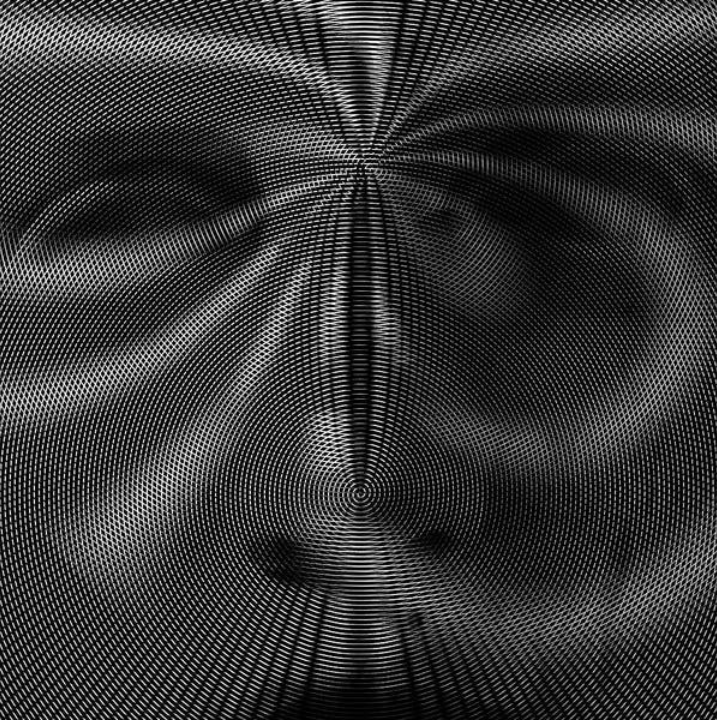
| John Karborn has illustrated most of the articles in the series with evocative conceptual art. (Image via New York Times) |
Op-Eds From The Future is a feature in America’s paper of record that appears every second week, in which an academic or science fiction author tackles a political issue from the perspective of an editorialist writing in the not-too-distant future.
Given that the series has so far included submissions written by luminaries such as Cory Doctorow, Malka Older, Ted Chiang, and Brooke Bolander, it is unsurprising that the results of this experiment have been compelling.
Masterminded by the paper’s op-ed technology editor Susan Fowler, this project shows the integral connection between science fiction and politics, demonstrating the relevance of the genre to a wider (mundane) audience. Speculative opinion is not standard fare for the New York Times, but it is a very welcome addition.
“Science fiction is so powerful and effective because it takes the problems and issues we face today and puts them into new situations and contexts, allowing us to see them more clearly,” Fowler explained on Twitter. Put another way, the series provides a type of public service.
Every second Monday, the Times publishes a new piece, tackling issues as varied as the intersection of income inequality and genetic engineering, the possible effects of anti-hate speech legislation on internet discourse, and the rights of persons displaced by climate change.
Using the traditional structure of an op-ed to explore a science fictional idea lays bare the political nature of the genre. The futurist nature of these works connects the changing role of technology with the practicalities of policies elected officials might enact as a result.
The format and venue also forces authors to hew closely to constraints of hard science fiction; there is a level of solemnity to the Grey Lady that inspires seriousness in its authors. We suspect that this lean towards hard science is also the product of Fowler’s editorial vision, which we appreciate.
Though several luminaries of science fiction have been featured thus far, those invited to submit articles to the series are not limited to genre professionals — University of Connecticut professor Susan Schneider penned one on the nature of consciousness.
Masterminded by the paper’s op-ed technology editor Susan Fowler, this project shows the integral connection between science fiction and politics, demonstrating the relevance of the genre to a wider (mundane) audience. Speculative opinion is not standard fare for the New York Times, but it is a very welcome addition.
“Science fiction is so powerful and effective because it takes the problems and issues we face today and puts them into new situations and contexts, allowing us to see them more clearly,” Fowler explained on Twitter. Put another way, the series provides a type of public service.
Every second Monday, the Times publishes a new piece, tackling issues as varied as the intersection of income inequality and genetic engineering, the possible effects of anti-hate speech legislation on internet discourse, and the rights of persons displaced by climate change.
Using the traditional structure of an op-ed to explore a science fictional idea lays bare the political nature of the genre. The futurist nature of these works connects the changing role of technology with the practicalities of policies elected officials might enact as a result.
The format and venue also forces authors to hew closely to constraints of hard science fiction; there is a level of solemnity to the Grey Lady that inspires seriousness in its authors. We suspect that this lean towards hard science is also the product of Fowler’s editorial vision, which we appreciate.
Though several luminaries of science fiction have been featured thus far, those invited to submit articles to the series are not limited to genre professionals — University of Connecticut professor Susan Schneider penned one on the nature of consciousness.
One of the joys of this series is quickly becoming the Monday-morning anticipation of discovering who has penned the latest installment. Although we have a long list of thinkers we would love to see play in this particular sandbox (i.e. Vernor Vinge, Madeline Ashby, Karl Schroeder …), we suspect that we will be surprised and delighted by the people Fowler has lined up for the coming weeks.
We would love to see this series included in next year's Hugo shortlist. But there isn’t an obvious category at the Hugo Awards to recognize the importance of this contribution. Susan Fowler is not eligible for Best Editor, nor would it be fair to compare her work to that of editors working on publications dedicated to the genre. The individual Op-Eds might technically fit into the Short Story category, but to us, the value of the overall project is greater than the sum of its parts. We are likely to suggest including the overall Op-Eds From The Future project in the Best Related Work category (though even that is a slightly odd fit that Hugo administrators might find reason to reject).
This is a series that we look forward to reading every week, and hope that the New York Times continues it over the long-term. Even better, we hope to see competitor pieces in other established dailies make this a staple of tomorrow’s newspapers.
 |
| Susan Fowler masterminded the new series appearing in the New York Times. (Image via BizJournals) |
We would love to see this series included in next year's Hugo shortlist. But there isn’t an obvious category at the Hugo Awards to recognize the importance of this contribution. Susan Fowler is not eligible for Best Editor, nor would it be fair to compare her work to that of editors working on publications dedicated to the genre. The individual Op-Eds might technically fit into the Short Story category, but to us, the value of the overall project is greater than the sum of its parts. We are likely to suggest including the overall Op-Eds From The Future project in the Best Related Work category (though even that is a slightly odd fit that Hugo administrators might find reason to reject).


