Showing posts with label monarchy. Show all posts

Wednesday, 26 July 2023

列王若尘 (The Tsars Like Dust - Mandarin Translation)

虽说科幻拥有其它题材难以企及的辽阔空间可以让艺术家挥毫描画新的世界体系,但我们读到的作品往往落入最陈旧、最粗糙、最愚蠢、乃至最落后的政府形式之窠臼:君主制。
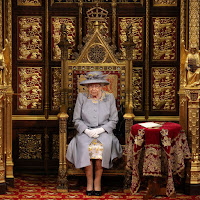
正值伊丽莎白二世女王陛下践祚七十载溥天同庆之祺,
本博客编创团队谨祈愿天下人主
(包括虚君如温莎王室者)
皆喜获废位。(图片来自IMDB.com)


这方面的例子不胜枚举:阿尔达拉公主(出自Buck Rogers 系列),灰色王子 (Jack Vance), 帝查卡国王(出自 Wakanda 瓦干达系列),“星帝”格蕾兰女皇 (John Scalzi), 六方位皇 (Arkady Martine), 火星公主德嘉·索丽丝 (Edgar Burroughs), 拜冷·阿巴萨克斯皇帝(出自《木星上行》),伊茹兰公主(出自《沙丘》系列),金星女王伊拉娜(出自 Queen of Outer Space 电影,见图),阿思查公主 (出自 Doctor Who),大巴札尔帝王(来自 Voltron 大陆译《战神金刚》,美版称Emperor Zarkon),“星火”科莉安公主(DC美漫人物),以及银河大帝革律翁二世(出自阿西莫夫《基地》系列)等等等等……遗憾的是,这里列举的作品大多既做不到批判性地运用君主制度这一概念,也没有努力探究这一政治制度在社会层面造成的后果,更未能拷问它所代言的精英主义哲学这一思想基础。因此,阅读这些作品时,读者应带有怀疑的精神。

考虑到当下除了其残余形态,仍在君主统治下的国度已寥寥无几,或许我们可以理解为什么几乎没有多少作者有意用批判性的态度面对自己笔下帝制造成的影响。毕竟,但凡未满244岁的美国人,以及对彼得卢惨案(1819年)前的社会没有个体记忆的英国人,已经无法通过切身经历来感知“星帝”统治下的生活该有多糟糕。(即使偶有格蕾兰般的明主现世,她们在守旧制度的沉疴之下也无力回天。)

创作者若要更准确地描写太空帝国的面貌,那就该参考当今世界少有的几个绝对君主制政体,例如阿曼苏丹国、斯威士兰(斯瓦帝尼)王国,以及北朝鲜金家王朝。说得直白点,现实世界里“有君权”和“无人权”是直接关联的。但科幻作品中却很少这样描写。

作者之所以对描写帝王趋之若鹜,有一些原因是很清楚的。首先,如果要突出某个人物的重要性和能动性,“称王”是条捷径。比如说,一旦某个人物提到“莉亚公主”,观众很容易领会到这是个“主要角色”。

同样,从故事叙事角度而言,要想解释某个政治决定,将其归为个人意志相对容易,而刻画其它政治体制下必须经历的决策过程就比较麻烦。

我们要看到,很不幸,作为人间现存持续时间最长的制度,有着“万岁”历史的君主制看来还要在未来很长时间内存续下去。

然而科幻题材作品太容易陷入对这种落后压迫制度不假批判的运用。例如,在早期《基地》系列小说中,即便谈起弊政多端、危机四伏的帝国可能的继承者,阿西莫夫也未曾主张任何比帝制更复杂、更富于内涵的治理体系。

《星战》中将奥德朗星描写成桃花源、乌托邦式的君主国。
然而,现
实世界里,人权和君权是水火不容的。
(图片来自 StarWars.com)
在戴维·韦伯的“奥诺尔宇宙” (Honorverse) 系列中,曼堤戈耳(Manticore, 意为西方神话中的刺尾狮人)星际帝国的女王和女皇伊丽莎白三世在任何问题上无一例外必然站在正确的一面,而她果敢的领袖气质则反衬出该系列作品中诸个民主政府的昏聩和低能。至于洛易丝·麦马斯特·比约德虽然承认历史上曾经出现过昏君,她塑造的格里高尔·弗巴拉却基本上“是个好人”。因为这一类作品未能冲击“开明君主”这一不经之谈,它们实质上深化了这一思想的影响。

也许,星际殖民征服只有在暴虐贪婪的帝制下才有更大可能。帝国一旦无力持续扩张,往往也就走向了尽头。因此,民主政体可能更安于(或更可能被要求)将资源集中在创造或者增加公民的福祉上,而非在群星间开疆拓土。就像资本主义下“拟帝制”的公司集权一样,传统的君权也许同样贪得无厌。既然这样,虚构世界中各种奥加纳世家(见《星战》)及其翻版,就应该描写成贪欲无艺的一夫民贼,而非普施仁政的明君。

《星战》系列作品基本上未曾流露出任何涉猎深层次文化批判的企图。即使如此,我们也应注意到其中对各种政体越来越全无章法、有头无尾的描写。我们简直无法读出其中任何一个政府如何运转:既有元老院,又有皇帝,还有选举产生的公主,甚至有掌握着某种政治权力的贸易联盟。不过,有一点表现得很清楚:帝制无过,暴君有辜。进而言之:过在贼人窃据大宝,不在国体自新之亟。

所有的君主制政体都依赖一个假设,即某些特定血统的继承人有着内秉的优越性。在这一点上,它和制度性种族主义所依赖的是同一个哲学。《星战》后传在这一点上变本加厉。蕾伊能够执掌原力,无非是因为她是帕尔帕廷大帝的直系血亲。她的价值和力量来自血统。这样看来,多数来自被歧视、被种族主义压迫群体的科幻创作者,相比于坎贝尔时期以白人为主的科幻作者群体,更倾向在作品中针对帝制表现出健康的质疑精神,这也就不足为奇了。

值得注意的是,坎贝尔时代的两位科幻巨子罗伯特·海因莱因和弗雷德里克·波尔虽然处于政治方向的对立两极,但在同辈中两人可并称为对帝制观念的最强怀疑者。波尔对帝制着墨不多的描写充满了大不敬的调侃,而海因莱因笔下的君主政体要么全然异类,要么面目可憎,但他却塑造了各式各样为民主而英勇斗争的主角。

虽然整体上有细致而高格调的叙事风格,
但 Leprechaun In space 电影还是未能免俗于星际君主的套路。
(图片来自 IMDB)
不过我们还要专门提及另一类作品,它们直接用君主制当作观念上的主要题材,旨在拷问政治制度对其参与者的意义何在。这一类的突出代表是查尔士·斯特罗斯的《商战王朝》(Merchant Princes) 系列,可以说多少直面了承天之命的特权血统造成的后果和对公共社会整体的影响。

君主制是残酷可怖的政治体制,繁荣而进步的国家大多已将其扬弃。屈指一数,当今世界现存只有7个绝对君主政体,此外尚有一小部分有虚君残存的国家。在这样的条件下,科幻这一向往未来的创作题材中,有相当一部分作品仍然将这种弊政制度奉为主要设定。

我们呼吁,在畅想人类社会的未来时,科幻粉丝同人界能够对帝制抱有健康的怀疑。

(注:原标题 The Tsars Like Dust, 得名自阿西莫夫作品 The Stars, Like Dust)

本杂志编撰团队感谢雨果奖提名,并借此机会挑选了2022年度若干得意之作翻译成中文,以飨参加本年度世界科幻大会的中国友人。译者:Zoë C. Ma [https://zoe-translat.es/]

Thursday, 2 June 2022

The Tsars Like Dust

For a genre that has an unparalleled canvas on which to sketch alternative systems, science fiction all too often falls back on the oldest, simplest, stupidest, and most regressive form of government: Monarchy.

To celebrate the 70th anniversary
of Her Majesty Queen Elizabeth II's
ascent to the throne, the authors
and editors of this blog would like to
respectfully suggest that all monarchies
(even vestigial ones like the House of
Windsor) should be abolished.
(Image via IMDB.com)
It’s easy to think of examples: Princess Ardala, The Gray Prince, King T'Chaka, Emperox Grayland, Emperor Six Direction, Princess Dejah Thoris, Emperor Balem Abrasax, Princess Irulan, Queen Yllana, Princess Astra, Emperor Zarkon, Princess Koriand'r, and Emperor Cleon II to name just a handful. Unfortunately, many of these examples do not engage critically with the idea of monarchy, nor attempt to grapple with the societal consequences of this form of government, nor question the underlying elitist philosophy it represents. Readers should therefore approach such stories with skepticism.

Given that there are few places that are still governed by monarchs of anything other than a vestigial variety, it might seem reasonable that few authors choose to engage critically with the consequences of the monarchies they depict. Americans under the age of 244 and British people with no recollection of what things were like before Peterloo don’t have any direct experience with just how truly awful it would be to live in a polity governed by Emperoxes. (Even if there's a good ruler like Greyland once in a while, they end up being hamstrung by the weight of tradition.) 

Authors seeking to more accurately depict what a space empire might look like should probably look to the few modern-day examples of absolute monarchy that still exist, places like the Sultanate of Oman, the Kingdom of Eswatini, and the Kim Family Protectorate of North Korea. To put it bluntly, in the real world there is a strong correlation between the authority of monarchs, and a lack of human rights, and this is rarely depicted in science fiction.

There are obvious reasons why writing about monarchs might be enticing: It’s an easy signifier of a character’s relevance and agency. The moment that someone mentions Princess Leah, the audience knows that this is a character who is important.

Likewise, from a storytelling perspective it’s easier to explain policy decisions as the result of one person’s choice, rather than the deliberative process often necessary for other forms of government to act.

It should also be noted that as the longest surviving human institution, persisting for more than 10,000 years, it seems likely that some form of monarchy will unfortunately continue well into the future.

But all too often, the genre has engaged uncritically with this repressive and regressive form of governance. For example, even when talking about what might replace a flawed and failing empire in the early Foundation novels, Asimov didn’t suggest a form of governance more complex or nuanced than monarchy.

Alderaan is depicted as idyllic
and a near utopian monarchy,
while in the real world kings
and human rights are incompatible.
(Image via StarWars.com)
In the Honorverse novels by David Weber, Elizabeth III, Queen and Empress of Manticore is inevitably always on the right side of every issue — and her decisive leadership is a stark contrast to the incompetent and bumbling democratic governments in the series. Although Lois McMaster Bujold at least concedes that there have been terrible emperors in the past, Gregor Vorbarra is basically decent. By failing to challenge the myth of the benevolent despot, these works reinforce it.

Perhaps the colonization of the stars is more likely under the violent and rapacious system of monarchy. Often empires don’t survive if they aren’t expanding. So a democratic system might be happy (or forced) to focus on increasing (or achieving) the wellbeing of citizens instead of venturing to the stars. Like the corporate pseudo-monarchs of capitalism, a traditional monarchy might also feel compelled to reach for ever more. But then fiction's various versions of the Organas should be portrayed as violent and greedy instead of as compassionate rulers.

The Star Wars franchise has rarely made any pretense of being interested in deeper cultural criticism, but the increasingly incoherent and inchoate depiction of governance systems is worth noting. It’s almost impossible to parse out how any of their government works; there’s a senate, an emperor, elected princesses, and a trade federation that wields some sort of authority. What is made clear however, is that the problem isn’t with the institution of the monarchy: the problem is that the emperor is evil. Ergo: the problem is that the wrong people are in power, rather than a need for greater systemic reform.

Despite otherwise nuanced and
high-brow storytelling, Leprechaun
In Space
fell back on the tired
trope of having an interstellar monarch.
(Image via IMDB)
All monarchy is based on a presumption that there is an inherent superiority to those within a specific lineage, and as such it is underpinned by the same philosophy that informs institutional racism. This is reinforced in the latest Star Wars trilogy; Rey is a force adept only because she is a direct descendant of Emperor Palpatine. Her worth and power results from her lineage. It should therefore be no surprise that many science fiction writers who belong to marginalized and racialized backgrounds have tended to depict monarchies with a healthier degree of suspicion than the mostly white writers of the Campbellian era of SFF.

It is interesting to note that despite being on opposite poles of the political spectrum, of the big-name Campbell-era authors, Robert Heinlein and Frederick Pohl were possibly the most skeptical of monarchy as a concept. Pohl’s few depictions of monarchy are irreverent, while Heinlein depicts monarchy as either alien or abhorrent, while offering protagonists who champion democratic systems of various sorts.

There however is something to be said for fiction that directly engages with the idea of monarchy, and does so in order to interrogate what that system of government actually means for those who participate in it. An excellent example of this would be Charles Stross’ Merchant Princes series, which somewhat unflinchingly depicts some of the consequences and externalities of having a privileged and chosen bloodline.

Monarchy is a brutal, awful system of government that has largely been abandoned in most prosperous progressive nations. At current count, the world has only seven absolute monarchies left, as well as a smattering of nations that have vestigial monarchs. It seems odd, therefore, that for significant portions of a genre that looks to the future this dreadful system seems to be the default.

When imagining futures for society, we would urge fandom to take an approach of healthy skepticism towards monarchies. 

Tuesday, 26 October 2021

The Potterization of Science Fiction

One of the more annoying trends in mass-media science fiction and fantasy is the move away from
The absurdity of the notion that
some people are born special
cannot be overstated, whether
we're talking about a monarch
or the Half-Blood Prince.
(Image via Wall Street Journal)

achievement-based protagonists, and towards those whose ‘specialness’ derives from something they were born with.

It’s clear that the entertainment-consuming public is often interested in people who get defined as special, regardless of what arbitrary circumstances have bestowed that specialness on them. We feel that when engagement with a protagonist is predicated on birthright rather than achievement, readers and viewers are essentially being treated as Royal Watchers.

Being expected to care about the narrative because it depicts an unattainable and presumably better position in life is classist and demeaning.

Whether the privilege is acquired through right of birth, through being born ‘special,’ or through being the subject of a prophecy, this trope is fundamentally tied to a classist and undemocratic worldview. The prevalence of such narratives, and why they persist, needs to be examined and challenged.

Certainly, under the right circumstances, this technique can produce characters that are central to memorable and enduring cultural myths, such as Paul Muad'dib or Prince Corwin. Those circumstances, however, are contingent on the overall narrative working coherently with the premise.
Say what you will about Dune,
it doesn't pretend to be anything
less than classist and cryptofascist.
(Image via Screenrant) 

Between the superhero craze and the shoe-horning of high-born people into existing franchises, this choice seems to have become the default for too much mainstream (corporate) science fiction and fantasy — whether or not it strengthens the larger story.

One of the fundamentally troubling assumptions behind the born-great protagonist is the anti-democratic idea that the lives of some people simply matter more than the lives of other people. If we accept that Harry Potter is destined to be the only one who can do the thing that’s important, then why should we care about the life of Ritchie Coote? Likewise, if Aragorn is destined for the throne then we have to accept that all other Men of Gondor would be incapable of managing the kingdom (let alone Women of Gonder). There is a direct link between the idea that one person can be born great, with the ideas that underpin racism, classism, and sexism. See also: the equally flawed “great man” theory.

Just as troubling an assumption is the idea that greatness is unearned; those who are great have not thought about it, have not put in effort to attain greatness, have not practiced whatever inherent part of their nature makes for greatness. It wouldn’t matter if Húrin the Tall graduated at the top of his class in urban planning at the University of Dúnedain, he’d still be incapable of managing Minas Tirith, and
Yes, even your favourite kids'
cartoon Visionaries features
a prince who was born special.
(Image via YouTube)

would be doomed to repeat Denethor’s mistakes. This is an idea that breeds complacency as we are taught by the stories we consume that greatness is achievable only through parentage. That is, one’s efforts to improve their lot in life are largely irrelevant, as is the society that supports the achievement of greatness at all.

We are not suggesting that readers should avoid these books, movies, and short dramatic works. Rather, we are suggesting that readers should cast a critical eye to what they read; particularly concerning issues of race, class and gender. The fact that problematic authors such as (kinda classist) J.R.R. Tolkien and (transphobic) J.K. Rowling would produce problematic works is unsurprising. What is more surprising is that this “born great” trope continues to appear in a plethora of modern, popular, award-shortlisted novels by authors who harbor otherwise progressive and thoughtful worldviews. Our intent is not to cast aspersions on authors who use this trope, but rather to encourage readers to interrogate the ideas at the heart of it. Why is it so appealing to you?

This narrative crutch has long been a central part of epic fantasies (Everything from Lord of the Rings and Wheel of Time, to Dragonlance and Masters Of The Universe), but the trend of prophesied protagonists who were born to lead has seeped into wider genre stories.

Salvor Hardin, who in the novel Foundation had been nothing more than a competent mayor who
Although some have tried
to cast the great math
prodigy Srinivasa Ramanujan
as someone who was
simply born with abilities,
an examination of his
biography reveals that they
were the result of significant
study and hard work.

happened to get caught up in historical forces, is recast in the television adaptation as someone who was born special; someone with a psychic ability to understand history. In the very same adaptation, Gaal Dornick has been recast from a young professor from a mid-tier university, to a child prodigy whose great mathematical abilities are simply in her blood. To our eyes, the way the series relies on the ‘specialness’ of these characters is condescending to the audience. 

Even Star Trek — once mocked for depicting an occasionally dull and technocratic meritocracy — has come to embrace the protagonist born great. Starting with the 2009 reboot of the classic series, J.J. Abrams reimagined James T. Kirk as a maverick who was born with a destiny, instead of the Original Series depiction of a studious “stack of books with legs” who had earned a captaincy through hard work in postings on the USS Republic and the USS Faragut. The distinction is not insignificant; in one version of the story greatness is something that is earned through hard work, in the other version greatness is something bestowed upon a person seemingly arbitrarily.

This is almost a direct rebuttal to the Star Trek: The Next Generation episode "Tapestry," which tries to give viewers a perspective into why Picard is who he is. It is revealed in that episode, that Picard could easily have ended up as a junior lieutenant, but that circumstances had motivated him to do better. In essence, he earned his command through hard work and diligence.

One could also note that when a protagonist is “born great,” it tends to undermine the role in societal supports leading to greatness. Harry Potter isn’t great because he lives in a society whose social services, schools, and hospitals enable him to achieve, he’s great because he was just born that way. One might parallel this to the view held by those arch-Randians who would proclaim that Mark Zuckerberg’s wealth is entirely self-generated, owing nothing to the school system that educated him or the public investment in developing internet technology.

Works that directly grapple with the implications of “born great” protagonists are worth examining. One of the best, Sarah Gailey’s Magic For Liars, engaged with the classism and elitism that is baked into the very notion of a person born with a great destiny. By taking the point-of-view of someone left behind by the destined greatness of another, the book serves as a sharp rebuttal to the elitism of
This will be the only time ever
that this blog says anything good
about Buffy Season 7.
(Image via Pintrest)

“chosen one” narratives. The Magicians trilogy by Lev Grossman takes a completely different tack in criticizing this trope by showing how infantilizing it might be for a character to be born into power; his protagonist Quentin Coldwater grows into a listless, emotionally stunted young man precisely because of his privileged magical destiny.

And despite a ham-handed delivery, smug self-congratulatory tone, and a toxic showrunner, we’d probably also have to give credit to the final season of Buffy: The Vampire Slayer for at least suggesting that the specialness of the show’s “chosen one” should be democratized.

At its core, the philosophy that some people are just inherently great (and therefore most others just aren’t) is nihilistic. This is a narrative framework in which few people have free will, or whose decisions can have an impact on the world.

If all of our enduring cultural myths are about people whose greatness and purpose are thrust upon them by right of birth, it implies that everyone else is saddled with a purposeless life. That’s a proposition that we urge readers to reject.

Thursday, 5 August 2021

Memory Going Backwards

One of the most interesting questions in A Memory Called Empire is whether or not protagonist Mahit Dzmare will turn her back on her native Lsel Station. Will she embrace and adopt the colonial culture of the Teixcalaanli Empire?
(Image via Goodreads)

One of the elements that elevated Arkady Martine’s debut novel above many others is the depiction of Dzmare’s internal turmoil and the interplanetary politics that force the question.

This isn’t a simple decision for Dzmare; not only had she been fascinated with the colonial superpower in her formative years — she had fallen for Three Seagrass, an Imperial bureaucrat. This exploration of a cultural identity is a tender, heartbreaking, and moving series of decisions that reveal the integrity of Dzmare’s character, and perhaps Martine as an author.

For us, this was why Martine deserved the Hugo Award she received for A Memory Called Empire. But it is a source of confusion when assessing the sequel A Desolation Called Peace.

Martine is a fine writer who crafts characters you want to root for and we think readers who want to spend more time in the company of Dizmar, Seagrass, Yskandr Aghavn, and Nineteen Adze will enjoy the book thoroughly. This is a well-written, engaging space opera adventure novel.

The problem is that bringing these characters together again (and returning Mahit Dzmare to the centre of the action) requires no small degree of contrivance. Whether or not a reader finds this construction believable and satisfying will depend on how they understood the relationships in the preceding novel.

This sequel picks the action up just weeks after the end of the first book, with Mahit having returned to her home station to find that she is no longer welcome there. Meanwhile the Empire has become embroiled in a war against an unknowable and mysterious alien race. Three Seagrass strategizes to reunite with Dzmare and drag her into the front-lines of the intergalactic conflict.

Some readers might find the first 150 pages of A Desolation Called Peace serves to undo the resolution of the first book. For example, the will-they-won’t-they romance is restored to uncertainty as if the characters were in a sitcom that needed to return everything to the status quo at the end of every episode. When looking at A Desolation Called Peace through this lens, if feels as though the nuance and meaningfulness of the previous book has been diluted. The final decision that Mahit made at the end of A Memory Called Empire seemed retconned to be not so final. The heartbreaking ending of her romance with Three Seagrass is suddenly not so heartbreaking.

In the novel’s defense, some readers might find the sequel to be a deft examination of the nature of
Colonialism is toxic and has a corrosive effect on
human relationships such as the one between 
Mahit Dzmare and Three Seagrass. Even if there's
real affection, one cannot help but question the
dynamics of power and appropriation of culture.
(Image via History.com
freedom within the context of colonization. There continue to be strong themes about marginalization of non-mainstream cultures, the erasure of history, and the belittling of an individual’s background or past. When these themes come into conflict with the ideologies of the dominant class, the novel becomes far more interesting. This quote of Dzmare contemplating why she is angry with Three Seagrass makes this tension explicit: “She'd meant, When you understand that there's no room for me to say yes, even if I want to. She'd meant, You don't understand that there's no such thing as being free. Free to choose, or free otherwise.” Ultimately the empire doesn’t change and Dzmare’s story ends the only way it could. This left some readers wondering how the relationship with the empire and the new aliens will evolve.

It’s worth noting that some of the best parts of A Desolation Called Peace feature characters who were not present or not prominent in the previous novel: Fleet Captain Nine Hibiscus and Imperial heir Eight Antidote. In these sections, the world of the Teixcalaanli seems as fresh and vibrant as it did in the first novel. The ways in which Imperial power structures and monoculture are corrosive to even those who are in positions of privilege are explored with nuance, and it is shown how internecine factionalism can tear down even those who excel within the system.

But fundamentally, the events of the second book no longer seem to be Mahit Dizmare’s story; she’s written to be the main character, but the story is no longer her own. Rather it seems like a story that was taking place in one corner of the galaxy far from anywhere that an Ambassador from Lsel Station should be. The continued focus on Dzmare seemed incongruous.

In many ways, A Desolation Called Peace succeeds: It’s engaging, sweet, often interesting, and fun. But it also has trouble connecting with and growing from the original story.