Showing posts with label Translated Works. Show all posts

Wednesday, 26 July 2023

列王若尘 (The Tsars Like Dust - Mandarin Translation)

虽说科幻拥有其它题材难以企及的辽阔空间可以让艺术家挥毫描画新的世界体系,但我们读到的作品往往落入最陈旧、最粗糙、最愚蠢、乃至最落后的政府形式之窠臼:君主制。
正值伊丽莎白二世女王陛下践祚七十载溥天同庆之祺,
本博客编创团队谨祈愿天下人主
(包括虚君如温莎王室者)
皆喜获废位。(图片来自IMDB.com)


这方面的例子不胜枚举:阿尔达拉公主(出自Buck Rogers 系列),灰色王子 (Jack Vance), 帝查卡国王(出自 Wakanda 瓦干达系列),“星帝”格蕾兰女皇 (John Scalzi), 六方位皇 (Arkady Martine), 火星公主德嘉·索丽丝 (Edgar Burroughs), 拜冷·阿巴萨克斯皇帝(出自《木星上行》),伊茹兰公主(出自《沙丘》系列),金星女王伊拉娜(出自 Queen of Outer Space 电影,见图),阿思查公主 (出自 Doctor Who),大巴札尔帝王(来自 Voltron 大陆译《战神金刚》,美版称Emperor Zarkon),“星火”科莉安公主(DC美漫人物),以及银河大帝革律翁二世(出自阿西莫夫《基地》系列)等等等等……遗憾的是,这里列举的作品大多既做不到批判性地运用君主制度这一概念,也没有努力探究这一政治制度在社会层面造成的后果,更未能拷问它所代言的精英主义哲学这一思想基础。因此,阅读这些作品时,读者应带有怀疑的精神。

考虑到当下除了其残余形态,仍在君主统治下的国度已寥寥无几,或许我们可以理解为什么几乎没有多少作者有意用批判性的态度面对自己笔下帝制造成的影响。毕竟,但凡未满244岁的美国人,以及对彼得卢惨案(1819年)前的社会没有个体记忆的英国人,已经无法通过切身经历来感知“星帝”统治下的生活该有多糟糕。(即使偶有格蕾兰般的明主现世,她们在守旧制度的沉疴之下也无力回天。)

创作者若要更准确地描写太空帝国的面貌,那就该参考当今世界少有的几个绝对君主制政体,例如阿曼苏丹国、斯威士兰(斯瓦帝尼)王国,以及北朝鲜金家王朝。说得直白点,现实世界里“有君权”和“无人权”是直接关联的。但科幻作品中却很少这样描写。

作者之所以对描写帝王趋之若鹜,有一些原因是很清楚的。首先,如果要突出某个人物的重要性和能动性,“称王”是条捷径。比如说,一旦某个人物提到“莉亚公主”,观众很容易领会到这是个“主要角色”。

同样,从故事叙事角度而言,要想解释某个政治决定,将其归为个人意志相对容易,而刻画其它政治体制下必须经历的决策过程就比较麻烦。

我们要看到,很不幸,作为人间现存持续时间最长的制度,有着“万岁”历史的君主制看来还要在未来很长时间内存续下去。

然而科幻题材作品太容易陷入对这种落后压迫制度不假批判的运用。例如,在早期《基地》系列小说中,即便谈起弊政多端、危机四伏的帝国可能的继承者,阿西莫夫也未曾主张任何比帝制更复杂、更富于内涵的治理体系。

《星战》中将奥德朗星描写成桃花源、乌托邦式的君主国。
然而,现
实世界里,人权和君权是水火不容的。
(图片来自 StarWars.com)
在戴维·韦伯的“奥诺尔宇宙” (Honorverse) 系列中,曼堤戈耳(Manticore, 意为西方神话中的刺尾狮人)星际帝国的女王和女皇伊丽莎白三世在任何问题上无一例外必然站在正确的一面,而她果敢的领袖气质则反衬出该系列作品中诸个民主政府的昏聩和低能。至于洛易丝·麦马斯特·比约德虽然承认历史上曾经出现过昏君,她塑造的格里高尔·弗巴拉却基本上“是个好人”。因为这一类作品未能冲击“开明君主”这一不经之谈,它们实质上深化了这一思想的影响。

也许,星际殖民征服只有在暴虐贪婪的帝制下才有更大可能。帝国一旦无力持续扩张,往往也就走向了尽头。因此,民主政体可能更安于(或更可能被要求)将资源集中在创造或者增加公民的福祉上,而非在群星间开疆拓土。就像资本主义下“拟帝制”的公司集权一样,传统的君权也许同样贪得无厌。既然这样,虚构世界中各种奥加纳世家(见《星战》)及其翻版,就应该描写成贪欲无艺的一夫民贼,而非普施仁政的明君。

《星战》系列作品基本上未曾流露出任何涉猎深层次文化批判的企图。即使如此,我们也应注意到其中对各种政体越来越全无章法、有头无尾的描写。我们简直无法读出其中任何一个政府如何运转:既有元老院,又有皇帝,还有选举产生的公主,甚至有掌握着某种政治权力的贸易联盟。不过,有一点表现得很清楚:帝制无过,暴君有辜。进而言之:过在贼人窃据大宝,不在国体自新之亟。

所有的君主制政体都依赖一个假设,即某些特定血统的继承人有着内秉的优越性。在这一点上,它和制度性种族主义所依赖的是同一个哲学。《星战》后传在这一点上变本加厉。蕾伊能够执掌原力,无非是因为她是帕尔帕廷大帝的直系血亲。她的价值和力量来自血统。这样看来,多数来自被歧视、被种族主义压迫群体的科幻创作者,相比于坎贝尔时期以白人为主的科幻作者群体,更倾向在作品中针对帝制表现出健康的质疑精神,这也就不足为奇了。

值得注意的是,坎贝尔时代的两位科幻巨子罗伯特·海因莱因和弗雷德里克·波尔虽然处于政治方向的对立两极,但在同辈中两人可并称为对帝制观念的最强怀疑者。波尔对帝制着墨不多的描写充满了大不敬的调侃,而海因莱因笔下的君主政体要么全然异类,要么面目可憎,但他却塑造了各式各样为民主而英勇斗争的主角。

虽然整体上有细致而高格调的叙事风格,
但 Leprechaun In space 电影还是未能免俗于星际君主的套路。
(图片来自 IMDB)
不过我们还要专门提及另一类作品,它们直接用君主制当作观念上的主要题材,旨在拷问政治制度对其参与者的意义何在。这一类的突出代表是查尔士·斯特罗斯的《商战王朝》(Merchant Princes) 系列,可以说多少直面了承天之命的特权血统造成的后果和对公共社会整体的影响。

君主制是残酷可怖的政治体制,繁荣而进步的国家大多已将其扬弃。屈指一数,当今世界现存只有7个绝对君主政体,此外尚有一小部分有虚君残存的国家。在这样的条件下,科幻这一向往未来的创作题材中,有相当一部分作品仍然将这种弊政制度奉为主要设定。

我们呼吁,在畅想人类社会的未来时,科幻粉丝同人界能够对帝制抱有健康的怀疑。

(注:原标题 The Tsars Like Dust, 得名自阿西莫夫作品 The Stars, Like Dust)

本杂志编撰团队感谢雨果奖提名,并借此机会挑选了2022年度若干得意之作翻译成中文,以飨参加本年度世界科幻大会的中国友人。译者:Zoë C. Ma [https://zoe-translat.es/]

Thursday, 25 May 2023

The Word For "World" Isn't America

In China they honour works of science fiction with the Galaxy Award, the Atorox Award is presented annually to the best Finnish work of SFF, Australia’s Ditmar Award recently celebrated 50 years of recognizing Aussie sci-fi, Japan has the Seiun Award, Canada the Aurora, New Zealand the Sir Julius Vogel Award, Netherlands the Paul Harland Prize, in Croatia they present the SFera Award … we could go on.
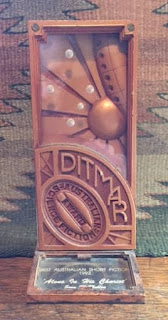
The Ditmar Award is almost
as old as the Nebula, and
recently recognized 
J.S. Breukelaar's "The Bridge."
(Image via BlackGate)
These national awards support science fiction fandom by platforming works that express the local concerns and national character of their host nations. Although neither Julie E. Czerneda, Candas Jane Dorsey, or Karl Schroeder have been honoured by the Hugo Awards, they’re truly great authors and we’re glad that the Aurora Award has recognized them. Their creative works speak to and for Canadians.

So why is there no national award recognizing the best science fiction published by authors from the United States?

It could be argued that this is a reflection of American exceptionalism or imperialism.

The Hugo Award — when it was established in 1953 — may have billed itself as celebrating the world’s greatest science fiction, but that was for a limited definition of “world.” This was a “world” that extended no further north than Toronto, no further east than London, and no further south or west than Los Angeles. American cultural hegemony was baked into the DNA of the award.

An American national SFF award was not seen as necessary, because the Hugos existed.

To date 84.2 per cent of all winners, and 84.5 per cent of the authors represented in the prose categories (short story, novelette, novella, novel and series) were born in the United States. If anything, these statistics understate the level of American dominance, given that the non-American 15 per cent includes figures like Isaac Asimov (born in Russia), Algis Budrys (born in Germany) and Ursula Vernon (born in Japan). If the goal of the Hugo Awards is to represent the best science fiction in the world, then we cannot limit ourselves to works by American authors.

It can be argued that American dominance might have eased slightly in recent years. But even over the most recent three awards ceremonies, 76 per cent of Hugo finalists in the prose categories were still Americans.

Despite a slightly increasing global reach of Worldcon over the past 20 years, clearly, the award’s early focus on America and on American SFF remains.

And this now feels like a disservice to the genre as a whole. The list of iconic SFF writers who did not primarily write in English, and who consequently never got even a whif of Hugo recognition is long. Among others, we’d mention Japan’s Kobo Abe, France’s Pierre Boule, Brazil’s Jerônymo Monteiro, France’s Bernard Werber.

Elia Barceló is among the best-known Spanish
authors and has published best-selling works of SFF.
But the Hugo Awards have yet to recognize her work.
(Image via Zendalibros.com)
The lack of an award for Best American Science Fiction means that the Hugo is the primary award that American science fiction fans and authors pay attention to, lobby for, and consequently dominate. Thus, the award for the best science fiction on Earth is usually awarded to American authors, and consequently reinforces the perception that American science fiction is the beginning and end of the genre.

Put another way, the lack of an American SFF award ends up disprivileging non-American authors.

But it’s a sword that can cut both ways.

This year, with Worldcon being held in China for the first time, there have been more nominating ballots than ever before received from science fiction fans whose first language is not English. There is consequently a real chance that the Hugo Award ballot may primarily celebrate Chinese-language works.

If this comes to pass, and if deserving works of American science fiction are denied recognition as a consequence, we should not blame the Chinese fans who engaged with the Hugos. The fault belongs with all of us in North American fandom for trying to have our award be global, but still wanting to be the only ones who can win it.

Regardless of what the shortlist looks like in 2023, the Hugos would be improved by the existence of a national science fiction award in the United States.

As much as Worldcon likes to think of itself as a “World” event, it seems pretty clear that for the first seven decades that it existed, the Hugo Award has steadfastly resisted the global reach of fandom.

If the Hugo Award is to be a truly “World” award, American fandom may need to relinquish it … by establishing an American award for American fiction.

Thursday, 6 January 2022

Hugos Unlike Any Previous

The 2022 Hugo Awards seem likely to be unlike any previous Hugos, because the Hugo-nominating constituency will be unlike any previous.

As far as we are aware, there has yet to be a Worldcon in which the largest single contingent of the membership came from anywhere other than the United States. Likewise, as far as we can determine, there has yet to be a Hugo Awards at which the plurality of votes came from anywhere other than the United States.

Even when the Worldcon was in Dublin two years ago, members living in the U.S. were the group
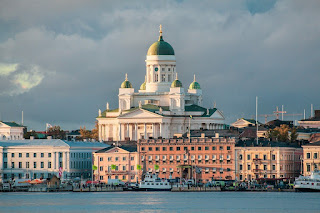
Even when the Worldcon was in far-off Helsinki,
there were more Americans than Fins in attendance.
(Photo by Tapio Haaja via Pixabay)

most represented in sales, with 2,750 of the 6,918 memberships (and 1,582 of the 4,190 in-person memberships) being purchased by U.S. residents. In Finland two years before that, 3,368 of the 8,748 memberships (and 1,141 of the 3,316 in-person memberships) were purchased by U.S. residents. At Japan’s 2007 Worldcon, 1,907 of the 4,010 memberships sold were purchased by U.S. residents. The complete and exact tally of how many people from each country bought memberships to Discon III is not available yet due to issues with the registration system, but similar patterns repeat in the demographic breakdown of every Worldcon for which we have found the statistics.

This dominance of American voters is reflected in the results of the Hugo Awards; almost 85 per cent of all Hugo-nominated fiction, and almost 85 per cent of all Hugo-winning fiction was written by U.S.-born authors (a statistic that’s even more revealing when one realizes that the calculation counts Isaac Asimov, Algis Budrys, and Manly Wade Wellman as not being U.S.-born.)

Editor and author Xueting
Christine Ni would be a
worthy inclusion on the Hugo
ballot. (Image via Amazon)

We predict that these statistics (which have remained fairly stable over recent decades) are about to change.

Rumours about a large number of supporting memberships being purchased in the days leading up to the 2023 Worldcon site selection vote were viral at Worldcon 2021. Turns out they were also accurate, with more than 2,400 Chinese residents purchasing supporting memberships for Discon III; approximately 1,600 of those memberships were purchased in the 10 days before the convention. The final vote tally was 2,006 votes for Chengdu to 807 for Winnipeg.
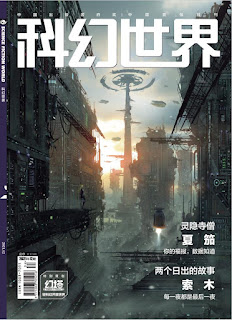
Science Fiction World prints more
than 200,000 copies every month.
(Image via CNBeta.com


We have trepidation about the Chinese government and its human rights record, but we also have respect for the fans and the bid committee behind the Chengdu Worldcon. As much as we would have preferred to see the 2023 Worldcon happen in Winnipeg, we are embarrassed to have seen the (sometimes racist) response we have seen towards the people working on the Chengdu Worldcon bid. Based on our attendance at related Worldcon 2021 sessions and conversations with members of both bids, the groups behind the 2023 bids seemed to be enthusiastic and professional, and backed by dedicated fans.

The Chengdu bid won this site selection vote through organizing, through outreach to convention runners, and through encouraging their local fans to purchase supporting memberships and to vote. As has often been pointed out by proponents of the Chendu bid, China is the country with the world’s largest number of science fiction fans. 

Based out of Chengdu, Science Fiction World (科幻世界) is the science fiction magazine with the largest circulation on Earth; comparable to the total of Analog, Asimov’s and the Magazine of Science Fiction & Fantasy combined. The 2,400 Discon III supporting memberships from China represent a fraction of a percent of the circulation of this one magazine.

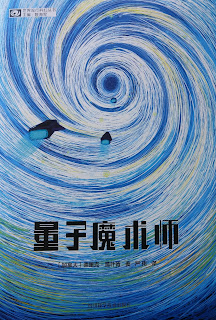
Canadian author Derek Künsken
does well in North America ...
but more than a million people
read his works in China.
(Cover of the Chinese edition
of Quantum Magician via the
publisher)

The vast majority of these memberships were bought by people who have never previously participated in voting on the Hugo Awards, as this will be their first Worldcon memberships. And excitingly, they will be eligible to nominate works for the Hugos in 2022. Given that there are usually little more than 1,000 nominating ballots cast in a given year, these supporting members of Discon III could have an enormous influence on what makes the ballot at the Chicago Worldcon. We encourage them to nominate. 

The third-highest grossing movie worldwide in 2021 was the Chinese-language time-travel movie Hi Mom. Han Song has won the Chinese Galaxy Award six times, but remains little-known among English-speaking readers. Xueting Christine Ni has been tirelessly working to promote Chinese science fiction for years, and could be recognized in one of the editor categories. And some authors underappreciated by Hugo voters (such as Derek Künsken) have found a broader audience with their works translated for Chinese-language magazines such as Non-Exist Magazine. We might also hope that these new Hugo voters will not neglect the fan categories.

There is a real possibility that the 2022 ballot could be the most surprising Hugo Awards shortlist in years — and the least U.S.-centric to date.

Friday, 27 September 2019

Many Princes; One Crown

Which version of The Little Prince won the Hugo Award?
"A new translation of the
beloved classic."
(Image via Amazon.com)

Was it Katherine Woods’ classic 1943 translation? Was it the 1995 Irene Testot-Ferry translation? Or perhaps it was Richard Howard’s 2000 translation?

Since the initial publication of Antoine de Saint-Exupéry's story in 1943, the book has been translated into English on at least seven different occasions, often with markedly different results.

If you’re an anglophone who is over the age of 30, or bought the book used, there’s every chance that you remember Woods’ relatively poetic and lyrical translation. A few might be most familiar with the direct and less florid Testot-Ferry version. Younger readers are likely to be more familiar with the plainspoken and colloquial Howard version of the text.

We argue here that the classic Woods version should be the one that is recognized as being worthy of the award, rather than one of the modern revisions. In particular, this is a Retro Hugo for 1944, and it is based on the work as it appeared in 1944 that votes should have been cast. The Hugo Awards page does specify the publisher, which would lead us to believe that it is indeed the Woods translation that is honoured.

That said, it is the 2000 version that is most readily available today, so a counter-argument could be made that a significant number of Hugo voters at Worldcon 77 were likely to have based their decision on the later version.

The differences between the translations are not insignificant.
Katherine Woods also
translated works such
as Emile Zola's The
Masterpiece, and was
the head of literature
with UNESCO.
(Image via Amazon.com)

As an example, the original Woods translation offers us the following: “It was from words dropped by chance that, little by little, everything was revealed to me.”

The 1995 Testot-Ferry translation flattens that same sentence to “It was thanks to the odd word, here and there, that everything was revealed to me.”

And in 2000, Howard renders this same sentence as “It was things he said quite at random that, bit by bit, explained everything.”

It is clear that the newer translation does not capture the gentleness of the original French phrase: “Ce sont des mots prononcés par hasard qui, peu à peu, m'ont tout révélé.”

The structural changes are mirrored by a narrowing of the vocabulary in the work: ‘a primordial forest’ becomes ‘a jungle.’ A ‘tippler’ becomes a ‘drunkard.’ A ‘spring of fresh water’ becomes a ‘fountain.’

By-and-large, the publishing industry is more sensitive to the work of translators today; today they often they get cover credit that they might not have in the past. For example, in 2014, Ken Liu was recognized on the cover of The Three-Body Problem and was consequently also recognized at the Hugo Awards for his translation work. 

But the case of The Little Prince is more comparable to that of the first translated work to appear on a Hugo Ballot: the 1963 novel Sylva, which was written by French war hero Vercors (A.K.A. Jean Bruller). No translator is mentioned on the dust jacket of the book. And until this summer, when the record was updated at our request, the official Hugo Awards site did not list the name of the translator, Rita Barisse. The Wikipedia entry for the Hugo Awards, and several other publications continue to neglect Barisse’s contribution to the work.

It is important when giving an award to a translated work to recognize the person — or people
The Little Prince has been translated into
more than 250 languages, and is the most
translated non-religious text on Earth.
(Image via Nortsider
— who worked on bridging the linguistic divide, and who interpreted and attempted to capture the tone and rhythm of the original. The translation of foreign works into English is a subtle and often misunderstood art. It is also one that all-too-often has gone unacknowledged.

Both Sylva and The Little Prince were published without translation credit on the cover, so when they were discussed, nominated, and voted on, there was little information provided to voters about whose work went into turning French prose into English.

While Sylva’s translator is easy to identify, and to retroactively credit, The Little Prince is a little less clear. But recognition, and attribution, must be offered.

It is Katherine Woods’ version that helped make the work so successful in North American English markets, it is her work that was available in 1944, and it should be recognized that she is the translator who contributed to the award-winning version of the work.

The WSFS should adopt a consistent practice of acknowledging translators in all instances, both for contemporaneous Hugos and for Retro Hugos.