Showing posts with label Netflix. Show all posts

Thursday, 16 May 2024

The Ill o Walin Amang Lessers (Translated Blog Post)

This blog post is a pairt o the Hugo Book Club Blog’s picture-hoose club, that’s been wirkin year bi year throu aw the Hugo-finalist big screen an televeesion follae-ups.

In the early 1970s, NBC executive Paul L. Klein set oot hoo the muckle netwarks makkit televeesion programming. The three American netwarks at the croun o the causay in thae days (ABC, CBS an NBC) held that fowk didna watch parteeclar programmes, but raither televeesion jist, an sae the successfae ettle wisna tae mak heich-quality shaws, but jist tae mak shaws that scunnert the least nummer o TV watchers intae chengin sides.

TV watchers isna walin the shaws thay like, Klein said. Thay’r watchin the televeesion jist, an walin the least-scunnersome choice. It wis a ploy that haed televeesion watchers walin fae amang the lessers, gin ye like.

He cawed this the “least-objectionable programming” (L.O.P.) theory, an it’s a souch anent the braid media that dauntont the televeesion landscape for sindry decades (fae aboot 1958 until 1992), an media executives haes grundit thair walings on it tae this day.

As oor picture-hoose club haes been wirkin its wey throu Hugo-finalist televeesion shaws fae the heicht o L.O.P., we’v affen haed sair parallels atween the trends that led til Holmes & Yo Yo, an the airt that oor streaming services is heidit the day. In actual fact, the affcome o L.O.P. can be seen nooadays an is important for unnerstaunin whit wey parteeclar shaws is cawed-aff the air, whit wey ithers is makkit yet, an whit tae thole in the decades aheid.

Mony in the media haes been clawin thair heids in the bygane week anent the deceesion bi Netflix tae caw-aff the air the German lee-science follae-up 1899 efter jist echt pairts, in spite o guid write-ups in general an reportit heich nummers o fowk watchin. The deceesion haes been taen as teepical o the wey that streamers caws shaws aff efter jist ae season, an descrived as pairt o thair growin bing o deid, unfeenisht stories an a ‘void an redd’ wey o makkin TV.

Acause it stertit oot afore the lave, an sae is the biggest player amang the streamers gauin bi nummers o subscreivars, Netflix haes been steert first an foremaist tae jist haud fowk’s intress eneuch sae thay’ll no stop watchin – an that’s a gey different task fae the darg o gettin fowk tae sign up tae stert wi.

This ettle kythes as a focus on feenishing rates. Whit Netflix daesna want is a front-page shaw that fowk turns on, but, syne, daesna want tae watch ony mair. The Midnight Club wis ane o the tap shaws on this streamer, seein mair nor 90 million houres watcht whan it stertit in October. The Mike Flanagan YA horror wis weel-quotit amang critics, but wis reportit haein a feenishing rate o jist abuin 34 per cent, meanin that 65 per cent o TV watchers decidit thay haed better cheils tae tak in haun nor see the end. The ettle is tae keep fowk fae chengin til anither side, an sae this maks couthie programming a heid o the maist importance tae Netflix.
The shaw 1899 steert fans tae passion,
but confoondit ithers. Conform tae the
feenishing rate-driven rule that Netflix gaes
wi, dowf an foushionless is preferred
 tae thon that cuid’a been rare.
(Eemage bi gait o Netflix).


At Netflix L.O.P. is in guid fettle yet. This can be seen in the wey that thay haunle colour grading an cinematography. The streamer hauds til a hoose style o editin that seems tae be made sae as TV watchers haesna tae think muckle; the’r a foushionless feel grundit on thair steive rules for kind an uiss o camera. If a body faws asleep watchin the Netflix picture Adam Project, an waukens watchin Red Notice, ye michtna tent at it’s a different picture. The langage o the filmin is aye easy tae brek doun: the estaiblishin shot, follaed wi ower-the-shouder back an forrit crack. It’s aw couthie an maks it easy tae lowp fae ae Netflix picture tae the neist athoot devalin in atween, acause thay’r aw ae oo. This is gey like a phenomenon seen in NBC’s TV shaws o the 1970’s, that reused the same action stoonds, the same framing, an even the selfsame typefaces. The L.O.P. model lippens on cheils o the ae oo. This maks muckle o whit’s seen throu Netflix ideal for a TV watchin populace that isna fasht whit it’s watchin.

This wisna aye the case wi Netflix; back whan it wis the gallus cheil up agin the auld kind o televeesion, the streamer took a puckle chancy shots, an makkit a wheen o guid material that’s lastit. But sometime aroond 2018 Netflix remakkit L.O.P. fae foonding principles. An it is mensefae tae them in the short term: thaim that’s weel-tochert winna steer whan the’r reward in naething chengin.

In the 1980s, the deid haun that L.O.P. haed on televeesion netwarks stertit tae weir doun throu new technologies like pey-as-ye-watch an narra-cast cable netwarks. It’s ironic that Paul L. Klein wis ahin the stert o baith. The undemous growth o televeesion that follaed gied rise tae new kinds forby: TV watchin biggit aroond an aesome shaw; the direct mercatin machine; the netwark wi a narra intress. Ilk ane o thaim cawed in question L.O.P., an the mercat places that cam oot o this can be seen tae this day.

Noo, afore we speak o hoo ilk streamer is different, we shuid tak tent o whit’s weel seen: Neither Netflix, or Paramount+, or Apple+, or Amazon Prime, or HBO Max is yer freen. Thay are pendicles o warld-national corporations that’s ettles is jist tae mak profit for the sharehauders. If ony o thir corporations cuid heize thair margins bi a bittie o a per cent throu peyin Hunter Moore an Andrew Tate tae mak ugsome scud pictures, thay wad dae it athoot thinkin twyst.

Gauin bi his cynical opeenion
anent TV watchers, it shuid
be nae ferlie that Paul L. Klein
wis, forby, a racist troker o
hard-richt scud pictures
(Eemage bi gait o Twitter)


The maist weel seen instance that gaes conter tae the L.O.P. model o televeesion is HBO, the pey netwark that’s service model fae 1992 onwards wis tae tairget a puckle o weel kent shaws that drew follaers. The material didna hae tae kittle awbody, an cuid scunner mony, as lang as it drew in eneuch peyin hauns. We jalouse haed thay gaed live on HBO Max in 2020, 1899 wad’a haen a second season, while Emily in Paris wad’a been forgot as quick. Until no lang syne, the model o TV watchin biggit aroond an aesome shaw governed HBO’s wey o streaming, tho wi the stoushie that’s owertaen Warner Media ower the bygane saxmonth the gait thay noo tak isna clear.

But the product differencing that rang ower narra-intress cable netwarks like SYFY, Legend, an Nick, is gey different fae baith the L.O.P. or TV watchin biggit aroond ae shaw wey o’t. Narra-intress netwarks maks products that’s ettle is tae tick boxes, an no necessar tae evite offendin, or tae caw the crack by watter coolers, but raither tae fulfil a mandate. It’s weel seen that Shudder an Crunchyroll is amang the mair kenspeckle instances o this pattren o corporate interteenment in the streaming landscape o 2023.

The’r twa mair models o streaming service tae speak aboot, baith o them gey kittlesome.

The first is video interteenment as a tool for howkin data; the kenspeckle instance o this is Amazon Prime that wirks in some weys as a loss-leader. The televeesion service daesna mak a profit in fact, but raither fleitches consumers sign up til Amazon’s free shipping programme an at the hinnerend (it is howpfae) order mair fae the online troker. But mair sleekitly, this big troker haes the can tae mak mair an mair pyntit profiles o its streaming service users bi recordin the parteeclars o whit thay watch, hoo muckle thay watch, an whan thay deval. We wad suggest that ane o the key reasons that Prime haes shaws that finds favour amang sindry political intresses as The Boys an The Handmaid’s Tale is as pairt o a slee prattick in psychological pruivin. The Venn Diagram o fowk that watches Reacher an Ms. Maisel haesna muckle owerlap, an noo thair algorithms kens whit data bucket ye faw intae.

The hinmaist model o data streaming micht seem the maist skaithless, but hit’s the ane that causes the maist suspeecion: Identity as a subscreiver service. This model is ordnar tae Disney+ an Paramount+ an wis weel seen fae the weys that thay’v biggit thair leebrars o material aroond parteeclar, organised media-franchise warlds o fans. The’r nae ‘anchor show’ for either o thir streamers but insteid an identity as a fan that a body is subscreivin tae. It’s a trauchle tae be a “true Star Wars fan” athoot peyin a $11.99 monthly fee tae Disney+ for tae be pairt o thair hoose o fans. Likewise, it’s a trauchle tae be a “true Star Trek fan” athoot peyin $9.99 tae Paramount+ ilk month.
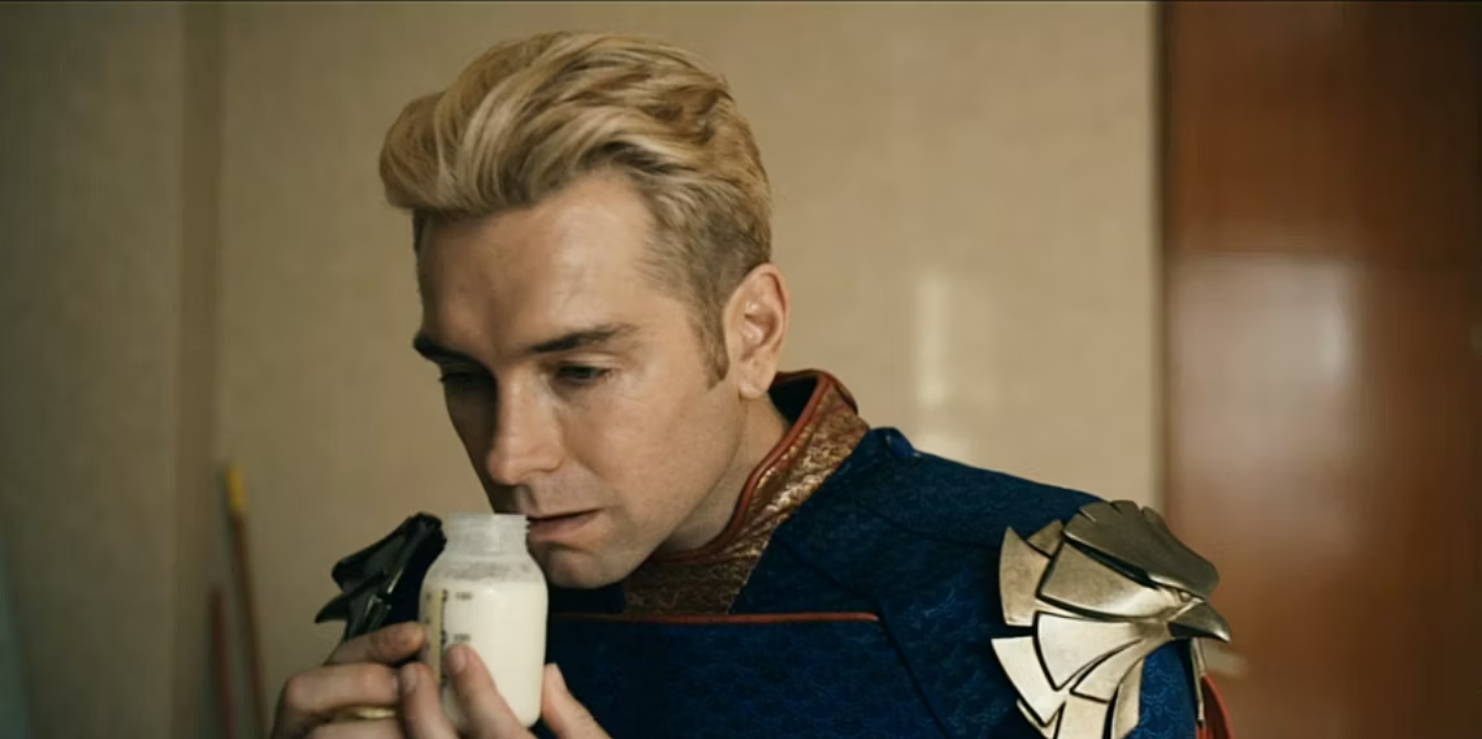
Jeff Bezos kens whit scenes fae The Boys TV watchers
hovers ower a guid bit, sae daena ferlie if ye
get tairgetit adverts sellin caller ferm milk at ye
(Eemage screen capturt fae Amazon Prime)


While aesome shaws on thir services micht come an gae, thir services is amang the maist likely tae seem douce in thair choices til an ootside watcher, an thay are are unlikely ever tae forleit ony o thair cash-coo sindry-media properties. We can lippen on intellectual offerings that daesna fash, an daesna threiten the lang-term warth o the IP owners or sharehauders.

Self-identity as a key selling pynt o a subscreivar service michtna seem a problem, but it’s no hard tae picture a time whaur a muckle streaming service douks intae the conter sides in culture weirs in an ettle tae bigg an identity streamer that’s astrictit tae, an weel-quotit amang, aw thaim wi a growin richt wing identity. Gien the company’s lang history o uphaudin tradeetional sex roles an white maucht, a body micht jalouse that Disney+ is the streamer maist like tae follae the gait o zeelots as set oot bi Fox News. This micht cuid dae muckle skaith tae the braider culture.

Whan crackin anent trokers o video interteenment, TV watchers an critics shuid aye ask whit ilk company is sellin, hoo thay are sellin it, an whit anes thay’r sellin tae. The answers tae thir questions is important for unnerstaunin the media landscape the noo, streaming in time tae come, an sae whit like culture in forrit time.

Set ower in Scots bi Dr Dauvit Horsbroch, 2024

Tuesday, 10 January 2023

The Evil of Choosing Among Lessers

This blog post is a part of the Hugo Book Club Blog’s cinema club, which has been working its way year by year through all the Hugo-finalist movies and television episodes

In the early 1970s, NBC executive Paul L. Klein explained how the major networks created television programming. The then-dominant Big Three American networks (ABC, CBS, and NBC) believed that people didn’t watch specific programs, they watched television, and therefore the successful strategy was not to make high-quality shows, but rather to make the shows that would cause the fewest viewers to change the channel.
The L.O.P. model of entertainment incentivizes
corporations to produce banal and derivative
television series that provide little intellectual heft.
(Image via TV Tropes)

Viewers aren’t choosing the show they like, Klein said. They’re choosing to watch television, and selecting the least-objectionable option. It was a strategy that introduced television viewers to the evil of choosing among lessers, if you will.

He called this the “least-objectionable programming” (L.O.P.) theory, and it’s a view of mass media that dominated the television landscape for several decades (from roughly 1958 to 1992), and continues to inform the choices made by media executives.

As our cinema club has been working its way through Hugo-finalist television shows from the heyday of L.O.P., there’s often been uncomfortable parallels between the trends that led to Holmes & Yo Yo, and the direction that our present-day streaming services are going.

In fact, the legacy of L.O.P. can be seen today and is essential to understanding why certain shows get canceled, why others continue to be produced, and what to expect in the coming decades.

Many in the media have expressed confusion in the past week over Netflix’ decision to cancel German science fiction series 1899 after only eight episodes, despite generally positive critical reviews and reportedly high viewership numbers. The decision has been pointed to as emblematic of the streamer’s habit of canceling shows after only one season, and described as part of their growing graveyard of unfinished stories and a slash-and-burn approach to TV making.
The show 1899 inspired passion in fans,
but confused others. Under the completion
rate-driven paradigm Netflix is pursuing,
mediocre but unchallenging is preferable
to that which might be great. 
(Image via Netflix.)

Because it got out of the gate first, and therefore is the biggest player in the streaming landscape in terms of subscriber numbers, Netflix has an incentive first and foremost to keep people just engaged enough not to stop watching — which is a very different task than convincing people to sign up in the first place.

This incentive manifests itself as a focus on completion rates. What Netflix doesn’t want is a front-page show that people turn on, then decide they don’t want to watch anymore. The Midnight Club was one of the top shows on this streamer, racking up more than 90 million hours viewed when it debuted in October. The Mike Flanagan YA horror was praised by critics, but reportedly had a completion rate of just above 34 per cent, meaning that 65 per cent of viewers decided they had better things to do than watch the ending. The aim is to persuade people not to change the channel, which makes unobjectionable programming a top priority for Netflix.

L.O.P. is still alive and well at Netflix. This can be seen in their approach to colour grading and to cinematography. The streamer maintains a house style of editing that appears to be designed not to challenge viewers; there’s a flat and depthless feel based on their rigid rules for camera specifications. If you fall asleep watching the Netflix movie Adam Project, and wake up watching Red Notice, you might not notice that it’s a different movie. The cinematic language is always easy to parse: establishing shot followed by over-the-shoulder back and forths for dialogue. It’s all very comfortable, and makes it easy to go from one fungible Netflix Movie to the next without stopping between. This is a remarkably similar phenomenon to NBC’s TV shows of the 1970s, which recycled the same action beats, the same framing, and even the same typefaces. The L.O.P. model relies on fungibility. This makes a vast swath of Netflix content ideal for a demographic that doesn't care what they're watching.

This wasn’t always the case for Netflix; back when it was the scrappy upstart competing against legacy television, the streamer swung for the fences, took risks, and created some content of enduring value. But sometime around 2018 Netflix reinvented L.O.P. from first principles. And it makes sense for them in the short term; the financially comfortable court complacency when there’s a reward in stasis.

In the 1980s, the death grip that L.O.P. had on television networks started to be eroded by emerging technologies like pay-per-view and narrow-cast cable networks. Ironically, Paul L. Klein was instrumental in launching both. The Cambrian Explosion of television that followed produced new forms as well; the appointment viewing prestige channel; the direct marketing machine; the niche interest network. Each of these upended the assumptions of L.O.P., and the resulting market habitats can still be seen today.
From his cynical view of TV
viewers, it should be no surprise
that Paul L. Klein was also
a racist purveyor of fascist porn.
(Image via Twitter)

Now, before we talk about how each streamer is different, we should note the obvious: Neither Netflix,nor Paramount+, nor Apple+, nor Amazon Prime, nor HBO Max is your friend. They are each appendages of multinational corporations whose agendas are only to make profit for shareholders. If any of these corporations could boost their margins by a fraction of a per cent by paying Hunter Moore and Andrew Tate to direct pornographic snuff films, they would do so without thinking twice.

The most obvious counterexample to the L.O.P. model of television is HBO, the pay network whose service model from 1992 onwards was to focus on a few anchor shows that drew in viewers. The content didn’t need to appeal to every viewer, and could be objectionable to many, as long as it was something that drew in a sufficient number of paid subscribers. We would wager that if they had launched on HBO Max in 2020, 1899 would have received a second season, while Emily In Paris would have been quickly forgotten. Until recently, the appointment viewing service model governed HBO’s approach to streaming, though with the chaos that has engulfed Warner Media over the past six months the approach they take now remains to be seen.

But the product differentiation that governed narrow-interest cable networks like SYFY, Legend, and Nick, is fundamentally different from both the L.O.P. or Appointment Viewing approach. Narrow-interest networks create products that are designed to check boxes; not necessarily to avoid offending, nor to cause water cooler conversations, but rather to fulfill a mandate. Obviously, Shudder and Crunchyroll are among the most prominent examples of this corporate entertainment paradigm in the streaming landscape of 2023.

There are two final models of streaming service to talk about, both of which are deeply problematic.

Jeff Bezos knows which scenes from The Boys
that viewers pause on for long periods of time,
so don’t be surprised if you get targeted ads
selling you farm-fresh milk.
(Image screen captured from Amazon Prime)
The first is video entertainment as a tool for data mining; the notable example of this is Amazon Prime, which in some ways operates as a loss-leader. The television service doesn’t actually turn a profit, but rather incentivizes consumers to sign up to Amazon’s free shipping program and consequently (hopefully) order more from the online retailer. But more insidiously, the retail giant is able to create more and more accurate profiles of its streaming service users by recording the details of what they watch, how much they watch, and when they stop. We would suggest that one of the key reasons that Prime has shows geared to as wildly different political constituencies as The Boys and The Handmaid’s Tale is as part of a subtle psychological testing experiment. The Venn Diagram of people who watch Reacher and Ms. Maisel has little overlap; and now their algorithms know which data bucket you fall into.

The final model of streaming service may seem the most innocuous, but it’s the one that causes us the most concern: Identity as a subscription service. This model is typified by Disney+ and by Paramount+, and is fairly obvious in the ways in which they’ve built their content libraries around specific, organized media-franchise fandoms. There’s no ‘anchor show’ for either of these streamers, but rather an identity as a fan that one is subscribing to. It is difficult to be a “true Star Wars fan,” without paying an $11.99 monthly fee to Disney+ to be a part of that fandom. Likewise, it is difficult to be a “true Star Trek fan” without paying $9.99 to Paramount+ each month.

While individual shows on these services might come and go, these services are among the most likely to appear rational in their choices to an outside observer, and they are unlikely ever to abandon any of their cash-cow multimedia properties. Expect intellectually low-risk offerings that don’t rock the boat, and don’t threaten the long-term value of the IP owners or shareholders.
Noted anti-union activist
Walt Disney has a
problematic legacy of
promoting patriarchy. 
(Image via USA Today)

Self-identity as a key selling point of a subscription service may not seem like a problem, but it’s relatively easy to imagine a scenario in which a major streaming service leans into culture war divisions in an attempt to build a walled-garden identity streamer that appeals to the increasingly extreme right wing political identity. Given the company’s long history of encouraging heteronormativity and white supremacy, one would suspect that Disney+ is the likeliest streamer to follow the Fox News organizational radicalization highway. The consequences of this to the broader culture could be disastrous.

When discussing the purveyors of video entertainment, viewers and critics should always ask what each company is selling, how they are selling it, and to whom they are selling. The answers to these questions are vital for understanding the current media landscape, the future of streaming, and consequently the future of culture.